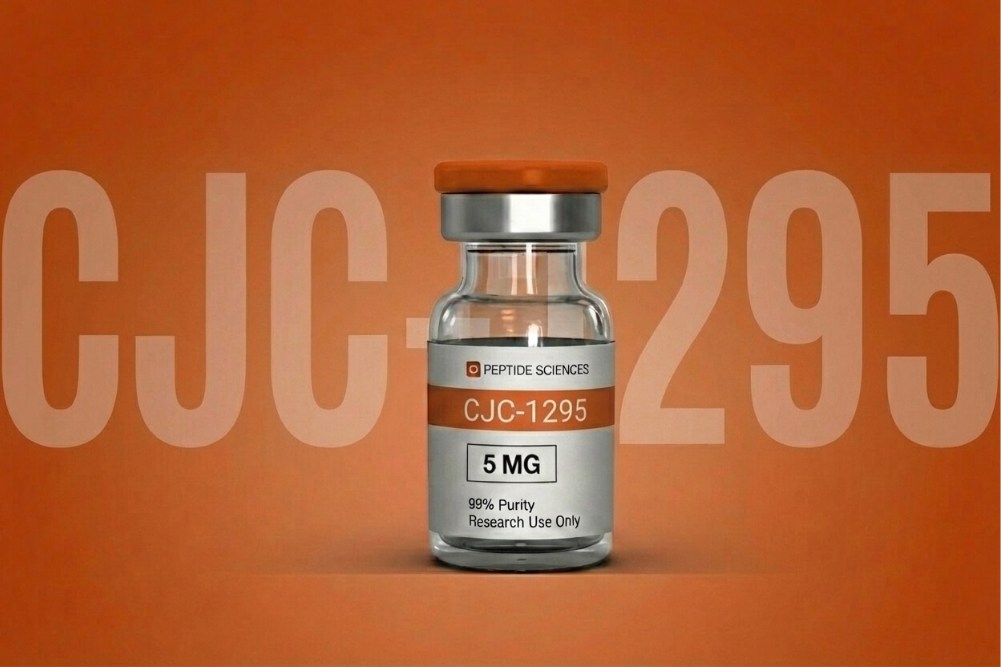
CJC-1295
What the Research Actually Says About this Growth Hormone Peptide

CJC-1295 is a synthetic peptide that tells your pituitary gland to produce and release more growth hormone — and depending on the version, a single injection can keep GH elevated for up to a week. The research confirms that hormone elevation is real. The research confirming what that elevation actually does to your body is not.
Key takeaways
- CJC-1295 is a synthetic analog of growth hormone-releasing hormone (GHRH) that stimulates the pituitary gland to produce and release GH — not a direct GH injection.
- The only published human randomized controlled trial (Teichman et al., 2006, PMID 16352683) showed GH rose 2 to 10-fold for 6+ days and IGF-1 rose 1.5 to 3-fold for 9 to 11 days from a single injection of the DAC version.
- No human trial has measured muscle gain, fat loss, or body composition as an outcome of CJC-1295 use in healthy adults.
- CJC-1295 is not FDA-approved. The PCAC voted against 503A compounding inclusion in December 2024. WADA explicitly prohibits it under S2.2.4 at all times.
- A Phase II trial death occurred during clinical development; the FDA maintains a cardiac risk concern for CJC-1295.
Before you start All peptide protocols require a physician evaluation before use. CJC-1295 carries an FDA cardiac risk flag stemming from a Phase II trial death, and it is absolutely contraindicated in anyone with active malignancy, cardiovascular disease, or uncontrolled diabetes.
What is CJC-1295?
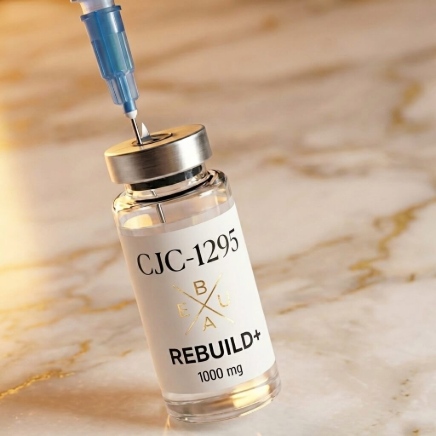
CJC-1295 is a 30-amino-acid synthetic peptide derived from GHRH 1-29 — the same parent molecule as sermorelin. ConjuChem Biotechnologies developed it by modifying sermorelin at four amino acid positions to make it more resistant to enzymatic breakdown and more biologically active.
Those four changes give CJC-1295 a dramatically longer working life than native GHRH, which your body breaks down within minutes. The practical result: one injection can keep growth hormone elevated for days, not hours.
Learn more about how CJC-1295 compares to sermorelin and other GHRH analogs.
How does CJC-1295 work?
CJC-1295 doesn’t deliver GH directly. It works upstream — telling your pituitary to make and release more of its own.
Here’s the chain reaction:
CJC-1295 → binds GHRH receptor on pituitary somatotroph cells → activates Gs/cAMP/PKA/CREB signaling cascade → increases GH gene transcription → GH releases into bloodstream → GH reaches the liver → liver produces IGF-1 via JAK/STAT signaling
Because CJC-1295 works through your body’s own regulatory system, natural feedback mechanisms remain active. Your body can still throttle GH output via somatostatin. This is a meaningful distinction from injecting synthetic growth hormone directly, which bypasses the pituitary entirely and suppresses natural production with chronic use.
Learn more about the differences between GH secretagogues and exogenous HGH.
CJC-1295 with DAC vs. without DAC (Mod GRF 1-29)
This is one of the most misunderstood distinctions in the peptide space — and it matters for protocols, side effects, and how physicians approach the two versions differently.
CJC-1295 with DAC includes a Drug Affinity Complex: a chemical tag attached at the C-terminal end that forms a permanent covalent bond with albumin (a carrier protein) in your blood once injected. Albumin circulates for weeks, dragging CJC-1295 along with it. That albumin binding extends the half-life to 5.8 to 8.1 days (Teichman et al., 2006). One injection per week is typical.
CJC-1295 without DAC (also called Mod GRF 1-29) has the same four amino acid substitutions but no albumin-binding tag. Half-life is approximately 30 minutes. It produces a sharp, short-lived GH pulse that more closely mimics your body’s natural pulsatile secretion pattern.
| Attribute | CJC-1295 with DAC | CJC-1295 without DAC (Mod GRF 1-29) |
|---|---|---|
| Molecular weight | 3,647 Da | 3,368 Da |
| Half-life | 5.8 to 8.1 days | ~30 minutes |
| Dosing frequency | 1 to 2 times per week | 1 to 3 times per day |
| GH pattern | Sustained elevation (“GH bleed”) | Sharp pulse, rapid return to baseline |
| Pulsatility preserved? | Partially (trough levels elevated 7.5-fold; pulse frequency unchanged) | Yes — mimics natural GHRH pulse |
| Human RCT data? | Yes (Teichman 2006) | No — extrapolated from parent compound |
The “GH bleed” concern. Many physicians prefer the No-DAC variant. The DAC version creates continuous GH elevation rather than the sharp on-off pulses your body normally produces. Ionescu and Frohman (2006) showed that GH pulse frequency is preserved during DAC treatment, but baseline (trough) GH levels are elevated 7.5-fold. Whether sustained baseline elevation over months of use is beneficial, neutral, or harmful remains unknown.
A note on salt forms. CJC-1295 is sold in three salt forms: free base, acetate, and TFA (trifluoroacetate). TFA counterions add mass without adding active peptide. A “5 mg vial” of TFA-salt CJC-1295 may contain only approximately 3.5 mg of actual peptide. Check the Certificate of Analysis for net peptide content, not gross vial weight.
Learn more about how to evaluate peptide quality through a Certificate of Analysis.
What does the research show?
Key takeaways — research
- The only published human RCT (Teichman et al., 2006) measured pharmacokinetic endpoints only — GH and IGF-1 levels — not body composition, muscle mass, or fat loss.
- GH rose 2 to 10-fold and IGF-1 rose 1.5 to 3-fold in healthy adults, sustained for 6 to 11 days from a single injection.
- No human trial has measured muscle gain, fat loss, bone density, or skin outcomes from CJC-1295 use.
- PeptideRx rates the evidence for CJC-1295 as Grade B: limited human trial data confirms the mechanism with plausible downstream benefits, but no human trial has measured clinical or body composition outcomes.
The evidence base for CJC-1295 is narrower than most sources acknowledge. Here’s what the research actually measured — and what it didn’t.
GH and IGF-1 elevation
Teichman et al. (2006) enrolled healthy adults aged 21 to 61 in two randomized, placebo-controlled, double-blind trials lasting 28 and 49 days. Single subcutaneous injections of CJC-1295 DAC at 30 or 60 mcg/kg produced dose-dependent GH increases of 2 to 10-fold above baseline, sustained for 6 or more days. IGF-1 rose 1.5 to 3-fold for 9 to 11 days. With repeated dosing, IGF-1 remained above baseline for up to 28 days.
These hormone changes are real, reproducible, and clinically meaningful. No serious adverse reactions were reported at those doses.
Muscle and body composition
GH and IGF-1 play established roles in lean mass maintenance and fat oxidation through the mTOR/PI3K/Akt and hormone-sensitive lipase pathways, respectively. But elevated hormones are not the same as measured body changes. No human trial has demonstrated that CJC-1295 produces measurable muscle gain or fat loss in healthy trained adults over any timeframe. The mechanism is plausible; the outcome data does not exist.
GI recovery
Beck et al. (2014, PMID 25331030) tested ipamorelin — not CJC-1295 — in 117 postoperative patients for GI motility recovery. The trial did not reach its primary endpoint (p=0.15). This is a negative result.
Sleep, skin, and cognition
User reports frequently describe improved sleep quality within 1 to 2 weeks, better skin texture within 4 to 8 weeks, and sharper mental clarity over time. These reports are consistent with known GH physiology: GHRH is involved in slow-wave sleep regulation, and GH/IGF-1 stimulate collagen synthesis. No controlled CJC-1295 study has measured any of these outcomes.
| Condition | Evidence tier | Key finding | Data gap? |
|---|---|---|---|
| GH/IGF-1 elevation | Human RCT (Teichman 2006) | 2 to 10x GH; 1.5 to 3x IGF-1; sustained 6 to 11 days | No — this is measured |
| Muscle/body composition | Mechanistic extrapolation | GH/IGF-1 promote lean mass via mTOR/PI3K/Akt | Yes — no human body composition RCT |
| Fat loss | Mechanistic extrapolation | GH activates hormone-sensitive lipase → lipolysis | Yes — no human fat loss RCT |
| Bone density | Animal study only | Ipamorelin improved bone markers in ovariectomized rats (Johansen 1999) | Yes — no human data |
| Sleep quality | Anecdotal + mechanistic | GHRH involved in slow-wave sleep regulation | Yes — no CJC-1295 sleep study |
| Skin/hair | Anecdotal + mechanistic | GH/IGF-1 stimulate collagen synthesis | Yes — no CJC-1295 skin study |
| GI motility | Human Phase II (ipamorelin only) | Beck 2014: n=117; did not reach primary endpoint (p=0.15) | Negative result |
| Cardiovascular | Safety concern | Phase II trial death (cardiac); FDA cardiac risk flag | Risk — not a benefit |
Data gap notice: PeptideRx rates the evidence for CJC-1295 as Grade B — limited human trial data confirms the mechanism (GH and IGF-1 elevation) with plausible downstream benefits, but no human trial has measured clinical or body composition outcomes.
Learn more about how PeptideRx evidence grades are assigned.
Who uses CJC-1295 and why
CJC-1295 attracts a somewhat older demographic than most tissue-repair peptides.
Anti-aging and somatopause patients (40 to 70+) form the largest documented user group. GH production declines approximately 14% per decade after age 30; by 60, many adults produce less than half the GH they did at 25. CJC-1295 appeals to this group as a way to restore GH output closer to youthful levels without injecting synthetic growth hormone directly.
Bodybuilders and physique athletes typically use the No-DAC variant combined with ipamorelin as part of body composition protocols. The combination targets both the frequency and amplitude of GH pulses. No RCT supports physique-specific outcomes.
Female users represent a documented segment. Van Hout and Hearne (2016, PMID 26771670) conducted a netnographic study of online forums documenting female CJC-1295 use for weight loss, muscle tone, skin quality, sleep, and injury recovery. Women may be more sensitive to water retention from GH elevation.
Functional medicine and TRT clinic patients encounter CJC-1295 through physician-directed protocols, often combined with ipamorelin and testosterone replacement therapy.
Important: Andrew Huberman (Huberman Lab, Episode 170) publicly noted a preference for sermorelin over CJC-1295, citing safety concerns related to the Phase II clinical trial death. He emphasized physician supervision for any GH secretagogue use.
Learn more about physician-supervised GH secretagogue protocols.
Dosing and administration
No FDA-approved dosing protocol exists for CJC-1295. The clinical trial used weight-based dosing to map pharmacokinetics — not to establish body composition targets. Community protocols are extrapolated from trial data and practitioner experience.
Important: Consult a licensed physician before using any peptide. The dosing ranges below reflect published clinical trial data and commonly reported community protocols — not prescribing recommendations.
Dosing table
| Variant | Source | Dose range | Frequency | Timing |
|---|---|---|---|---|
| CJC-1295 with DAC | Clinical trial (Teichman 2006) | 30 to 60 mcg/kg | Weekly or biweekly | SC, any time |
| CJC-1295 with DAC | Community protocol | 1,000 to 2,000 mcg per injection | 1 to 2 times per week | SC, bedtime preferred |
| CJC-1295 without DAC (Mod GRF 1-29) | Community protocol | 100 to 300 mcg per injection | 1 to 3 times per day | SC, fasted, bedtime preferred |
| CJC-1295 No-DAC + Ipamorelin | Community protocol | 100 to 300 mcg each, simultaneously | 1 to 2 times per day | SC, fasted, bedtime |
Clinical vs. community context. The Teichman trial used weight-based dosing (30 to 60 mcg/kg) to map pharmacokinetics. For a 75 kg individual, 60 mcg/kg equals 4,500 mcg — substantially higher than most community protocols. Community protocols use lower flat doses that have not been formally tested for efficacy or safety.
Timing
GH release is blunted when insulin is elevated. Most protocols call for injection in a fasted state — at least 90 minutes after eating. Bedtime injection takes advantage of the body’s natural nocturnal GH pulse window. Eating raises insulin, which directly opposes GH secretion.
Administration routes
| Route | Bioavailability | Evidence basis | Recommended? |
|---|---|---|---|
| Subcutaneous (SubQ) | Near 100% | All human RCT data (Teichman 2006) | Yes — standard |
| Intramuscular (IM) | High | No CJC-1295-specific data | Acceptable alternative |
| Oral | Very low / unknown | No published PK data; peptide degraded by gastric acid | No |
| Nasal | Partial absorption | Johansen 1998 (Xenobiotica); partial absorption for related GHRH peptides | Not validated for CJC-1295 |
| Sublingual | Unknown | No published data | No |
Subcutaneous injection is the only route with clinical trial support. Oral CJC-1295 products lack bioavailability validation; as a peptide, CJC-1295 degrades in gastric acid.
Cycle length and off-cycle timing
Most protocols run 8 to 16 weeks on, followed by 4 to 8 weeks off. The off-cycle break is intended to prevent GH receptor desensitization, though no study has confirmed the optimal break duration.
CJC-1295 does not suppress testosterone, estrogen, LH, or FSH. The hypothalamic-pituitary-gonadal axis is unaffected. No post-cycle therapy is needed.
Reported results timeline (anecdotal — not clinically validated)
| Goal | Typical reported onset |
|---|---|
| Sleep quality improvement | 1 to 2 weeks |
| Energy and recovery | 2 to 4 weeks |
| Body composition changes | 6 to 12 weeks |
| Anti-aging markers (skin, hair) | 3 to 6 months |
Reconstitution guide
CJC-1295 is sold as a lyophilized (freeze-dried) powder, typically in 2 mg, 5 mg, or 10 mg vials.
Reconstitution calculations:
| Vial | BAC water | Concentration | mcg per 10 units (0.1 mL) |
|---|---|---|---|
| 5 mg CJC No-DAC | 2.5 mL | 2,000 mcg/mL | 200 mcg |
| 5 mg CJC DAC | 2.5 mL | 2,000 mcg/mL | 200 mcg |
| 10 mg CJC No-DAC | 5.0 mL | 2,000 mcg/mL | 200 mcg |
| 5 mg/5 mg blend (CJC + Ipamorelin) | 2.5 mL | 2,000 mcg each/mL | 200 mcg each |
Step-by-step reconstitution:
- Allow the vial to reach room temperature (~15 minutes)
- Wash hands and put on nitrile gloves
- Swab both vial stoppers with separate alcohol pads
- Draw the desired volume of bacteriostatic water into an insulin syringe
- Insert needle into the peptide vial and release water slowly along the inside glass wall — do not spray onto the powder
- Swirl gently until fully dissolved; never shake. The solution should be clear and colorless.
- Label with date, concentration, and contents
- Refrigerate immediately
Storage: Lyophilized powder stores at -20°C long-term (stable up to 2 years); room temperature is acceptable for shipping. Reconstituted solution stores at 2 to 8°C for 28 to 45 days. Never freeze reconstituted peptides. Never allow freeze-thaw cycles.
Injection sites. The periumbilical abdomen is the most common SubQ site. The outer thigh and upper arm are alternatives. Use 29 to 31 gauge insulin syringes at 45 degrees (lean individuals) or 90 degrees (adequate skin fold). No aspiration needed for SubQ injection. Rotate sites daily to prevent lipohypertrophy.
Learn more about reconstitution, storage, and subcutaneous injection technique for peptides.
Side effects and safety
Common side effects
| Side effect | Severity | Notes |
|---|---|---|
| Injection site redness, swelling | Mild | Standard for SubQ peptide injections; resolves in hours |
| Water retention / facial puffiness | Mild to moderate | GH-mediated sodium retention; dose-dependent; common in first 2 to 4 weeks |
| Headache | Mild | Reported in trial and anecdotal data; typically transient |
| Flushing / warmth | Mild | Vasodilatory response shortly after injection |
| Fatigue / lethargy | Mild | Some users report initial tiredness; may relate to GH timing and sleep cycle changes |
| Tingling / numbness in extremities | Mild | GH-related; similar to carpal tunnel; dose-dependent |
The clinical trial death and cardiovascular risk
During Phase II development, one trial subject died of a cardiac event. The attending physician assessed the death as “probably unrelated” to CJC-1295, attributing it to pre-existing asymptomatic coronary artery disease with plaque rupture. ConjuChem subsequently discontinued development.
The FDA maintains a cardiac risk concern for CJC-1295. GH elevates fluid retention, which increases cardiac preload — the volume of blood returning to the heart. In individuals with pre-existing cardiovascular disease, undiagnosed coronary artery disease, or congestive heart failure, this added volume load could potentially trigger a cardiac event.
One death in a clinical trial is a serious data point. The physician’s assessment of pre-existing disease is plausible. The absence of additional cardiac events in other trial participants is reassuring. The total human exposure to CJC-1295 in controlled settings is limited — the trial lasted 28 to 49 days — and rare cardiac events require larger populations to detect.
Important: This cardiac risk is not unique to CJC-1295. It applies to all GH-elevating therapies. Anyone with pre-existing cardiovascular disease, undiagnosed coronary artery disease, or CHF should not use CJC-1295.
IGF-1, cancer risk, and the mitogenic concern
IGF-1 activates the mTOR/PI3K/Akt signaling pathway, which promotes cell growth and proliferation. This pathway does not distinguish between healthy and cancerous cells. Elevated IGF-1 levels are associated with increased risk of certain cancers in epidemiological studies, though no study has demonstrated that CJC-1295 itself causes cancer.
The longest human exposure data for CJC-1295 is 49 days (Teichman 2006). Long-term IGF-1 elevation effects are completely unknown.
Absolute contraindication: Active malignancy, cancer in remission, or strong family history of hormone-sensitive cancers (prostate, breast, colon).
Immunogenicity
The FDA cited immunogenicity as a concern during the PCAC review. Peptide impurities in lower-quality compounded products can trigger antibody formation, which may reduce the peptide’s effectiveness over time or cause immune reactions. Higher-purity peptides (HPLC ≥98%) carry lower immunogenicity risk.
Full contraindications
- Active cancer or cancer history (IGF-1 mitogenic risk)
- Cardiovascular disease, CHF, or uncontrolled hypertension (fluid retention concern)
- Diabetes or prediabetes (GH antagonizes insulin; may worsen glucose control)
- Pregnancy and breastfeeding (no safety data)
- Active pituitary tumors (GH-axis stimulation may promote growth)
- Concurrent corticosteroid therapy (blunts GH response)
- Children and adolescents (no pediatric data for this indication)
Learn more about GH-axis safety considerations and cardiovascular risk factors.
Stacking CJC-1295
CJC-1295 + Ipamorelin: the primary stack
This is the most widely used GH secretagogue combination. The rationale is dual-pathway synergy.
CJC-1295 activates the GHRH receptor (Gs/cAMP pathway), setting the baseline amplitude of GH release. Ipamorelin activates the ghrelin receptor GHSR-1a (Gq/Ca²⁺ pathway), triggering acute GH pulses on top of that elevated baseline. The two pathways converge on the same somatotroph cells through different signaling cascades, producing a combined GH output greater than either peptide alone.
Ipamorelin carries a key selectivity advantage over older growth hormone-releasing peptides (GHRPs). Raun et al. (1998, PMID 9849822) established that ipamorelin does not elevate cortisol, ACTH, or prolactin at GH-stimulating doses — unlike GHRP-6 and GHRP-2, which raise all three. This selectivity makes ipamorelin the preferred GHRP partner for CJC-1295.
Typical protocol: CJC-1295 No-DAC 100 to 300 mcg + Ipamorelin 100 to 300 mcg, injected simultaneously, subcutaneously, at bedtime in a fasted state. Both peptides can be drawn into the same syringe from separate vials, or drawn from a pre-mixed blend vial.
Other combinations
CJC-1295 + TRT (testosterone replacement therapy). GH and testosterone have synergistic effects on body composition. The combination is common in men’s health and anti-aging clinics for patients seeking both hormonal optimization and GH-axis support. Physician monitoring of IGF-1, glucose, lipids, and PSA is required.
CJC-1295 + BPC-157. The theory is that BPC-157 upregulates GH receptor expression, potentially amplifying downstream effects of CJC-1295’s GH stimulation. No controlled data supports this combination. BPC-157 also faces FDA compounding restrictions (Category 2 as of 2023).
CJC-1295 + Sermorelin. Both activate the same GHRH receptor. Combining them offers no additional pathway synergy and is generally not recommended when ipamorelin is available.
Combinations to avoid
GHRP-6 or Hexarelin + CJC-1295. These peptides stimulate GH release but also significantly elevate cortisol and ACTH. Ipamorelin achieves comparable GH release without those hormonal side effects. There is no rationale for accepting the cortisol elevation.
MK-677 (Ibutamoren) + Ipamorelin. Both target the ghrelin receptor (GHSR-1a), creating receptor-level redundancy. MK-677 also stimulates appetite and causes water retention. Adding ipamorelin provides no additional receptor pathway.
Absolute contraindication for any GH secretagogue stack: Active malignancy. IGF-1 cannot distinguish healthy cells from cancer cells.
Learn more about GHRH and ghrelin receptor dual-pathway synergy in GH secretagogue stacks.
Legal status (2026)
FDA regulatory timeline
| Date | Event |
|---|---|
| Mid-2000s | ConjuChem conducts Phase I/II trials; development halted after trial subject death |
| September 2023 | FDA places CJC-1295 on Category 2 of the interim 503A bulks list (compounding prohibited) |
| September 27, 2024 | FDA removes CJC-1295 from Category 2 after nominator withdraws nomination |
| December 4, 2024 | PCAC votes against including CJC-1295 on the 503A compounding list; FDA recommended against inclusion, citing cardiac risk, immunogenicity, and peptide impurity concerns |
| February 27, 2026 | HHS Secretary RFK Jr. announces potential reclassification of ~14 peptides from Category 2 to Category 1 |
| March 2026 (current) | FDA has not published formal updated guidance; enforcement suspended via related litigation; final rule expected by March 2027 per court filings |
CJC-1295 has no FDA-approved therapeutic indication. The PCAC recommendation against 503A inclusion means the committee’s expert panel did not find sufficient evidence to support legal compounding. That recommendation is advisory, not binding, and formal FDA rulemaking has not been completed.
The “re-allowed” confusion. Some practitioners have described CJC-1295 as “re-allowed” since the September 2024 removal from Category 2. This is misleading. Removal from Category 2 means CJC-1295 is no longer on the restricted list — but the PCAC subsequently recommended against inclusion on the approved list. The practical status as of March 2026 is a gray zone: neither explicitly prohibited nor explicitly permitted for compounding.
WADA and sports prohibition
WADA explicitly names CJC-1295 under Section S2.2.4 (Growth Hormone Releasing Factors) of both the 2025 and 2026 Prohibited Lists. CJC-1295 is prohibited at all times, in and out of competition. USADA enforces this prohibition domestically. Gjerde et al. (2011, PMID 21204297) documented a forensic case in which CJC-1295 was identified in a doping sample from a competitive athlete, confirming real-world detection and enforcement. DoD/OPSS prohibits all WADA-listed substances for US military service members.
International legal status
| Jurisdiction | Approved? | Compoundable? | Notes |
|---|---|---|---|
| United States | No | Gray zone (enforcement suspended) | PCAC voted against; litigation pending |
| European Union | No (not EMA-approved) | Generally no | Research chemical market accessible |
| United Kingdom | No (not MHRA-approved) | No | Sold as research chemical |
| Canada | No (not Health Canada-approved) | No specific advisory confirmed | Data gap |
| Australia | No (not TGA-approved) | No | Global supply disrupted by 2024 FDA actions |
Learn more about the current FDA enforcement status for peptide compounding.
Alternatives to CJC-1295
| Compound | Type | Half-life | FDA status | Cortisol elevation | WADA status | Route | Compoundable? |
|---|---|---|---|---|---|---|---|
| CJC-1295 DAC | GHRH analog | 5.8 to 8.1 days | Not approved | No | Prohibited (S2.2.4) | SC | Gray zone |
| CJC-1295 No-DAC (Mod GRF) | GHRH analog | ~30 min | Not approved | No | Prohibited (S2.2.4) | SC | Gray zone |
| Sermorelin | GHRH (1-29) | 10 to 20 min | Off-patent; USP monograph | No | Prohibited (S2.2.4) | SC | Yes — legally compoundable |
| Tesamorelin (Egrifta) | GHRH analog | ~26 min | FDA-approved (HIV lipodystrophy only) | No | Prohibited (S2.2.4) | SC | No — branded only |
| Ipamorelin | Ghrelin receptor agonist | ~2 hours | Not approved | No | Prohibited (S2) | SC | Gray zone |
| MK-677 (Ibutamoren) | Oral ghrelin receptor agonist | ~24 hours | Not approved | Yes (mild) | Prohibited (S2) | Oral | Gray zone |
| GHRP-6 | Ghrelin receptor agonist | ~15 to 60 min | Not approved | Yes (significant) | Prohibited (S2) | SC | Gray zone |
Sermorelin is the primary alternative for users who prioritize legal clarity. It has a USP monograph, meaning it can be legally compounded under 503A. Andrew Huberman has publicly recommended sermorelin over CJC-1295 due to safety profile concerns. The trade-off: sermorelin’s 10 to 20 minute half-life requires daily (sometimes twice-daily) injections versus CJC-1295 DAC’s weekly dosing.
Tesamorelin has the strongest evidence base of any GHRH analog. It is FDA-approved for HIV-associated lipodystrophy and produces documented visceral fat reduction. The limitation: narrow approved indication, branded product only, and annual cost around $10,000+.
MK-677 (Ibutamoren) offers oral dosing with a 24-hour half-life. The selectivity profile is inferior to ipamorelin — MK-677 stimulates appetite (ghrelin mimetic) and causes water retention. For users who cannot or will not inject, MK-677 is the primary alternative despite these disadvantages.
Learn more about sermorelin as a compounding-eligible alternative to CJC-1295.
The bottom line
CJC-1295 does what it says it does in the one domain where human trial data exists: it raises GH and IGF-1 levels significantly, and sustains that elevation for days. That mechanism is real, reproducible, and clinically documented. What it does not have is evidence that elevated hormones translate into the body composition, anti-aging, or performance outcomes most users are seeking — because no trial has measured those outcomes.
The regulatory picture adds a layer your physician needs to know about. The PCAC voted against compounding inclusion in December 2024, the FDA maintains a cardiac risk concern tied to a Phase II trial death, and WADA prohibits CJC-1295 at all times for competitive athletes. If you’re exploring GH axis support with clearer legal standing, sermorelin is the compounding-eligible starting point your doctor can prescribe today.
If CJC-1295 is on your radar, the conversation starts with a licensed physician — labs first, protocol second, and a full cardiovascular screening before either.
Frequently asked questions
What is the difference between CJC-1295 with DAC and without DAC?
The DAC version bonds to albumin in your blood after injection, extending its half-life to 5.8 to 8.1 days and allowing weekly dosing. The No-DAC version (also called Mod GRF 1-29) has a half-life of approximately 30 minutes and requires daily injection. The DAC version creates sustained GH elevation; the No-DAC version produces a sharper, more physiological GH pulse that more closely mimics the body’s natural secretion pattern.
Is CJC-1295 FDA-approved?
No. CJC-1295 has no FDA-approved therapeutic indication. Clinical development was discontinued after a Phase II trial death. The PCAC voted against 503A compounding inclusion on December 4, 2024. HHS Secretary RFK Jr. announced potential reclassification in February 2026, but the FDA has not formally acted as of March 2026.
Is CJC-1295 banned in sports?
Yes. WADA explicitly lists CJC-1295 under S2.2.4 (Growth Hormone Releasing Factors, including GHRH and its analogs) and prohibits it at all times — in and out of competition — with no Therapeutic Use Exemption available. USADA enforces this prohibition domestically. DoD/OPSS prohibits it for US military service members.
Will CJC-1295 build muscle or burn fat?
GH and IGF-1 play roles in lean mass maintenance and fat oxidation through established biological pathways. However, no human trial has measured muscle gain or fat loss as an outcome of CJC-1295 use in healthy adults. Hormone elevation does not automatically equal body composition change, and the clinical evidence supports the mechanism, not the outcome.
What are the side effects of CJC-1295?
Common side effects include injection site reactions, water retention and facial puffiness, headache, flushing, and tingling in the extremities. One clinical trial death from a cardiac event occurred during Phase II development (attributed to pre-existing coronary disease; the FDA maintains a cardiac risk concern). IGF-1 elevation carries a theoretical cancer risk and is an absolute contraindication for anyone with active malignancy. Immunogenicity is possible with lower-purity compounded products.
What is the best time to inject CJC-1295?
Bedtime, in a fasted state — at least 90 minutes after your last meal. This timing takes advantage of your body’s natural nocturnal GH pulse window and avoids the blunting effect of elevated insulin on GH release.
Can CJC-1295 be used alongside TRT?
Yes, under physician supervision. GH and testosterone have synergistic effects on body composition, and the combination is common in men’s health and anti-aging clinics. Monitoring of IGF-1, glucose, lipids, and PSA is required.
Is CJC-1295 the same as growth hormone (HGH)?
No. CJC-1295 stimulates your pituitary to release its own GH — it does not provide GH directly. Exogenous HGH injection bypasses the pituitary entirely. CJC-1295 preserves natural feedback mechanisms (somatostatin regulation), meaning your body can still throttle GH output. Exogenous HGH suppresses natural production with chronic use.
Considering peptide therapy? Speak with a licensed physician who can review your labs and discuss whether any option is appropriate for your individual situation.
References
- Teichman SL, Neale A, Lawrence B, Gagnon C, Castaigne JP, Frohman LA. Prolonged stimulation of growth hormone (GH) and insulin-like growth factor I secretion by CJC-1295, a long-acting analog of GH-releasing hormone, in healthy adults. Journal of Clinical Endocrinology and Metabolism. 2006;91(3):799-805. PMID: 16352683.
- Ionescu M, Frohman LA. Pulsatile secretion of growth hormone (GH) persists during continuous stimulation by CJC-1295, a long-acting GH-releasing hormone analog. Journal of Clinical Endocrinology and Metabolism. 2006;91(12):4792-4797. PMID: 17018654.
- Jetté L, Léger R, Thibaudeau K, et al. Human growth hormone-releasing factor (hGRF)1-29-albumin bioconjugates activate the GRF receptor on the anterior pituitary in rats. Endocrinology. 2005;146(7):3052-3058. PMID: 15817669.
- Raun K, Hansen BS, Johansen NL, et al. Ipamorelin, the first selective growth hormone secretagogue. European Journal of Endocrinology. 1998;139(5):552-561. PMID: 9849822.
- Gobburu JV, Agersø H, Jusko WJ, Ynddal L. Pharmacokinetic-pharmacodynamic modeling of ipamorelin, a growth hormone releasing peptide, in human volunteers. Pharmaceutical Research. 1999;16(9):1412-1416. PMID: 10496658.
- Beck DE, Sweeney WB, McCarter MD, et al. Prospective, randomized, controlled, proof-of-concept study of the ghrelin mimetic ipamorelin for the management of postoperative ileus in bowel resection patients. International Journal of Colorectal Disease. 2014;29(12):1527-1534. PMID: 25331030.
- Van Hout MC, Hearne E. Netnography of female use of the synthetic growth hormone CJC-1295: pulses and potions. Substance Use and Misuse. 2016;51(1):73-84. PMID: 26771670.
- Gjerde H, Langel K, Favretto D, Verstraete AG. Detection of 4 benzodiazepines in oral fluid and blood collected from patients in treatment. Drug Testing and Analysis. 2011;3(1):46-52. PMID: 21204297.
- Sackmann-Sala L, Ding J, Frohman LA, Kopchick JJ. Activation of the GH/IGF-1 axis by CJC-1295 results in serum protein profile changes in normal adult subjects. Growth Hormone and IGF Research. 2009;19(6):471-477. PMID: 19386527.
- WADA 2025/2026 Prohibited List. S2.2.4: Growth Hormone Releasing Factors.
- FDA Pharmacy Compounding Advisory Committee. CJC-1295 review. December 4, 2024. Docket FDA-2024-N-4777.
Disclaimer: PeptideRx provides physician-reviewed educational content about peptide therapy. PeptideRx does not provide medical advice, diagnosis, or treatment. CJC-1295 is not FDA-approved for human therapeutic use. All dosing information reflects published research protocols, not prescribing recommendations. Consult a licensed healthcare provider before making any decisions about peptide therapy.