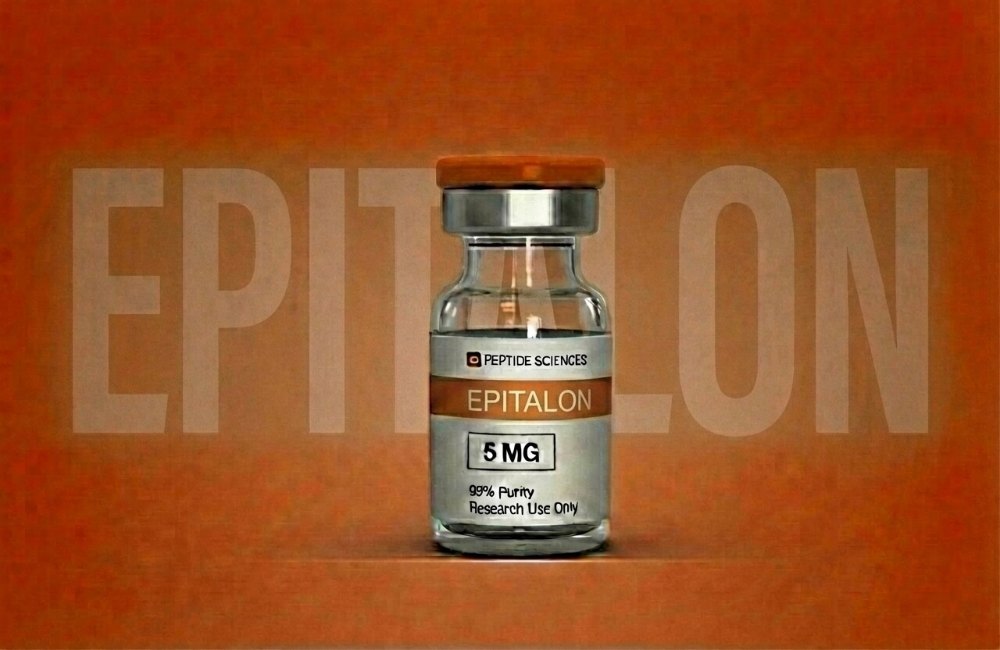
Epitalon (AEDG)
Benefits, Dosing, & Research 2026

Epitalon is a short synthetic peptide that activates telomerase — the enzyme your cells use to rebuild the protective caps on your chromosomes. Interest in Epitalon centers on its potential to slow cellular aging, support melatonin production, and extend healthy cell lifespan. The research base spans 25 years and includes one published human clinical trial, but long-term human safety data does not exist, and Epitalon is not approved for therapeutic use in the United States.
Key takeaways
- Epitalon (AEDG) activates telomerase by increasing expression of the hTERT gene, which rebuilds telomeres — a recognized biomarker of cellular aging.
- In a published human trial of 162 patients with retinitis pigmentosa, Epitalon improved visual acuity and expanded the visual field in 90% of participants, with no reported side effects (Khavinson et al., 2002).
- Animal studies show a 12.3% increase in maximum lifespan in SHR mice and a 6-fold reduction in leukemia incidence (Anisimov et al., 2003).
- The vast majority of Epitalon research comes from a single institution in St. Petersburg, Russia. Independent Western replication is still limited.
- As of March 2026, Epitalon is classified as a Category 2 bulk drug substance in the United States. An HHS reclassification announcement from February 2026 may change this, but no formal FDA update has been published.
Before you start All peptide protocols require a physician evaluation. Epitalon raises a specific safety question for anyone with a personal or family history of cancer — telomerase activation is a mechanism shared by some malignancies, and this tension has not been fully resolved in human data.
What is Epitalon?
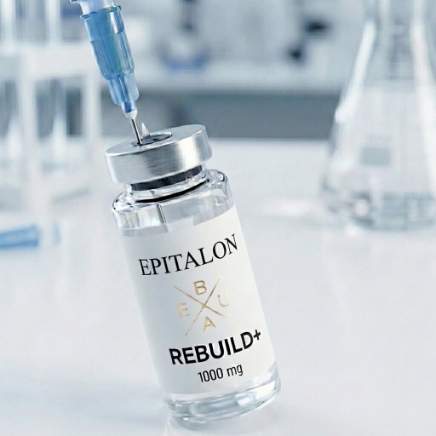
Epitalon is a synthetic tetrapeptide made up of four amino acids: Alanine-Glutamic Acid-Aspartic Acid-Glycine, abbreviated as AEDG. Its molecular weight is 390.35 Da (CAS registry number 307297-39-8).
Professor Vladimir Khavinson and his team at the St. Petersburg Institute of Bioregulation and Gerontology developed Epitalon as the synthetic active fragment of Epithalamin — a polypeptide extract derived from bovine pineal glands. Where Epithalamin is a complex mixture, Epitalon is the isolated, standardized tetrapeptide.
PeptideRx rates the evidence for Epitalon’s telomerase activation as Grade B: limited human trials with strong animal model data and a plausible mechanism.
Learn more about the difference between Epitalon and Epithalamin in the FAQ below.
How does Epitalon work?
Epitalon’s primary action is activating telomerase — the enzyme responsible for rebuilding the protective caps (telomeres) on your chromosomes.
Here’s the chain of events:
Epitalon binds to DNA promoter sequences (ATTTG/ATTTC motifs) → hTERT gene expression increases → telomerase production rises → telomerase rebuilds shortened telomeres → cells can continue dividing past their normal limit
Every time a cell divides, its telomeres get slightly shorter. After roughly 50 divisions — what scientists call the Hayflick limit — most human cells stop dividing and enter senescence. Telomere shortening is one of twelve recognized hallmarks of aging.
Beyond telomerase, Epitalon works through several secondary pathways:
- Melatonin synthesis: Epitalon acts on the AANAT/pCREB signaling pathway in pineal gland cells, stimulating your body’s own melatonin production.
- Antioxidant enzymes: Epitalon upregulates superoxide dismutase-1 (SOD-1), glutathione peroxidase, and catalase through the Nrf2/Keap1 pathway.
- Epigenetic activity: Epitalon binds to histone H1 proteins and interacts with specific DNA sequences in gene promoter regions.
One honest note: despite 25 years of research, Epitalon’s full mechanism of action remains unclear. The 2025 systematic review by Araj et al., published in the International Journal of Molecular Sciences (PMC11943447), confirmed this gap. Epitalon clearly does multiple things at the cellular level — the complete picture has not yet been mapped.
Learn more about telomere biology and why telomere length matters for cellular aging.
What does the research show?
Key takeaways — research
- Epitalon-treated human fibroblasts continued dividing through the 44th cell passage; untreated cells stopped at the 34th (Khavinson et al., 2003).
- Maximum lifespan increased 12.3% in SHR mice; leukemia incidence dropped 6-fold in the same study (Anisimov et al., 2003).
- The strongest human evidence comes from retinal disease: 90% of patients with retinitis pigmentosa showed improved vision in a 162-person trial (Khavinson et al., 2002).
- A 2025 Brunel University study (Al-Dulaimi et al., PMC12411320) found that Epitalon uses different telomere-lengthening mechanisms in normal cells versus cancer cells — a finding relevant to safety.
Longevity and lifespan extension
The key lifespan data comes from animal models, not humans.
Anisimov et al. (2003) administered Epitalon to 54 female SHR mice from age 3 months until natural death. Maximum lifespan increased 12.3% (p < 0.01). The longest-surviving 10% of mice lived 13.3% longer than controls. Leukemia incidence dropped 6-fold compared to the untreated group.
In fruit fly (Drosophila melanogaster) models, Epitalon extended lifespan 11–16% at concentrations 1,000 to 5,000 times lower than the effective dose of Epithalamin (Khavinson et al., 2000).
No controlled human longevity trials exist for Epitalon. A 12-year observational study of 70 elderly adults using the parent extract Epithalamin — not synthetic Epitalon — reported a 28% decrease in mortality (Khavinson and Morozov, 2003). That distinction matters when interpreting the finding.
Telomere elongation (cell studies)
In the foundational 2003 study (Khavinson et al., PMID 12937682), Epitalon-treated human fetal fibroblasts continued dividing through the 44th cell passage. Untreated controls stopped at the 34th. Epitalon also produced a 2.4-fold increase in telomere length in human lung fibroblasts.
A 2025 study from Brunel University (Al-Dulaimi et al., PMC12411320) added important nuance. Epitalon increased telomere length in both normal cells and cancer cell lines — but through different mechanisms. Normal cells relied on telomerase upregulation. Cancer cells activated the Alternative Lengthening of Telomeres (ALT) pathway instead. This difference is directly relevant to the cancer safety question discussed in the side effects section.
Retinal health and vision
Epitalon’s strongest human evidence comes from a clinical trial in 162 patients with retinitis pigmentosa (a degenerative retinal disease) conducted by Khavinson et al. (2002, PMID 12195242). Epitalon improved visual acuity and expanded the visual field in 90% of treated patients. No side effects were reported.
Epitalon shares a common embryonic origin with retinal tissue, which may explain why retinal effects appear specifically in the human data. A 2025 study (Gatta et al.) also showed that Epitalon restored delayed wound healing in an in vitro model of diabetic retinopathy by reducing oxidative stress in retinal pigment epithelial cells.
Sleep, circadian rhythm, and melatonin
Epitalon restored normal evening melatonin secretion and circadian cortisol rhythms in aging rhesus monkeys (Khavinson et al., 2001). One small sublingual study in 75 elderly participants showed a 1.6-fold increase in melatonin production after a 20-day cycle.
A note on the data: most circadian research uses Epithalamin (the pineal extract), not pure synthetic Epitalon. The effects are mechanistically plausible given Epitalon’s demonstrated action on the AANAT pathway, but independent confirmation with synthetic Epitalon is limited.
Antioxidant activity and skin aging
Epitalon increased the activity of superoxide dismutase (SOD), glutathione peroxidase, and glutathione-S-transferase in aging rat models. In aging skin fibroblasts in vitro, Epitalon inhibited MMP9 protein synthesis — a mechanism that may help preserve skin structural integrity. Epitalon also reduced chromosomal aberrations in bone marrow cells by 17.1% in SHR mice (Anisimov et al., 2003).
Immune modulation
Epitalon modulated interleukin-2 (IL-2) mRNA levels in hypothalamic tissue and influenced murine thymocyte mitogenic activity in animal models. Epitalon also recovered thymic structure in chickens after neonatal hypophysectomy.
Data gap: No human clinical trials exist for Epitalon’s effects on musculoskeletal recovery, cardiovascular health, or cognitive function. Human immune data for synthetic Epitalon specifically is not available.
Research limitations
The evidence base is real — and its constraints are equally real.
The vast majority of published Epitalon research originates from a single institution: the St. Petersburg Institute of Bioregulation and Gerontology, primarily under Vladimir Khavinson’s supervision. Independent Western replication of the key findings is still sparse. The 2025 Brunel University telomere study represents one of the first significant independent investigations outside that group.
Many earlier studies also used Epithalamin rather than pure synthetic Epitalon, making it difficult to isolate the effects of the AEDG tetrapeptide specifically.
Learn more about the evidence hierarchy for peptide research and what Grade B evidence means.
Epitalon vs. alternatives
| Peptide | Primary mechanism | Human evidence level | Typical dose | Stacking with Epitalon |
|---|---|---|---|---|
| Epitalon (AEDG) | Telomerase activation, melatonin synthesis | Limited human trials + strong animal data | 5–10 mg/day SQ, 10–20 day cycles | N/A |
| Thymalin | Thymic immune regulation | Observational cohort data (12-year study) | Varies by protocol | Strong — published mortality data (Khavinson & Morozov, 2003) |
| BPC-157 | Tissue repair, angiogenesis, GI protection | Primarily animal studies | 250–500 mcg/day SQ | Rationale-based only; no clinical data |
| Melatonin (oral) | Circadian regulation, antioxidant | Extensive human data | 0.5–5 mg oral | Complementary; distinct mechanism |
| NAD+ precursors (NMN/NR) | NAD+ restoration, sirtuin activation | Growing human trial data | 250–1,000 mg/day oral | No telomerase activation; mechanistically distinct |
Epitalon vs. melatonin: Epitalon stimulates your own melatonin production through the pineal gland. Oral melatonin supplements the hormone directly. In Drosophila lifespan studies, Epitalon produced comparable lifespan extension at concentrations approximately 16,000 times lower than melatonin (Khavinson, 2000). The two work through overlapping but distinct pathways.
Epitalon vs. Epithalamin: Epithalamin is the multi-peptide bovine pineal gland extract. Epitalon is the isolated synthetic tetrapeptide fragment. Studies comparing telomere effects in blood cells of adults ages 60–80 showed comparable efficacy between the two. Synthetic Epitalon offers standardization advantages over the natural extract.
Epitalon vs. NAD+ precursors: NMN and NR boost cellular NAD+ levels and activate sirtuins. They do not activate telomerase. Epitalon does not boost NAD+ levels. These are mechanistically distinct approaches targeting different hallmarks of aging.
Learn more about how to choose between telomere-targeted and NAD+ approaches.
Dosing and administration
Important: All dosing information below reflects published research protocols only, not prescribing recommendations. Consult a licensed physician before initiating any peptide protocol.
Published research protocols
| Protocol | Daily dose | Duration | Cycle frequency | Total per cycle |
|---|---|---|---|---|
| Standard (Russian Protocol) | 10 mg/day SQ | 10 days | 1–2× per year | 100 mg |
| Extended protocol | 5 mg/day SQ | 20 days | 1–2× per year | 100 mg |
| Ukrainian Pulsed Protocol | 10 mg SQ on days 1, 5, 9, 13, 17 | 17 days | 1–2× per year | 50 mg |
Published research consistently uses 5–10 mg per day administered subcutaneously for 10–20 consecutive days. Neither protocol represents an FDA-approved dosing guideline.
Evening administration (near bedtime) may offer additional benefit by aligning with Epitalon’s effect on pineal melatonin production. No published study has shown greater benefit at doses above 20 mg per day.
Epitalon works on a cyclical, not continuous, basis. Short-term courses appear sufficient to activate telomerase and restore melatonin secretion. Continuous daily dosing has not shown improved outcomes in published data.
Data gap: No dose-by-body-weight calculations have been validated in human studies. Commonly reported dosing ranges come from clinical protocols and animal data extrapolation.
Administration routes compared
| Route | Evidence base | Relative bioavailability | Typical dose | Best use case |
|---|---|---|---|---|
| Subcutaneous injection | Strong — basis of all major studies | Highest | 5–10 mg/day | Standard research protocol |
| Intramuscular injection | Moderate — used in some clinical trials | High | 5–10 mg/day | Clinical settings |
| Intranasal spray | Limited — faster CNS onset (~1.5 hours) | Moderate | Varies | Circadian/sleep focus |
| Sublingual | One human study (0.5 mg/day) | Low–moderate | 0.5 mg/day | Convenience |
| Oral | Minimal — high GI degradation expected | Low (unverified) | Not established | Not supported by evidence |
Subcutaneous injection is the only administration route with consistent published data. All major Epitalon studies — the SHR mouse lifespan study, the retinitis pigmentosa trial, and the fibroblast telomere studies — used injectable delivery.
Oral Epitalon formulations exist commercially, but no peer-reviewed study has validated oral bioavailability. As a tetrapeptide, Epitalon is expected to undergo significant enzymatic degradation in the gastrointestinal tract.
Reconstitution guide
For a standard 10 mg lyophilized vial, add 2.0 mL of bacteriostatic water to yield a concentration of 5 mg/mL. Inject the water slowly along the vial wall and swirl gently until dissolved. Do not shake the vial.
Storage:
- Lyophilized (unreconstituted): −20°C for long-term storage (stable 24–36 months). Refrigeration at 2–8°C is acceptable short-term.
- Reconstituted: Refrigerate at 2–8°C. Use within 20–30 days. Avoid freeze-thaw cycles. Protect from light.
Subcutaneous injection uses a 28–31 gauge insulin syringe with a 5/16″ to 5/8″ needle. Rotate injection sites daily (abdomen, thighs, upper arms). Clean both the vial stopper and the injection site with an alcohol swab before each use.
Epitalon does not require injection at a specific injury site. It works systemically through telomerase and neuroendocrine pathways.
Learn more about subcutaneous injection technique and peptide reconstitution.
Side effects and safety
Epitalon’s safety profile appears favorable in published data — with the important caveat that long-term human safety data does not exist.
| Side effect | Frequency in published data | Source |
|---|---|---|
| Injection-site redness/swelling | Common across all injectable peptides | General injectable peptide literature |
| Vivid dreams / altered sleep patterns | User-reported; not documented in trials | Community reports |
| Mild headache (first days of cycle) | User-reported; not documented in trials | Community reports |
| Serious adverse events | None reported in published trials | Khavinson et al., 2002 (n=162) |
In the 162-patient retinitis pigmentosa trial, zero side effects were reported (Khavinson et al., 2002). Animal studies spanning months of administration also reported no significant adverse effects.
The Epitalon paradox: telomerase and cancer
Telomerase activation raises a legitimate question. Cancer cells rely on telomerase to maintain their ability to divide indefinitely. If Epitalon activates telomerase, could it promote tumor growth?
Preclinical data points in the opposite direction. Epitalon reduced leukemia incidence 6-fold in SHR mice (Anisimov et al., 2003) and inhibited spontaneous mammary tumor development in HER-2/neu transgenic mice (Anisimov et al., 2002).
A 2025 Brunel University study (Al-Dulaimi et al., PMC12411320) proposed a potential resolution: Epitalon appears to activate telomerase in normal cells but triggers the ALT (Alternative Lengthening of Telomeres) pathway in cancer cells, which operates independently of telomerase. This differential mechanism is a proposed explanation from a single study — not a confirmed safety guarantee.
Important: Anyone with a history of cancer or active malignancy should only consider Epitalon under direct oncology supervision.
Known safety gaps (per 2025 Araj et al. systematic review):
- Long-term human toxicity data: not established
- Genotoxicity studies: not conducted
- Drug-drug interaction data: not available
- Reproductive toxicity: not studied in humans
Learn more about the Epitalon paradox and what the current cancer safety data actually shows.
Legal status (2026)
Epitalon is not approved by the FDA for human therapeutic use.
In October 2023, the FDA classified Epitalon as a Category 2 bulk drug substance, restricting compounding pharmacies from preparing Epitalon under Section 503A regulations.
In February 2026, HHS Secretary Robert F. Kennedy Jr. announced that approximately 14 of the 19 peptides on the Category 2 list — including Epitalon — would be moved back to Category 1 status. As of March 2026, the FDA has not published its formal updated list. If reclassified to Category 1, licensed compounding pharmacies would again be able to prepare Epitalon under physician prescription.
Epitalon is not specifically named on the World Anti-Doping Agency (WADA) 2026 Prohibited List. The WADA list is not exhaustive, however, and substances not specifically named may still fall under broader prohibited categories. Athletes should consult a sports medicine physician or check GlobalDRO.com before using any peptide in a competitive context.
Data verified: March 2026. Regulatory status is subject to change. Bookmark this page or check FDA.gov for updates.
Learn more about the FDA’s 503A bulk drug substance framework and how peptide reclassification works.
Epitalon stacking
| Stack combination | Evidence level | Notes |
|---|---|---|
| Epitalon + Thymalin | Published clinical data | 4.1-fold reduction in mortality over 12 years (Khavinson & Morozov, 2003); strongest evidence for any Epitalon stack |
| Epitalon + GHK-Cu | Rationale-based only | GHK-Cu targets extracellular matrix; Epitalon works intracellularly. No published study has tested this combination. |
| Epitalon + BPC-157 or Semax | Community-reported only | No published data supports specific synergy. Discuss with a licensed physician before combining. |
| Epitalon + GH secretagogues (CJC-1295/Ipamorelin) | No clinical data | No peer-reviewed study has investigated this combination. |
The Epitalon-Thymalin combination is the only stack supported by published clinical data. Thymalin (a thymic peptide) targets immune regulation, while Epitalon targets telomere and circadian pathways. A common protocol administers Thymalin in the morning and Epitalon in the evening.
Learn more about the Thymalin-Epitalon combination protocol and the 12-year mortality data.
The bottom line
Epitalon has one of the more substantive research bases among research peptides — 25 years of data, a plausible mechanism, and one published human clinical trial. The retinal disease data is the strongest, and the animal lifespan data is consistent across multiple models. The main limitations are real: most research comes from a single institution, long-term human safety data does not exist, and the FDA’s current classification restricts access through compounding pharmacies. If you’re considering Epitalon, the honest starting point is a conversation with a licensed physician who can weigh the evidence against your specific health history — particularly if you have any history of malignancy.
Frequently Asked Questions
What is the difference between Epitalon and Epithalamin?
Epithalamin is a multi-peptide extract derived from bovine pineal glands. Epitalon is the isolated synthetic tetrapeptide fragment (Ala-Glu-Asp-Gly) of that extract. Blood cell studies in adults ages 60–80 showed comparable telomere effects between the two, but synthetic Epitalon offers greater standardization and batch consistency.
Can Epitalon be taken orally?
No — not with confidence in bioavailability. Oral Epitalon formulations exist commercially, but no peer-reviewed study has validated oral bioavailability for this tetrapeptide. Significant enzymatic degradation in the gastrointestinal tract is expected. Subcutaneous injection remains the only evidence-supported administration route.
How long before Epitalon shows results?
Circadian and sleep-related effects may become noticeable within a 20-day cycle, based on sublingual study data showing a 1.6-fold melatonin increase. Telomere-level changes operate over months to years. No validated human timeline for telomere effects exists.
Is Epitalon safe for cancer patients or survivors?
No clear answer exists yet. Preclinical data shows tumor inhibition, but telomerase activation raises a theoretical oncogenic concern. The 2025 Brunel University study proposed that Epitalon may use different mechanisms in normal versus cancer cells, but this requires independent confirmation. Anyone with a personal history of cancer should only consider Epitalon under active oncology supervision.
Does Epitalon require a prescription in the United States?
As of March 2026, Epitalon does not require a prescription for purchase as a research peptide, but it is classified as a Category 2 bulk drug substance — meaning licensed compounding pharmacies cannot legally prepare it for human use under Section 503A. If the anticipated reclassification to Category 1 is formalized by the FDA, compounding under physician prescription would again be permitted.
What is the “Epitalon paradox”?
The Epitalon paradox refers to the apparent tension between telomerase activation (a mechanism cancer cells also use) and Epitalon’s preclinical tumor-reduction data. A 2025 Brunel University study proposed that Epitalon activates telomerase in normal cells but triggers the ALT pathway in cancer cells — a mechanism that does not depend on telomerase. This proposed resolution has not yet been independently confirmed.
What stacking combination has the strongest evidence?
Epitalon combined with Thymalin is the only combination supported by published clinical data. A 12-year observational study (Khavinson and Morozov, 2003) reported a 4.1-fold reduction in mortality when elderly patients received both compounds. All other Epitalon stacking combinations are rationale-based or community-reported, with no supporting clinical trials.
Why does most Epitalon research come from one institution?
The St. Petersburg Institute of Bioregulation and Gerontology, where Professor Vladimir Khavinson developed Epitalon, remains the primary publisher of Epitalon research. Independent replication in Western institutions is still limited. The 2025 Brunel University telomere study represents one of the first significant investigations conducted outside that group.
Considering peptide therapy? Consult a licensed physician to discuss whether telomerase-targeted peptide therapy fits your health goals and medical history.
References
- Araj SK, Brzezik J, Mądra-Gackowska K, Szeleszczuk Ł. Overview of Epitalon — highly bioactive pineal tetrapeptide with promising properties. Int J Mol Sci. 2025;26(6):2691. doi:10.3390/ijms26062691. PMC11943447.
- Al-Dulaimi S, Thomas R, Matta S, Roberts T. Epitalon increases telomere length in human cell lines through telomerase upregulation or ALT activity. Biogerontology. 2025;26(5):178. PMC12411320.
- Anisimov VN, Khavinson VKh, Popovich IG, et al. Effect of Epitalon on biomarkers of aging, life span and spontaneous tumor incidence in female Swiss-derived SHR mice. Biogerontology. 2003;4(4):193-202. PMID: 14501183.
- Khavinson VKh, Bondarev IE, Butyugov AA. Epithalon peptide induces telomerase activity and telomere elongation in human somatic cells. Bull Exp Biol Med. 2003;135(6):590-592. PMID: 12937682.
- Khavinson V, Razumovsky M, Trofimova S, Grigorian R, Razumovskaya A. Pineal-regulating tetrapeptide epitalon improves eye retina condition in retinitis pigmentosa. Neuro Endocrinol Lett. 2002;23(4):327-332. PMID: 12195242.
- Anisimov VN, Khavinson VKh, Provinciali M, et al. Inhibitory effect of the peptide epitalon on the development of spontaneous mammary tumors in HER-2/neu transgenic mice. Int J Cancer. 2002;101(1):7-10.
- Khavinson VKh, Morozov VG. Peptides of pineal gland and thymus prolong human life. Neuro Endocrinol Lett. 2003;24(3-4):233-240.
- Khavinson VKh. Peptides and ageing. Neuro Endocrinol Lett. 2002;23(Suppl 3):11-144. PMID: 12374906.
- Gatta M, Dovizio M, Milillo C, et al. The antioxidant tetrapeptide Epitalon enhances delayed wound healing in an in vitro model of diabetic retinopathy. Stem Cell Rev Rep. 2025;21:1822-1834.
- Ullah S, Haider Z, Perera CD, et al. Epitalon-activated telomerase enhance bovine oocyte maturation rate and post-thawed embryo development. Life Sci. 2025;362:123381.
Disclaimer: PeptideRx provides physician-reviewed educational content about peptide therapy. PeptideRx does not provide medical advice, diagnosis, or treatment. Epitalon is not FDA-approved for human therapeutic use. All dosing information reflects published research protocols, not prescribing recommendations. Peptides are available through licensed compounding pharmacies under physician prescription, subject to current FDA classification (see Section 503A/503B of the Federal Food, Drug, and Cosmetic Act). Consult a licensed healthcare provider before making any decisions about peptide therapy. Content medically reviewed [date]. Evidence grading criteria are working definitions pending formal review.