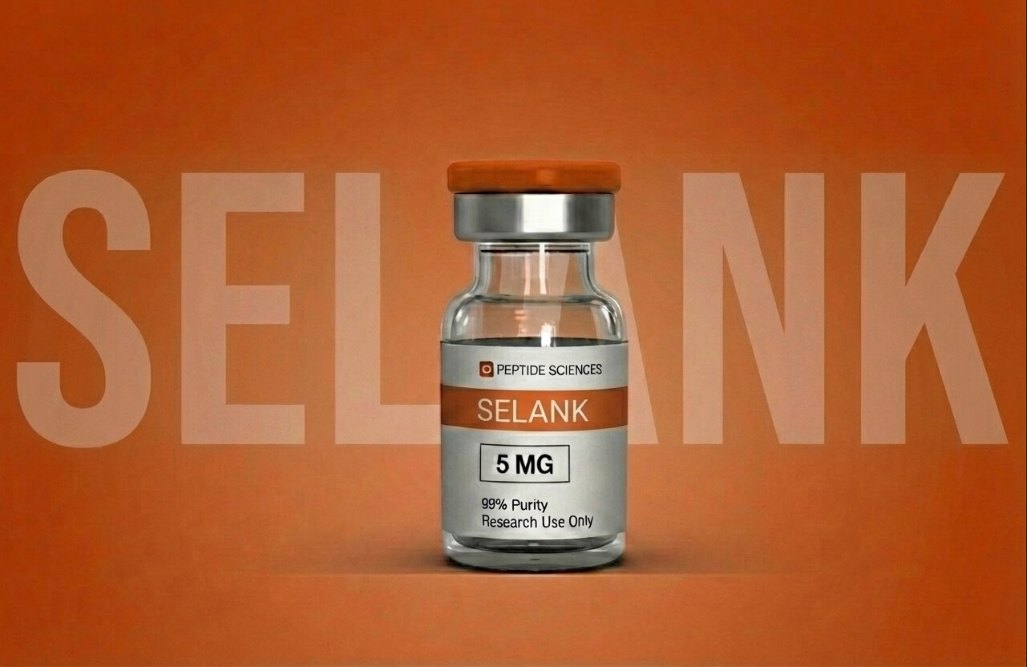
Selank
Benefits, Dosing, and Research

Selank is a synthetic peptide developed in Russia that reduces anxiety without the sedation, dependence, or cognitive impairment associated with benzodiazepines. Two clinical trials have shown it performs comparably to prescription-grade anxiolytics — while also improving mental clarity, something no benzodiazepine does. The research is real but limited: all published human data comes from Russia, no trial has run longer than 30 days, and international replication has not happened yet.
Key takeaways
- Selank is a 7-amino-acid peptide derived from tuftsin, a naturally occurring human immune peptide, developed by the Institute of Molecular Genetics at the Russian Academy of Sciences
- Two clinical trials (N=62 and N=60) showed anxiolytic effects comparable to the prescription benzodiazepines medazepam and phenazepam — with an added cognitive benefit that benzodiazepines do not produce
- No sedation, tolerance, dependence, or withdrawal has been documented in any published study; the most common side effect is mild nasal irritation
- Selank is an approved prescription anxiolytic in Russia; in the United States, HHS Secretary RFK Jr. announced expected Category 1 reclassification in February 2026 (pending formal FDA publication)
- The single most important evidence gap: no safety or efficacy data exists beyond 30 days of use
Before you start All peptide protocols require a physician evaluation. Selank acts on the same receptor system as benzodiazepines — anyone currently taking benzodiazepines, sleep medications, or other CNS depressants should discuss interactions with a licensed physician before use.
What is Selank?
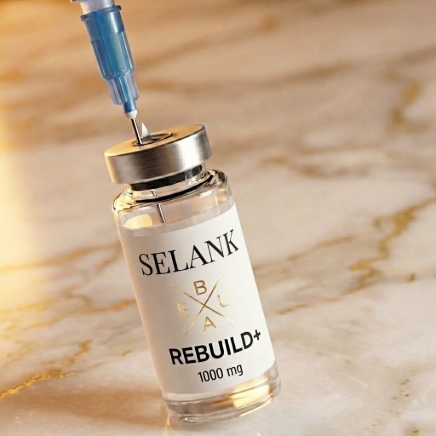
Selank is a short synthetic peptide — seven amino acids long — with the sequence Thr-Lys-Pro-Arg-Pro-Gly-Pro. Its molecular weight is 751.88 Da and its CAS number is 129954-34-3.
Researchers built it from tuftsin, a naturally occurring fragment found in the heavy chain of human immunoglobulin G. Tuftsin functions primarily as an immune regulator with minimal direct brain activity. Scientists at the Institute of Molecular Genetics extended tuftsin’s structure by adding three amino acids at one end, producing a new molecule with dramatically improved metabolic stability and a strong anxiolytic profile that tuftsin itself does not have.
Selank is available in several forms. The diacetate form appears in most research studies. The acetate salt form (referenced as TP-7 in FDA documents) was the version reviewed during US regulatory proceedings. NA-Selank Amidate is a modified version with structural additions claimed to improve brain penetration and extend the half-life — but no direct clinical study has been conducted on it. Every piece of published human evidence belongs to the original Selank molecule.
| Form | Molecular weight | Modification | Clinical trial data? |
|---|---|---|---|
| Selank (base) | 751.88 Da | None (parent compound) | Yes — Russian clinical trials |
| Selank diacetate | ~872 Da | Diacetate counter-ion | Most preclinical studies |
| NA-Selank Amidate | ~864 Da | N-acetyl + C-terminal amide | None — extrapolated from parent |
Learn more about how Selank differs from its modified derivatives.
How does Selank work?
Selank’s primary mechanism is allosteric modulation of GABA-A receptors — the same receptor family targeted by benzodiazepines. The critical difference is where it acts.
Benzodiazepines bind directly to a specific site on the GABA-A receptor. Selank doesn’t use that site. It modulates the receptor through a different pathway, changing how GABA — your brain’s main calming chemical — interacts with the receptor.
The signaling chain looks like this:
Selank → binds GABA-A receptor allosterically → alters receptor sensitivity to GABA → GABA stays active longer → calming effect without direct sedation
Volkova et al. (2016, PMC4757669) mapped this in detail. Within one hour of intranasal delivery in rats, Selank altered the expression of 45+ genes involved in GABAergic neurotransmission in the frontal cortex. Key findings included approximately 20-fold downregulation of GABA-A receptor subunit genes Gabre and Gabrq, and upregulation of Gabrb3. Selank also downregulated genes responsible for clearing GABA from synapses — meaning GABA lingers longer at the receptor.
Beyond GABA: three additional mechanisms
Selank’s nootropic effects — the cognitive improvement that distinguishes it from benzodiazepines — come from activity outside the GABA system.
Monoamine modulation. Selank upregulates dopamine receptor genes (Drd1a, Drd2, Drd3) and serotonin receptor genes (Htr3a, Htr1b). These changes support the reported improvements in mood, motivation, and mental clarity.
Enkephalin stabilization. Selank inhibits the enzymes that break down leu-enkephalin, an endogenous opioid peptide involved in mood regulation. Zozulia et al. (2008, PMID 18454096) directly measured leu-enkephalin levels in 62 patients with generalized anxiety disorder and found these levels increased during Selank treatment, correlating with clinical improvement. Patients with lower baseline levels showed the most benefit.
BDNF upregulation. Selank increases brain-derived neurotrophic factor (BDNF) in the hippocampus — the region central to learning and memory. Kolik et al. (2019) showed Selank prevented ethanol-induced BDNF dysregulation in rats, preserving cognitive function under conditions of neurological stress.
Learn more about how Selank’s multi-target mechanism compares to benzodiazepines.
What does the research show?
Key takeaways — research
- Two controlled clinical trials (N=62, N=60) showed Selank produced comparable anxiolytic effects to medazepam and phenazepam — with better tolerability
- Approximately 40% of patients in one trial were “rapid responders” whose anxiety scores dropped from 20.3 to 7.0 within three days
- Selank’s anxiolytic effects persisted approximately one week after a 14-day course ended
- A rat study (Kasian et al., 2017) found combining Selank with diazepam normalized anxiety indicators 8.9-fold better than diazepam alone under chronic stress conditions
- All human data originates from Russian clinical trials; no international replication exists
Generalized anxiety disorder
The landmark human trial (Zozulia et al., 2008, PMID 18454096) randomized 62 patients with generalized anxiety disorder and neurasthenia to either Selank (30 patients) or medazepam (32 patients). Outcomes were measured using the Hamilton Anxiety Rating Scale (HARS), the Zung self-rating scale, and Clinical Global Impression (CGI).
Selank produced anxiolytic effects comparable to medazepam. It also produced anti-fatigue and mild psychostimulant effects that medazepam did not.
A second controlled trial (Medvedev et al., 2014) compared Selank to phenazepam in 60 patients with anxiety disorders. Selank showed similar anxiolytic efficacy with better tolerability.
Two distinct response patterns. An observational analysis identified two groups within the clinical data. Approximately 40% of patients were “rapid responders” — their HARS scores dropped from 20.3 to 7.0 by day three. The remaining 60% were conventional responders, with HARS scores declining from 16.1 to 6.2 by day 14. Both groups reached similarly low final scores through different timelines.
Residual effect. Neznamov et al. (2014) documented that Selank’s anxiolytic benefit persisted for approximately one week after completing a 14-day treatment course.
PeptideRx rates the evidence for Selank’s anxiolytic effects as Grade B: limited human trial data from Russian clinical trials demonstrates efficacy comparable to benzodiazepines, with a well-characterized mechanism; international replication is absent.
Selank combined with diazepam
Kasian et al. (2017, PMC5322660) tested Selank and diazepam — alone and combined — in rats under unpredictable chronic mild stress (UCMS), a model that mirrors persistent low-grade human anxiety.
Combining Selank (300 mcg/kg) with diazepam (1 mg/kg) normalized anxiety indicators to pre-stress baseline. Open arm time on the elevated plus maze improved 8.9-fold versus saline controls under UCMS conditions. Neither compound alone achieved that level of normalization.
Important: This is animal data. The practical implication — that Selank may allow lower benzodiazepine doses while maintaining anxiolytic effect — is plausible but not established in human trials. Any combination use requires physician oversight.
Cognitive and nootropic effects
Kozlovskii et al. (2003) demonstrated that Selank activated learning processes in rats on the first day of administration.
A 2020 fMRI study (PMID 32342318) in 52 human subjects found Selank altered functional connectivity between the right amygdala and temporal cortex — regions involved in emotional processing and anxiety regulation. This provides a human neuroimaging correlate for the reported “calm focus” effect.
BDNF upregulation in the hippocampus (Kolik, 2019) offers the mechanistic basis: BDNF supports new neuron growth and strengthens existing synaptic connections — the biological underpinning of learning and memory.
Antiviral and immune effects
Ershov et al. (2009) demonstrated that Selank suppressed H3N2 influenza virus replication and induced interferon-alpha production in preclinical models. Selank’s origin from tuftsin — itself an immune regulator — explains this activity. Andreeva et al. (2010) and Uchakina et al. (2008) provided additional immunomodulatory data.
Important: All antiviral and immune data comes from preclinical studies. No controlled human trial has tested Selank for immune or antiviral applications.
Where the evidence falls short
No published data exists for Selank’s effects on musculoskeletal tissue, gastrointestinal function, cardiovascular outcomes, or skin and wound healing. Selank acts on the central nervous system. For tissue repair, BPC-157 is the relevant peptide. For GI applications, BPC-157 is similarly better suited. Selank is not the right choice for these goals.
Learn more about which peptides have evidence for tissue repair and recovery.
Who uses Selank and why
People explore Selank for several distinct reasons, and the research supports some more than others.
Generalized anxiety and stress management is the primary use case. The published clinical data directly addresses this. Adults seeking anxiety relief without the sedation, dependence risk, or cognitive dulling associated with benzodiazepines find Selank’s profile attractive.
Cognitive enhancement and “calm focus” is the second most common use. The dual effect — anxiety down, mental clarity up — is what distinguishes Selank from both benzodiazepines (which impair cognition) and stimulants (which can worsen anxiety). Knowledge workers and students report using it situationally for high-pressure tasks, given the 15 to 30-minute intranasal onset.
Benzodiazepine tapering is a use case derived from the Kasian 2017 finding. The hypothesis: Selank may allow effective anxiety control at lower benzodiazepine doses. This application carries the most clinical risk and requires physician oversight.
Mental fatigue and burnout is supported by the antiasthenic effects documented in Zozulia 2008 — a benefit that medazepam did not produce in the same trial.
Important: HHS Secretary RFK Jr. mentioned Selank among peptides expected to receive Category 1 reclassification during Episode #2461 of the Joe Rogan Experience (February 27, 2026). Competitive athletes should note that WADA’s S0 catch-all clause may apply — discussed in the legal status section.
Learn more about how Selank compares to other options for anxiety management.
Dosing and administration
No FDA-approved dosing exists for Selank. The ranges below reflect published Russian clinical trial protocols and community-derived extensions of those protocols. Consult a licensed physician before beginning any peptide protocol.
Administration routes compared
| Route | Bioavailability | Onset | Clinical precedent | Recommended? |
|---|---|---|---|---|
| Intranasal | Moderate to high (direct CNS access via olfactory pathway) | 15–30 minutes | All Russian clinical trials | Yes — standard route |
| Subcutaneous (SubQ) | High | 20–40 minutes | Preclinical data; practitioner protocols | Yes — alternative |
| Oral | Very low | N/A | None | No — degraded by digestive enzymes |
| Sublingual | Unknown | Unknown | None | Data gap |
| Topical | Unknown | Unknown | None | Data gap |
Intranasal is the standard route. All Russian clinical trials used intranasal Selank, typically as a 0.15% solution. Intranasal delivery reaches the CNS partially through olfactory nerve transport, bypassing the digestive system.
Intranasal technique. Tilt the head slightly forward — not back. Insert the spray nozzle just inside the nostril and spray gently. Do not sniff aggressively; this pulls the solution past the nasal mucosa into the throat and reduces absorption. Allow 30 to 60 seconds between nostrils. Some people alternate nostrils between doses.
Subcutaneous injection is used when Selank is combined with other injectable peptides in a protocol. Standard SubQ sites — abdomen, outer thigh, upper arm — are all appropriate. Selank acts systemically on the CNS; there is no advantage to injecting near any specific body area.
Oral Selank does not work. Selank is a peptide. Like nearly all peptides, it is broken down by stomach acid and digestive enzymes before reaching the bloodstream. Oral products have no bioavailability validation and should be avoided.
Dosing by indication
| Indication | Route | Dose per administration | Frequency | Daily total |
|---|---|---|---|---|
| Anxiety (clinical trial) | Intranasal | ~450 mcg per nostril | 3× daily | ~2,700 mcg/day |
| Anxiety (community-reported) | Intranasal | 250–500 mcg per nostril | 2–3× daily | 1,000–3,000 mcg/day |
| Cognitive enhancement | Intranasal | 100–250 mcg per nostril | 1–2× daily | 200–1,000 mcg/day |
| General use (injectable) | SubQ | 300–500 mcg | 1–2× daily | 300–1,000 mcg/day |
Research data indicates an optimal range of approximately 0.3 mg/kg body weight for anxiolytic effect. Adverse event rates remain under 10% at doses of 0.2 mg/kg or below. Above 0.3 mg/kg, side effect frequency increases.
Onset timeline
| Effect | Typical onset |
|---|---|
| Acute anxiety relief (intranasal) | 15–30 minutes |
| Mental clarity improvement | 1–2 weeks of consistent use |
| Nootropic / cognitive enhancement | 4–6 weeks |
| Mood stabilization | 8–12 weeks |
Cycle length. Most protocols run 4 to 6 weeks on, followed by 2 to 4 weeks off. The off-cycle period allows baseline reassessment and prevents potential receptor adaptation. No tolerance was documented in 14-day clinical studies. Whether tolerance develops beyond 30 days of use is unknown — this is a meaningful data gap.
Learn more about how Selank protocols compare to other anxiolytic peptide cycles.
Reconstitution and preparation
Intranasal spray preparation
For nasal spray use, reconstitute a 5 mg vial with 2 mL of bacteriostatic water. This produces a concentration of 2,500 mcg/mL. A standard nasal spray device delivers approximately 100 mcL per spray, yielding 250 mcg per actuation.
Steps:
- Reconstitute the vial using the injectable method below
- Draw the solution into a syringe
- Transfer into a clean nasal spray bottle
- Prime the spray mechanism with 2 to 3 pumps before first use
- Store refrigerated; bring to room temperature briefly before each use
Injectable reconstitution
5 mg vial: Add 3 mL bacteriostatic water → concentration: 1,670 mcg/mL. For a 300 mcg dose, draw 0.18 mL (18 units on a U-100 syringe).
10 mg vial: Add 3 mL bacteriostatic water → concentration: 3,330 mcg/mL. For a 500 mcg dose, draw 0.15 mL (15 units).
Mixing technique: Inject bacteriostatic water slowly along the inside wall of the vial. Do not spray directly onto the powder. Swirl gently. Allow 10 to 20 minutes for full dissolution. Never shake. The final solution should be clear and colorless.
Storage
| State | Temperature | Duration |
|---|---|---|
| Lyophilized (powder) | −18°C or below | 12+ months |
| Lyophilized (powder) | Room temperature | ~3 weeks (during shipping) |
| Reconstituted | 2–8°C (refrigerator) | 14–28 days |
Learn more about reconstitution technique and storage for injectable peptides.
Stacking Selank with other peptides
Selank + Semax: the “calm focus” combination
This is the most widely used Selank combination. Semax is an ACTH(4-10) derivative developed at the same Russian institute as Selank. Semax primarily upregulates BDNF and enhances dopaminergic signaling, making it a focus and motivation compound.
The mechanisms are complementary, not redundant. Selank reduces anxiety and mental noise. Semax sharpens focus and drive. Together, they address two distinct problems that often coexist: anxious rumination and cognitive sluggishness.
Pre-mixed Selank + Semax nasal sprays and injectable blends are commercially available. No direct clinical study has tested the combination. The complementary mechanisms and overlapping tolerability profiles support the rationale, but this remains community-level evidence.
Other documented and proposed combinations
| Stack | Rationale | Evidence level | Key caution |
|---|---|---|---|
| Selank + Semax | Anxiolytic + nootropic: complementary mechanisms | Mechanistic (no direct study) | None documented |
| Selank + diazepam | Enhanced anxiolysis under chronic stress | Published animal study (Kasian 2017) | Monitor for sedation; physician oversight required |
| Selank + DSIP | Anxiety reduction (daytime) + sleep support (nighttime) | Mechanistic only | Timing: Selank AM, DSIP PM |
| Selank + L-Theanine | Dual GABAergic support | Mechanistic only | Mild; low risk |
| Selank + Cerebrolysin | Neuropeptide + neurotrophic combination | Advanced; no primary data | Physician oversight required |
No published data exists for Selank combined with TB-500, BPC-157, KPV, GHK-Cu, or Sermorelin. These compounds target tissue repair or growth hormone secretion — mechanistically unrelated to Selank’s CNS anxiolytic indication.
Interaction cautions: SSRIs (serotonergic overlap; discuss with physician). Sleep medications (additive sedation risk). Other CNS depressants (enhanced effect possible). Alcohol (avoid during Selank use).
Learn more about how to structure a Selank + Semax protocol.
Side effects and safety
Documented side effects by route
| Route | Effect | Frequency | Severity |
|---|---|---|---|
| Intranasal | Mild nasal irritation, throat dryness | Most common | Mild; resolves quickly |
| Intranasal | Headache | Occasional | Mild |
| Intranasal | Transient dizziness, mild fatigue | Rare | Mild |
| SubQ injectable | Injection site redness | <5% | Mild |
| SubQ injectable | Mild flushing | Rare | Mild |
What the safety data actually shows
Across all published studies, Selank has not produced sedation, muscle relaxation, amnesia, tolerance, physical dependence, or withdrawal. This profile is the primary clinical differentiator from benzodiazepines, which commonly produce all of these with repeated use.
Kolomin et al. (2013) reviewed Selank’s available safety data and concluded the peptide is generally well-tolerated in clinical settings at studied doses. At or below 0.2 mg/kg body weight, adverse event rates remain under 10%. At the 0.3 mg/kg level — where anxiolytic efficacy appears highest — adverse event rates stay under 25%.
FDA immunogenicity concern
The FDA flagged immunogenicity as a general concern for peptide compounds during the compounding review process. This concern is not specific to Selank — it applies to all compounded peptides. Peptide impurities in lower-quality products may trigger antibody formation, potentially reducing effectiveness or causing immune reactions over time. This is a quality-control issue, not a compound-specific toxicity finding.
The critical safety gap
Important: The longest published Selank clinical study lasted approximately 14 to 30 days. No long-term safety data beyond this window exists. People using multi-month protocols are operating beyond the evidence base. This is the single most important limitation in Selank’s research record.
Contraindications
- Pregnancy and breastfeeding (no safety data)
- Active cancer (precautionary; no specific data, but the gap means risk cannot be assessed)
- Concurrent use of CNS depressants without physician oversight
- Known hypersensitivity to any component of the peptide
Learn more about how to evaluate peptide safety data and quality.
Legal status (2026)
Regulatory timeline
| Date | Event |
|---|---|
| 2009 | Selank approved as a prescription anxiolytic in Russia |
| September 2023 | FDA places Selank (as Selank acetate / TP-7) on Category 2 of the interim 503A bulks list |
| September 2024 | FDA removes Selank from Category 2 after the nominator withdraws the nomination |
| October/December 2024 | PCAC reviews peptides for potential 503A list inclusion |
| February 27, 2026 | HHS Secretary RFK Jr. announces expected Category 1 reclassification for ~14 peptides; Selank is among those named |
| April 2026 (current) | FDA has not formally published updated guidance; Category 1 status pending |
What Category 1 means — and what it doesn’t
Category 1 does not mean FDA-approved. If Selank receives Category 1 status, licensed compounding pharmacies can prepare it under a physician prescription. Selank would remain an off-label, unapproved compound — not available over the counter and carrying no FDA-reviewed indication.
Legal status by region
| Jurisdiction | Status | Prescription required? |
|---|---|---|
| Russia | Approved prescription anxiolytic | Yes |
| Ukraine | Approved prescription | Yes |
| United States | Category 1 reclassification pending | Yes (compounding Rx) |
| European Union | Not approved; research chemical | No Rx (gray market) |
| United Kingdom | Not approved; research chemical | No Rx (gray market) |
| Canada | Not approved | N/A |
| Australia | Not approved | N/A |
WADA and competitive athletes
Selank is not named on the 2025 or 2026 WADA Prohibited List. However, WADA’s S0 category prohibits any pharmacological substance with no current approval from a governmental regulatory health authority for human therapeutic use.
Selank has no approval from the FDA, EMA, MHRA, TGA, or Health Canada. Whether Russia’s approval satisfies the “any governmental regulatory health authority” clause is legally ambiguous.
Important: If you compete in any WADA-tested sport, assume Selank carries prohibition risk under S0. Contact USADA’s Drug Reference Line at drugreference@usada.org for a definitive ruling before use.
Learn more about WADA’s S0 clause and how it applies to unapproved peptides.
Alternatives to Selank
| Compound | Mechanism | Onset | Dependence risk | Approved? | Sedation | Evidence base |
|---|---|---|---|---|---|---|
| Selank | GABA-A allosteric modulation + enkephalin + BDNF | 15–30 min (intranasal) | None documented | Russia (Rx); US pending | No | Russian clinical trials |
| Semax | BDNF upregulation + dopaminergic | 15–30 min (intranasal) | None documented | Russia (Rx); US pending | No | Russian clinical trials |
| Benzodiazepines | GABA-A direct benzodiazepine-site binding | 15–60 min | High (documented) | Yes (FDA) | Yes | Extensive |
| Buspirone | 5-HT1A partial agonist | 2–4 weeks | Low | Yes (FDA) | Mild | Moderate |
| SSRIs | Serotonin reuptake inhibition | 2–6 weeks | Low (withdrawal possible) | Yes (FDA) | Variable | Extensive |
| L-Theanine | Glutamate modulation + alpha wave promotion | 30–60 min | None | OTC supplement | No | Moderate |
| Ashwagandha | Cortisol modulation + GABAergic | Days to weeks | None | OTC supplement | Mild | Moderate |
Choose Selank over benzodiazepines when dependence risk must be avoided, cognitive function must be preserved, or a non-sedating option is the priority.
Choose benzodiazepines over Selank when severe acute anxiety requires fast, reliable, potent relief — or when international clinical infrastructure and prescribing support matter.
Choose Semax over Selank when focus and cognitive enhancement are the primary goals and anxiety is not the main concern.
Choose both Selank and Semax when the goal is “calm focus” — reducing anxiety while simultaneously improving concentration and mental clarity.
TB-500, BPC-157, Sermorelin, CJC-1295, and Pentadeca Arginate are mechanistically unrelated to Selank. They address tissue repair and growth hormone secretion, not anxiety or cognition. No comparative data with Selank exists for any of these peptides.
Learn more about how to match a peptide to your specific goals.
The bottom line
Selank is the most evidence-supported non-benzodiazepine anxiolytic peptide in current use, with two controlled human trials showing comparable efficacy to prescription benzodiazepines and a documented cognitive benefit that benzodiazepines do not produce. Its safety profile across published studies is genuinely favorable — no dependence, no sedation, no withdrawal — but the longest study lasted about 30 days, so long-term safety is an open question your doctor should factor into any protocol. In the US, access is currently in transition: Category 1 compounding status has been announced but not formally published, so a licensed physician and compounding pharmacy are the right pathway right now. If you’re managing anxiety and want to explore Selank, the evidence supports a conversation with your doctor — and that conversation should start before you source anything.
Frequently asked questions
What is Selank used for?
Selank is used primarily for anxiety reduction and cognitive enhancement. In Russia, it is an approved prescription treatment for generalized anxiety disorder. In the US, it is used as a research compound and, in clinical settings, as an off-label anxiolytic and nootropic peptide under physician supervision.
Is Selank addictive?
No dependence, tolerance, or withdrawal has been documented in any published Selank study. This contrasts sharply with benzodiazepines, which carry well-established addiction risk. The longest clinical study ran approximately 14 to 30 days — whether dependence could develop with longer use is not yet known.
How does Selank compare to benzodiazepines?
Both produce comparable anxiolytic effects in clinical studies. Selank additionally produces nootropic (cognitive-enhancing) effects that benzodiazepines do not. Selank does not cause sedation, muscle relaxation, amnesia, tolerance, or dependence. Benzodiazepines are more reliable for acute severe anxiety but carry significant adverse effects with repeated use.
How long does Selank take to work?
Intranasal Selank produces noticeable anxiety reduction within 15 to 30 minutes. Mental clarity improvements typically appear within 1 to 2 weeks of consistent use. Deeper nootropic effects may take 4 to 6 weeks. Anxiolytic effects have been documented to persist approximately one week after completing a 14-day course (Neznamov et al., 2014).
Can Selank be taken orally?
No. Selank is a peptide degraded by gastric acid and digestive enzymes before it can reach the bloodstream. Oral administration provides essentially no bioavailability. Intranasal spray is the standard route; subcutaneous injection is the alternative.
Is Selank FDA-approved?
No — Selank is not FDA-approved for any indication. It is approved in Russia as a prescription anxiolytic. In the US, HHS Secretary RFK Jr. announced expected Category 1 reclassification in February 2026, which would allow compounding pharmacy preparation under a physician prescription. The FDA has not formally published updated guidance as of April 2026.
What is NA-Selank Amidate?
NA-Selank Amidate is a structurally modified version of Selank with N-acetyl and C-terminal amide groups added to the original sequence. These modifications are claimed to improve stability and brain penetration. No direct clinical study has been conducted on NA-Selank Amidate. All evidence for this form is extrapolated from the original Selank compound.
Is Selank safe for athletes?
Selank is not named on the WADA Prohibited List. However, WADA’s S0 catch-all category prohibits unapproved substances, and Selank has no FDA, EMA, or TGA approval. Competitive athletes in WADA-tested sports should assume prohibition risk and contact USADA directly before use.
Considering peptide therapy for anxiety or cognitive support? A licensed physician can review your health history and discuss whether the existing evidence supports Selank or another option for your situation.
References
- Zozulia AA, Neznamov GG, Siuniakov TS, et al. Efficacy and possible mechanisms of action of a new peptide anxiolytic selank in the therapy of generalized anxiety disorders and neurasthenia. Zhurnal Nevrologii i Psikhiatrii. 2008;108(4):38-48. PMID: 18454096.
- Medvedev VE, Tereshchenko ON, Israelian A, et al. A comparison of the anxiolytic effect and tolerability of selank and phenazepam in the treatment of anxiety disorders. Zhurnal Nevrologii i Psikhiatrii. 2014;114(7):17-22.
- Kasian A, Kolomin T, Andreeva L, et al. Peptide Selank enhances the effect of diazepam in reducing anxiety in unpredictable chronic mild stress conditions in rats. Behavioural Neurology. 2017;2017:5091027. PMC5322660.
- Volkova A, Shadrina M, Kolomin T, et al. Selank administration affects the expression of some genes involved in GABAergic neurotransmission. Frontiers in Pharmacology. 2016;7:31. PMC4757669.
- Filatova E, Shadrina M, Kolomin T, et al. GABA, Selank, and olanzapine affect the expression of genes involved in GABAergic neurotransmission in IMR-32 cells. Frontiers in Pharmacology. 2017;8:89.
- Ershov FI, Uchakin PN, Ershova ON, et al. Antiviral activity of immunomodulator Selank in experimental influenza infection. Voprosy Virusologii. 2009;54(5):19-24.
- Kolik LG, Nadorova AV, Kozlovskaya MM. Efficacy of peptide anxiolytic selank during modeling of withdrawal syndrome in rats with stable alcoholization. Bulletin of Experimental Biology and Medicine. 2019;166(5):616-618.
- Kozlovskii II, Danchev ND, Seredenin SB. The optimizing action of the synthetic peptide Selank on a conditioned active avoidance reflex in rats. Neuroscience and Behavioral Physiology. 2003;33(7):639-643.
- Kolomin TA, Shadrina MI, Slominsky PA, et al. A new generation of drugs: synthetic peptides based on natural regulatory peptides. Neuroscience and Behavioral Physiology. 2013;43(9):1058-1063.
- Andreeva LA, Mezentseva MV, Nagaev IB, et al. The synthetic peptide Selank: the antiviral activity. Doklady Biological Sciences. 2010;431:112-115.
- Functional connectivity changes after Selank administration. PMID: 32342318. 2020.
- Yasenyavskaya AL, et al. The role of the peptide Selank in regulating neurochemical and neuroinflammatory processes. Neurochemical Journal. 2021.
- WADA 2025/2026 Prohibited List. S0: Non-Approved Substances.
- FDA PCAC proceedings, October and December 2024.
Disclaimer: PeptideRx provides physician-reviewed educational content about peptide therapy. PeptideRx does not provide medical advice, diagnosis, or treatment. Selank is not FDA-approved for human therapeutic use. All dosing information reflects published research protocols, not prescribing recommendations. Consult a licensed healthcare provider before making any decisions about peptide therapy.