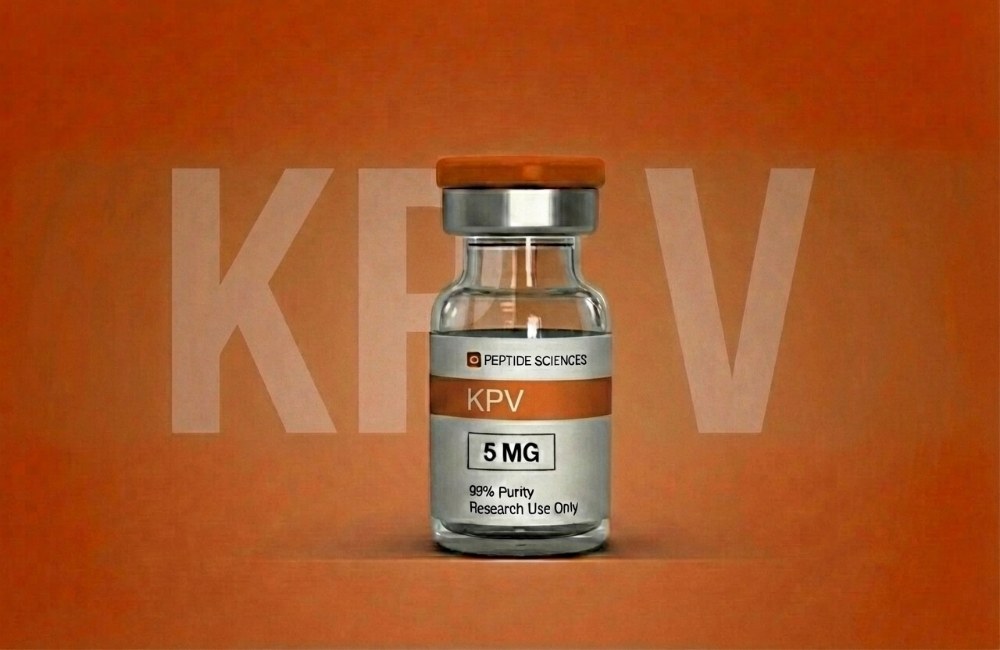
KPV Peptide
What It Is, Researched Benefits, Dosing & Legal Status 2026

KPV is a three-amino-acid peptide fragment that has attracted attention for its potential to reduce gut inflammation — without the hormonal side effects of its parent molecule, alpha-MSH. The research base is real but limited entirely to animal and cell studies. No human clinical trials have been completed for any indication, and its regulatory status in the US is currently in transition. This guide covers what the evidence actually shows, how dosing protocols are structured, and what the legal situation looks like as of 2026.
Key takeaways
- KPV (Lysine-Proline-Valine) is a tripeptide derived from positions 11–13 of alpha-melanocyte-stimulating hormone (alpha-MSH). Its molecular weight is approximately 383.49 Da (Pawar et al., 2017).
- KPV enters cells through the PepT1 transporter — not melanocortin receptors — so it does not cause skin darkening or hormonal side effects associated with full-length alpha-MSH.
- The strongest evidence is for gut inflammation. Dalmasso et al. (2008) found approximately 50% reduction in MPO activity in a mouse colitis model. All evidence remains preclinical.
- The FDA placed KPV on its Category 2 bulk drug substances list in late 2023. HHS Secretary Kennedy announced potential reclassification to Category 1 on February 27, 2026. The formal FDA list update had not been published as of March 11, 2026.
- PeptideRx rates the evidence for KPV’s anti-inflammatory effects as Grade C: primarily animal and in vitro data with no human clinical evidence.
Before you start All peptide protocols require a physician evaluation. KPV has no FDA-approved dosing for any indication, and all clinical protocols currently in use are derived from preclinical animal data — this gap is important to understand before considering its use.
What is KPV?
KPV is a synthetic tripeptide made up of three amino acids: L-Lysine, L-Proline, and L-Valine. It represents the C-terminal fragment — positions 11 through 13 — of alpha-melanocyte-stimulating hormone (alpha-MSH), a 13-amino-acid peptide produced from pro-opiomelanocortin (POMC) in the pituitary gland. Its CAS registry number is 67727-97-3.
Pawar et al. (2017, Journal of Pharmaceutical Sciences) reported KPV’s molecular weight as 383.49 Da. Some sources list values between 342–400 Da depending on the salt form and terminal modifications. Commercially, it is supplied as either an acetate or trifluoroacetic acid (TFA) salt in lyophilized form.
Unmodified KPV degrades within 24 hours in biological environments (Songok et al.). Glycoalkylated KPV variants offer improved proteolytic stability, which is relevant for any application requiring sustained tissue exposure.
The key difference from alpha-MSH: KPV does not bind melanocortin receptors (MC1R, MC3R, or MC5R). Dalmasso et al. (2008) confirmed that KPV does not elevate intracellular cAMP — the downstream signal of melanocortin receptor activation. Full-length alpha-MSH triggers pigmentation, appetite changes, and hormonal effects through these receptors. KPV retains only the anti-inflammatory activity.
Learn more about how KPV compares to other alpha-MSH-derived peptides.
How does KPV work?
KPV’s mechanism starts with a transporter, not a receptor. Understanding this distinction explains both its therapeutic targeting and its lack of pigmentation side effects.
The PepT1 entry pathway
The human peptide transporter 1 (hPepT1) is an H⁺-coupled oligopeptide transporter located on the apical membrane of small intestinal epithelial cells. In a healthy colon, PepT1 expression is minimal. During inflammatory bowel disease (IBD), PepT1 expression increases significantly in colonic epithelial cells, lamina propria macrophages, and T cells.
Dalmasso et al. (2008) measured KPV’s affinity for PepT1 at a Km (the concentration at which half of the transporters are occupied) of approximately 160 micromolar in Caco2-BBE intestinal epithelial cells. Gly-Sar — the most commonly used PepT1 substrate — has a Km of 1 millimolar or greater in the same cells. KPV’s Km is among the lowest ever reported for any PepT1 substrate, meaning the transporter binds KPV with unusually high affinity.
A self-targeting mechanism
This creates a notable property: IBD inflammation upregulates PepT1 in the colon, which in turn increases KPV uptake into exactly the cells driving the inflammatory response.
Once inside:
- KPV stabilizes IkB-alpha, preventing NF-kB activation
- It blocks p65RelA nuclear import
- It suppresses all three MAPK (mitogen-activated protein kinase) subfamilies: ERK1/2, JNK, and p38
The downstream result is reduced secretion of pro-inflammatory cytokines including IL-6, IL-8, IL-12, TNF-alpha, and IFN-gamma. In Jurkat immune cells, the Km was approximately 700 micromolar — higher than in intestinal cells, but still reflecting active transport.
Learn more about how NF-kB inhibition compares across peptide and non-peptide anti-inflammatory options.
What does the research show?
Important: All KPV efficacy data comes from animal studies and in vitro cell culture experiments. Zero human clinical trials have been completed for any indication. Evidence grades reflect this limitation throughout.
Key takeaways — research
- Oral KPV reduced MPO activity by approximately 50% in a mouse DSS colitis model and approximately 30% in a TNBS colitis model (Dalmasso et al., 2008).
- KPV-loaded hyaluronic acid nanoparticles delivered equivalent anti-inflammatory effects at concentrations 12,000-fold lower than free KPV (Xiao et al., 2017).
- KPV reduced tumor number, size, and burden in a colitis-associated cancer mouse model — and the effect disappeared in PepT1-knockout mice (Vijay et al., 2016).
- Topical KPV at 1–10 mg/mL produced significantly smaller corneal wounds in a rabbit model (Bonfiglio et al., 2006).
- No published KPV data exists for musculoskeletal, neurological, or cardiovascular applications.
Gut inflammation
The gut is KPV’s best-studied application by a significant margin.
Dalmasso et al. (2008, Gastroenterology, PMID: 18061177) tested oral KPV at 100 micromolar in drinking water across two standard murine colitis models.
DSS (dextran sodium sulfate) model:
- MPO (myeloperoxidase) activity reduced by approximately 50%
- Colon weight and length changes decreased
- Pro-inflammatory cytokine mRNA expression (IL-6, IL-12) significantly reduced
- Histological examination confirmed reduced tissue damage and inflammatory cell infiltration
TNBS (trinitrobenzene sulfonic acid) model:
- Body weight loss reduced during the acute phase (days 1–2)
- MPO activity reduced by approximately 30%
- mRNA levels of IL-1beta, IL-6, TNF-alpha, and IFN-gamma all significantly decreased
Both models confirmed that oral KPV delivery works — a direct consequence of the PepT1 targeting mechanism.
Xiao et al. (2017, Molecular Therapy) advanced this by loading KPV into hyaluronic acid-functionalized nanoparticles (~272 nm diameter). These particles delivered KPV to colonic epithelial cells and macrophages at concentrations 12,000-fold lower than free KPV in solution, with comparable anti-inflammatory efficacy.
Colitis-associated cancer
Vijay et al. (2016, PMC4957955) tested KPV in an azoxymethane/DSS (AOM/DSS) colitis-associated cancer model. KPV-treated mice showed significantly reduced tumor numbers, sizes, and overall colonic tumor burden. In PepT1-knockout mice, KPV provided no protective effect — confirming the PepT1-dependent mechanism.
Important: This data is counterintuitive relative to common concerns about peptides and tumor growth. The available animal evidence suggests KPV may reduce, not increase, cancer risk in inflammation-driven models. No human cancer safety data exists. Practitioners generally advise against KPV use in individuals with active malignancy as a precautionary measure.
Skin, wound healing, and antimicrobial activity
Topical KPV at 1–10 mg/mL applied four times daily produced significantly smaller corneal wounds compared to controls in a rabbit model (Bonfiglio et al., 2006).
KPV-loaded mucoadhesive hydrogels restored ulcerated gingival mucosa tissue in rats with chemotherapy-induced oral mucositis, upregulating anti-inflammatory IL-10 while suppressing IL-1beta and TNF-alpha. These hydrogel formulations also showed antibacterial activity against MRSA at wound sites.
Alpha-MSH C-terminal fragments, including KPV, inhibited Staphylococcus aureus colony formation across a broad concentration range including the physiological picomolar range (Cutuli et al., 2000). Singh and Mukhopadhyay (2011) confirmed that the C-terminal amino acids of alpha-MSH are required for antibacterial activity against S. aureus. Small concentrations also reduced viability and germ tube formation of Candida albicans.
A practical note on topical delivery: KPV is hydrophilic and does not cross skin easily through passive diffusion. Pawar et al. (2017) showed that combining microneedles with iontophoresis achieved a 35-fold improvement in KPV flux through human skin compared to passive diffusion alone.
Airway inflammation
Land (2012, PMID: 22837805) demonstrated that KPV inhibited p65RelA nuclear import and suppressed MMP-9 in human bronchial epithelial cells. This was in vitro only — no animal models and no human data exist for this indication.
Evidence summary by condition
| Condition | Study type | Key finding | Evidence level |
|---|---|---|---|
| Gut inflammation (DSS colitis) | Animal (mice) | Oral KPV reduced MPO activity ~50%; decreased IL-6/IL-12/TNF-alpha mRNA (Dalmasso et al., 2008) | Animal model |
| Gut inflammation (TNBS colitis) | Animal (mice) | MPO reduced ~30%; IL-1beta, IL-6, TNF-alpha, IFN-gamma mRNA significantly decreased (Dalmasso et al., 2008) | Animal model |
| Colitis-associated cancer | Animal (mice) | KPV reduced tumor number, size, and burden via PepT1 (Vijay et al., 2016) | Animal model |
| Nanoparticle delivery for UC | Animal + in vitro | HA-functionalized nanoparticles effective at 12,000-fold lower concentration (Xiao et al., 2017) | Animal + in vitro |
| Skin/wound healing | Animal + in vitro | Topical KPV produced smaller corneal wounds vs. control (Bonfiglio et al., 2006); hydrogels combated MRSA | Animal + in vitro |
| Antimicrobial (S. aureus, MRSA) | In vitro | Inhibited S. aureus colony formation at picomolar concentrations (Cutuli et al., 2000) | In vitro only |
| Airway inflammation | In vitro only | KPV inhibited p65RelA nuclear import; MMP-9 suppression (Land, 2012) | In vitro only |
| Musculoskeletal | None | No published KPV studies | Data gap |
| Neurological | None | No published KPV studies | Data gap |
| Cardiovascular | None | No published KPV studies | Data gap |
Learn more about the preclinical evidence pipeline for peptide-based IBD therapies.
Dosing and administration
Important: No FDA-approved dosing exists for KPV. No standardized weight-based human dosing has been validated in clinical trials. All protocols below derive from preclinical studies and practitioner-reported ranges. Consult a licensed physician before starting any peptide protocol.
Route comparison
| Route | Bioavailability | Typical dose range | Best for | Key limitation |
|---|---|---|---|---|
| Oral (capsule/liquid) | PepT1-mediated in GI tract; variable systemic | 250–500 mcg/day | Gut inflammation (IBD, UC, Crohn’s); PepT1 targeting is a unique advantage | Variable absorption; empty stomach preferred |
| Subcutaneous injection | Consistent systemic delivery | 200–500 mcg/day | Systemic inflammation; when oral is insufficient | Requires reconstitution; injection technique |
| Topical (cream/gel/hydrogel) | Low via passive diffusion; improved with microneedle + iontophoresis | 0.1–1% formulations | Localized skin inflammation, wound healing | Hydrophilic — poor passive skin penetration |
| Nasal | No published KPV-specific data | Unknown | No evidence basis | Data gap |
| Sublingual | No published KPV-specific data | Unknown | No evidence basis | Data gap |
Injectable dosing (subcutaneous)
Practitioner-reported range: 200–500 mcg per day, administered subcutaneously. Some protocols extend to 500–1,000 mcg for acute inflammation.
Standard cycle length is 4–8 weeks. Chronic conditions may use longer protocols with periodic reassessment.
Reconstitution reference:
| Vial size | Bacteriostatic water added | Concentration | Volume per 200 mcg dose |
|---|---|---|---|
| 5 mg | 2.5 mL | 2 mg/mL | 0.1 mL |
| 10 mg | 3.0 mL | 3.33 mg/mL | ~0.06 mL |
Step-by-step reconstitution:
- Wash hands. Clean the vial septum with an alcohol swab.
- Draw bacteriostatic water into an insulin syringe.
- Inject slowly along the inside wall of the vial — do not spray directly onto the powder.
- Swirl gently until fully dissolved. Never shake; shaking damages peptide structure.
- Label with date, concentration, and contents. Refrigerate immediately.
- Discard if the solution appears cloudy or discolored.
Oral dosing
Commonly reported clinical protocols: 250–500 mcg per day, taken in the morning on an empty stomach. Some combined oral capsules pair KPV 500 mcg with BPC-157 (Body Protection Compound-157) 500 mcg per capsule.
Animal study reference for context: Dalmasso et al. (2008) used 100 micromolar KPV in drinking water in mouse colitis models. Allometric scaling to a 70 kg human yields approximately 0.2–0.4 mg as a human equivalent dose. This calculation has not been validated clinically.
Important: Anecdotal reports of doses up to 250 mg twice daily circulate in online communities. These are far beyond any published protocol and have no safety or efficacy basis in the literature.
Storage
| Form | Temperature | Maximum duration |
|---|---|---|
| Lyophilized powder (long-term) | -20°C (freezer) | 12+ months |
| Lyophilized powder (short-term) | 2–8°C (refrigerator) | Several months |
| Reconstituted with bacteriostatic water | 2–8°C, light-protected | Up to 30 days |
| Reconstituted without bacteriostatic water | 2–8°C | Up to 7 days |
Never refreeze reconstituted KPV. For travel, lyophilized powder is preferred over reconstituted solution.
Injection technique: Use a 29–31 gauge insulin syringe. Insert at a 45–90 degree angle into pinched subcutaneous fat. Preferred sites include the lower abdomen (avoiding the navel), outer thighs, and upper arms. Rotate injection sites by at least 1–2 inches between injections. KPV acts systemically through NF-kB suppression and does not need to be injected near a specific injury site.
Stacking and combinations
KPV is frequently combined with other peptides in phase-based healing protocols.
| Peptide | Healing phase | Primary mechanism | KPV synergy rationale |
|---|---|---|---|
| KPV | Phase 2: Inflammation modulation | PepT1-mediated NF-kB/MAPK suppression | Baseline; reduces inflammatory signaling |
| BPC-157 | Phase 3: Proliferation/tissue repair | Nitric oxide pathway; angiogenesis | KPV controls inflammation; BPC-157 rebuilds tissue |
| TB-500 (Thymosin Beta-4) | Phase 3: Systemic cell migration | Actin regulation | Systemic tissue repair complementing KPV’s anti-inflammatory action |
| GHK-Cu | Phase 4: Remodeling | Copper-dependent collagen synthesis; ECM remodeling | Remodeling after inflammation (KPV) and repair (BPC-157) are addressed |
| Thymosin Alpha-1 | Immune modulation | T-cell maturation; dendritic cell activation | Immune system balancing alongside KPV |
Important: No formal drug interaction studies exist for KPV in any combination. Physician supervision is advised when combining KPV with immunosuppressant medications or biologics.
Learn more about phase-based peptide stacking protocols for gut healing.
Side effects and safety
Multiple animal studies and in vitro experiments have reported no notable side effects from KPV at research doses. Xiao et al. (2017) described KPV as “a naturally derived tripeptide without any notable side effects” in a peer-reviewed context. The primary limitation in assessing safety is the complete absence of human clinical trial data.
Side effects by route
| Route | Reported effects | Frequency | Clinical significance |
|---|---|---|---|
| Subcutaneous injection | Injection site redness, transient swelling, mild flu-like sensation on initial doses | Occasional | Mild and self-limiting |
| Oral | Transient GI symptom worsening in IBD patients (first 1–2 weeks) | Occasionally reported by practitioners | Considered a normalization response; typically resolves |
| Topical | Orange skin discoloration (some formulations), mild local irritation | Rare | Formulation-dependent |
Contraindications
- Pregnancy and breastfeeding (no safety data)
- Active cancer (precautionary — see cancer note above)
- Concurrent use of immunosuppressant medications without physician supervision
Long-term safety: No human data beyond aggregate practitioner experience exists. KPV is a fragment of an endogenous hormone (alpha-MSH), which provides a theoretical safety advantage over fully synthetic compounds. This theoretical advantage does not substitute for clinical safety testing.
Blood pressure: No published data exists specifically examining KPV’s effects on blood pressure. This is a data gap, not a confirmed risk.
Learn more about safety monitoring considerations for peptide anti-inflammatory protocols.
Legal status (2026)
| Jurisdiction | Status | Key detail | Practical implication |
|---|---|---|---|
| United States | Category 2 bulk drug substance (as of March 11, 2026) | FDA placed KPV on Category 2 in late 2023. HHS Secretary Kennedy announced ~14 peptides including KPV will return to Category 1 on Feb 27, 2026. Formal FDA list update not yet published. | Regulatory transition. Compounding pharmacy access currently restricted. If reclassified to Category 1, licensed 503A/503B pharmacies could prepare KPV with a valid physician prescription. |
| Russia/CIS | Not a registered pharmaceutical | Unlike Semax or Selank, KPV is not approved as a prescription drug in Russia | Research chemical only |
| European Union | Not approved | Sold as “for research use only” | Legal to purchase for research; not approved for human therapeutic use |
| United Kingdom | Not approved by MHRA | Research chemical status | Similar to EU |
| Canada/Australia | No specific regulatory advisory found | Data gap | Likely research chemical status |
| WADA (athletes) | High violation risk under S0 | KPV is not specifically named on the 2025 WADA Prohibited List, but WADA Section S0 covers all non-approved pharmacological substances | Competitive athletes should treat KPV as prohibited; consult USADA or GlobalDRO.com before any use |
On the February 2026 announcement: HHS Secretary Kennedy signaled on February 27, 2026 that approximately 14 of 19 Category 2 peptides — including KPV — will return to Category 1 status. Multiple legal analyses confirm this announcement does not constitute regulatory action. Formal reclassification requires official FDA list publication, which had not occurred as of March 11, 2026.
The “research use only” label on vendor-sold KPV reflects the current gray area: purchasing lyophilized KPV is currently legal in the US; using it for human therapeutic purposes outside a physician-supervised compounding pharmacy framework is not officially sanctioned by the FDA.
Learn more about how the FDA’s Category 1/2 bulk drug substance classification system works.
Alternatives to KPV
| Compound | Mechanism | Primary use | GI safety profile | US availability (March 2026) | vs. KPV |
|---|---|---|---|---|---|
| BPC-157 | Nitric oxide pathway; angiogenesis | Tissue repair, gut healing | Well-tolerated orally | Category 2 (Cat. 1 expected) | KPV targets inflammation; BPC-157 targets repair — different healing phases |
| TB-500 (Thymosin Beta-4) | Actin regulation; cell migration | Muscle/tendon/systemic repair | Limited GI data | Category 2 (Cat. 1 expected) | KPV = targeted NF-kB suppression; TB-500 = systemic cell migration |
| GHK-Cu | Copper-dependent collagen synthesis | Wound healing, skin, ECM remodeling | Well-tolerated | Research chemical | KPV = inflammation modulation; GHK-Cu = matrix remodeling (later healing phase) |
| KdPT (Lys-D-Pro-Thr) | Enhanced proteolytic stability variant | Acne, sebocyte inflammation | Limited data | Research chemical | KdPT modified for skin; KPV broader anti-inflammatory applications |
| NSAIDs (ibuprofen, naproxen) | COX-1/COX-2 inhibition | Pain, acute inflammation | GI damage with chronic use | OTC/prescription | KPV lacks GI toxicity of NSAIDs; targets NF-kB not COX pathway |
| Anti-TNF biologics (e.g., infliximab) | TNF-alpha neutralization | IBD (FDA-approved) | Injection site reactions | Prescription | Biologics = clinically proven, expensive, immunosuppressive; KPV = preclinical, no immunosuppression |
| Curcumin | NF-kB inhibition (same pathway) | General anti-inflammatory | Well-tolerated | OTC supplement | Same pathway as KPV but less specific; no PepT1 targeting; widely available |
Low-dose naltrexone (LDN) modulates immune function through opioid receptor blockade — a mechanistically distinct approach. Omega-3 fatty acids provide broad systemic anti-inflammatory effects without NF-kB specificity. Mesalamine (5-ASA) is an FDA-approved IBD drug targeting the COX pathway. Each addresses inflammation differently from KPV’s PepT1-mediated NF-kB suppression.
Learn more about comparing peptide and non-peptide anti-inflammatory options for IBD.
The bottom line
KPV is one of the more scientifically grounded peptides in the gut inflammation space, with a plausible mechanism, consistent animal study results, and a logical oral delivery pathway through PepT1. The problem is the same one that applies across the peptide category: the human clinical trial data does not exist yet. If you’re considering KPV for IBD or chronic gut inflammation, the preclinical evidence is genuinely promising — but your decision should be made with a licensed physician who can weigh it against established, FDA-approved options. The regulatory picture may shift if the February 2026 reclassification announcement results in a formal FDA list update, which would restore compounding pharmacy access. Until that update is published, the current status remains Category 2.
Frequently Asked Questions
What is KPV peptide?
KPV is a three-amino-acid tripeptide — Lysine-Proline-Valine — representing positions 11–13 of alpha-MSH. It weighs approximately 383.49 Da (Pawar et al., 2017). It enters cells via the PepT1 transporter and inhibits NF-kB inflammatory signaling without binding melanocortin receptors or causing pigmentation changes.
Is KPV FDA-approved?
No. KPV has no FDA approval for any indication. The FDA classified KPV as Category 2 in late 2023, restricting compounding pharmacy access. HHS Secretary Kennedy announced potential Category 1 reclassification on February 27, 2026, but the formal FDA list update had not been published as of March 11, 2026.
Does KPV cause skin tanning or pigmentation?
No. KPV does not bind melanocortin receptors (MC1R, MC3R, MC5R) and does not elevate intracellular cAMP. It has no effect on melanin production. This distinguishes KPV from full-length alpha-MSH and from melanocortin agonists like Melanotan II.
Can KPV be taken orally for gut conditions?
Yes — preclinical evidence supports oral delivery for gut applications specifically. Dalmasso et al. (2008) demonstrated significant anti-inflammatory effects after adding KPV to drinking water in mouse colitis models. KPV’s small size (three amino acids) allows it to survive GI digestion. The PepT1 transporter, upregulated in inflamed colonic tissue during IBD, absorbs KPV directly into the cells driving inflammation — a targeting mechanism no other delivery route can replicate.
How long does KPV take to work?
Practitioner-reported timelines suggest digestive comfort improvements within 1–2 weeks on oral KPV. Measurable changes in inflammatory markers may take 4–6 weeks. Results vary by condition severity, delivery route, and individual response. No validated human pharmacokinetic data exists.
Is KPV banned in sports?
Likely yes. KPV is not specifically named on the 2025 WADA Prohibited List. However, WADA Section S0 covers all non-approved pharmacological substances, and KPV lacks both FDA and EMA approval. Competitive athletes should treat KPV as prohibited and consult USADA or GlobalDRO.com before any use.
Can KPV cause cancer?
Current animal evidence suggests the opposite. Vijay et al. (2016, PMC4957955) demonstrated that KPV was protective against colitis-associated cancer in an AOM/DSS mouse model, with the effect disappearing in PepT1-knockout mice. No human cancer safety data exists. Practitioners advise precautionary avoidance in individuals with active malignancy, and anyone with a cancer history should discuss KPV with their oncologist before considering use.
Can KPV be combined with BPC-157?
Yes. KPV and BPC-157 is the most common peptide combination for gut healing protocols. KPV addresses the inflammation phase through NF-kB suppression, while BPC-157 targets the tissue repair phase through angiogenesis and nitric oxide pathways. These are complementary mechanisms operating at different stages of the healing process.
Considering peptide therapy? Speak with a licensed physician who can review your history and discuss whether any option is appropriate for your situation.
References
- Dalmasso G, Charrier-Hisamuddin L, Nguyen HTT, Yan Y, Sitaraman S, Merlin D. PepT1-mediated tripeptide KPV uptake reduces intestinal inflammation. Gastroenterology. 2008;134(1):166–178. PMID: 18061177. PMC2431115.
- Vijay N, Viennois E, Bhardwaj V, Merlin D. Critical role of PepT1 in promoting colitis-associated cancer and therapeutic benefits of the anti-inflammatory PepT1-mediated tripeptide KPV in a murine model. Cell Mol Gastroenterol Hepatol. 2016;2(3):340–357. PMC4957955.
- Xiao B, Xu Z, Viennois E, et al. Orally targeted delivery of tripeptide KPV via hyaluronic acid-functionalized nanoparticles efficiently alleviates ulcerative colitis. Mol Ther. 2017;25(7):1628–1640.
- Pawar VK, et al. Transdermal delivery of KPV peptide: microneedle and iontophoresis study. J Pharm Sci. 2017.
- Land SC. Inhibition of cellular and systemic inflammation cues in human bronchial epithelial cells by melanocortin-related peptides: mechanism of KPV action and a role for MC3R agonists. Int J Physiol Pathophysiol Pharmacol. 2012;4(2):59–73. PMID: 22837805.
- Singh M, Mukhopadhyay K. C-terminal amino acids of alpha-melanocyte-stimulating hormone are requisite for its antibacterial activity against Staphylococcus aureus. Antimicrob Agents Chemother. 2011;55(5):1920–1929.
- Cutuli M, Cristiani S, Lipton JM, Catania A. Antimicrobial effects of alpha-MSH peptides. J Leukoc Biol. 2000;67(2):233–239. PMID: 10670585.
- Bonfiglio V, et al. Effects of alpha-MSH C-terminal peptides on corneal wound healing. 2006.
- Kannengiesser K, et al. Melanocortin-derived tripeptide KPV has anti-inflammatory potential in murine colitis. Inflamm Bowel Dis. 2008.
- Catania A, et al. The neuropeptide alpha-MSH has specific receptors on neutrophils and reduces chemotaxis in vitro. Peptides. 2004.
- FDA Category 2 Bulk Drug Substances List (last updated July 8, 2025).
- Joe Rogan Experience, Episode #2461 (February 27, 2026). HHS Secretary Robert F. Kennedy Jr.
Disclaimer: PeptideRx provides physician-reviewed educational content about peptide therapy. PeptideRx does not provide medical advice, diagnosis, or treatment. KPV is not FDA-approved for human therapeutic use in the United States. All dosing information reflects published research protocols, not prescribing recommendations. Consult a licensed healthcare provider before making any decisions about peptide therapy. The regulatory status of KPV is subject to change; the information in this article reflects the regulatory landscape as of March 2026. The FDA’s formal reclassification list had not been published at the time of writing. Check PeptideRx’s regulatory tracker for the most current status updates.