Recovery Peptides: How BPC-157 and TB-500 Accelerate Tissue Repair
Accelerate healing from injuries, surgeries, or intense training.
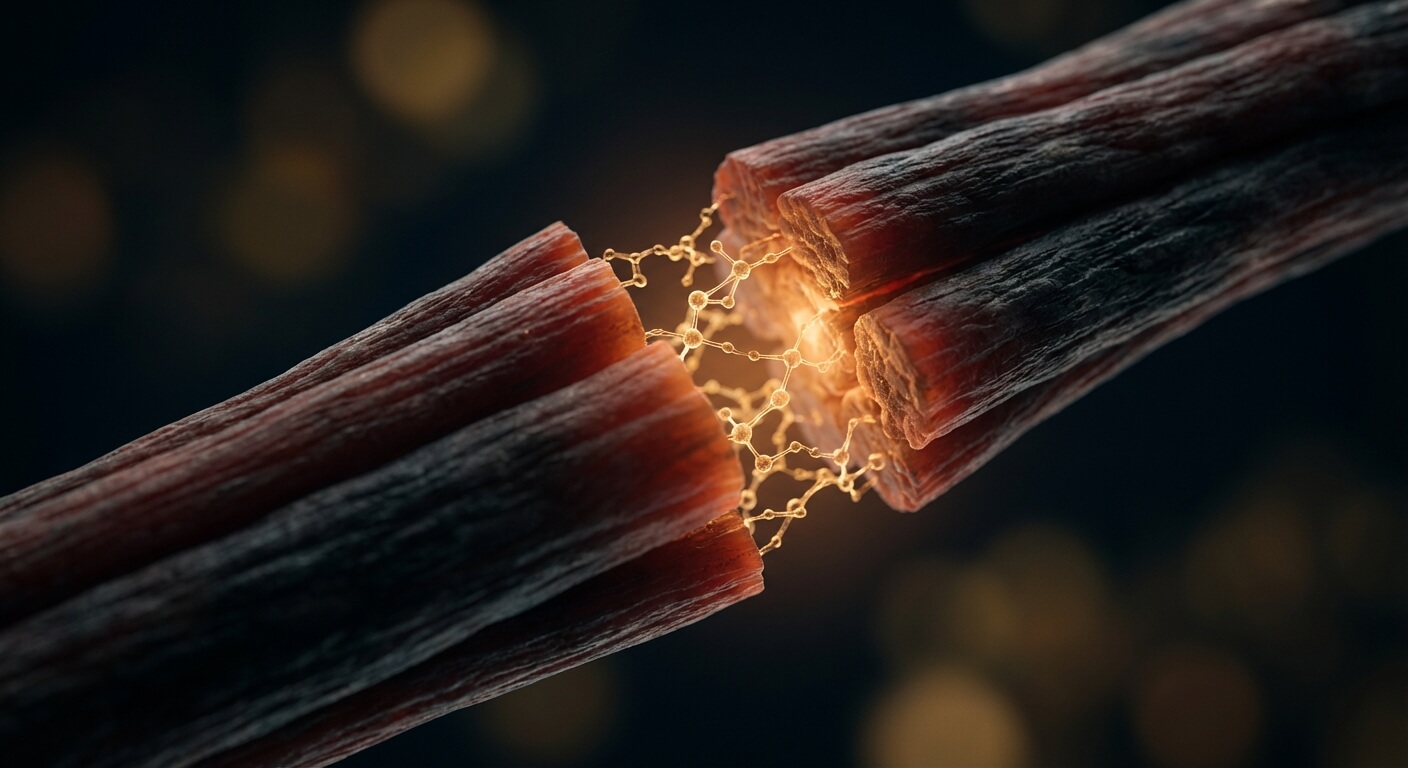
Recovery peptides like BPC-157 and TB-500 have moved from niche biohacking forums to mainstream sports medicine conversations partly because they offer something NSAIDs and cortisone injections don’t: a mechanism aimed at repairing tissue rather than just managing symptoms. The evidence base is still heavily preclinical, the regulatory situation is in flux, and tested athletes face serious consequences if they use them. This guide covers all of it.
Key takeaways
- Recovery peptides are short amino acid chains (2–50 amino acids) that signal your cells to accelerate tissue repair through four pathways: new blood vessel growth, cell migration, collagen production, and inflammation reduction.
- BPC-157 targets localized tendon and ligament injuries. TB-500 promotes systemic muscle recovery across larger tissue areas.
- Evidence for both peptides comes primarily from animal studies. Only three small pilot studies have tested BPC-157 in humans as of early 2026. No randomized controlled trials exist for either compound.
- WADA prohibits BPC-157 (Section S0) and TB-500 (Section S2.3) at all times. Tested athletes face suspension, disqualification, and career consequences.
- BPC-157 and TB-500 are FDA Category 2 bulk drug substances. HHS Secretary Kennedy announced potential reclassification to Category 1 in February 2026, but no formal FDA rulemaking has been published as of March 2026.
How recovery peptides work
Recovery peptides are short chains of amino acids that act as signaling molecules to accelerate tissue repair. Unlike full-length proteins such as collagen, these smaller sequences reach injury sites more efficiently through subcutaneous or localized injection.
They work differently from standard pain treatments. NSAIDs block COX enzymes to reduce inflammation and mask pain — they do nothing to repair the underlying tissue damage. Recovery peptides target the damage itself by triggering your body’s natural repair cascade at an accelerated rate.
A 2025 systematic review by Vasireddi et al. (Orthopaedic Journal of Sports Medicine) screened 544 articles on BPC-157 and included 36 studies from 1993 to 2024. The review confirmed that BPC-157 promotes structural and functional recovery in preclinical tendon rupture, ligament tear, muscle tear, and fracture models.
Evidence grade: PeptideRx rates the overall evidence for recovery peptides as Grade C: primarily animal and in vitro data with limited human clinical evidence. Only three small pilot studies have examined BPC-157 in humans as of early 2026. No randomized controlled trials exist for either compound.
The four-pathway tissue repair mechanism
Recovery peptides accelerate healing through four interconnected pathways. They work together rather than in isolation.
Pathway 1: Angiogenesis (new blood vessel formation). BPC-157 stimulates vascular endothelial growth factor (VEGF) expression, triggering formation of new capillaries near the injury site. More blood vessels deliver more oxygen and nutrients to damaged tissue. Preclinical rodent models show increased capillary density at Achilles tendon injury sites following BPC-157 administration (Sikiric et al., multiple studies 1993–2024).
Pathway 2: Fibroblast migration (cellular repair). TB-500 regulates actin, a protein that controls how cells move and maintain their shape. By binding to actin monomers, TB-500 promotes cellular migration toward the injury site. Fibroblasts — the cells responsible for producing connective tissue — move to the wound faster and begin closing the damage.
Pathway 3: Collagen synthesis (structural rebuilding). Both BPC-157 and TB-500 upregulate production of Type I and Type III collagen, the structural proteins that form the backbone of tendons, ligaments, and muscle connective tissue. BPC-157-treated tendons in preclinical studies demonstrate increased load-to-failure and improved functionality compared to controls, as measured by the Achilles Functional Index (AFI) in rodent models.
Pathway 4: Anti-inflammatory signaling (swelling reduction). Recovery peptides reduce prostaglandin and cytokine cascades that cause secondary damage after an injury. By dialing down inflammation early, peptides help prevent the cycle where swelling leads to more tissue damage, which leads to more swelling.
BPC-157 vs. TB-500: which one for which injury?
The BPC-157 vs. TB-500 decision comes down to injury type and scope. BPC-157 excels at localized, site-specific repair. TB-500 covers more ground with systemic distribution.
| Factor | BPC-157 | TB-500 |
|---|---|---|
| Best for | Isolated tendon/ligament injuries (Achilles, rotator cuff, patellar tendon, hamstring) | Large muscle group recovery, systemic inflammation, post-surgical healing |
| Mechanism | Angiogenesis + collagen synthesis at injection site | Actin regulation + cellular migration throughout the body |
| Scope | Local (works best near the injury) | Systemic (distributes widely regardless of injection site) |
| Amino acids | 15 (pentadecapeptide) | 43 |
| Typical dosage | 250–500 mcg/day | 2–5 mg loading phase (2x/week for 4 weeks), then maintenance |
| Evidence tier | Strong preclinical + 3 small pilot human studies | Preclinical only (cardiac and wound healing models) |
| Monthly cost | $200–$350 | $200–$450 |
| WADA status | Prohibited (S0, all times) | Prohibited (S2.3, all times) |
BPC-157: localized tendon and ligament repair
BPC-157 is the more studied of the two, with over 50 preclinical publications spanning three decades. Derived from a protective protein in human gastric juice, this 15-amino acid peptide targets localized injuries through angiogenesis and collagen synthesis.
Preclinical evidence is strongest for tendon repair. Rodent Achilles tendon transection studies show BPC-157-treated animals recovered faster and demonstrated improved biomechanical strength compared to controls. A 2025 narrative review in Current Reviews in Musculoskeletal Medicine confirmed that BPC-157 promotes regenerative and cytoprotective effects in preclinical models.
Human data is limited to three small pilot studies:
- Knee pain (Lee & Padgett, 2021): 16 patients received intra-articular BPC-157 injections for chronic knee pain. 7 of 12 follow-up patients reported pain relief lasting more than 6 months. No control group.
- Interstitial cystitis (Lee et al., 2024): 12 patients received intravesical BPC-157. All 12 scored “significant improvement” on the Global Response Assessment Questionnaire.
- IV safety (Lee & Burgess, 2025): 2 healthy adults received IV infusions up to 20 mg with no adverse events or clinically meaningful changes in vital signs, ECG, or blood markers. PMID: 40131143.
TB-500: systemic muscle recovery
TB-500 is a synthetic 43-amino acid fragment of Thymosin Beta-4, one of the most abundant intracellular proteins in mammalian cells. It works through actin regulation — promoting widespread cellular migration rather than targeting a single injury site.
Preclinical evidence centers on cardiac and wound healing applications. Rodent models show improved left ventricular function following myocardial infarction, reduced infarct size, and enhanced cardiac microvascular density. Athletic recovery applications are extrapolated from these findings, not directly studied. No published human trials exist for TB-500 in musculoskeletal recovery as of March 2026.
Other recovery peptides at a glance
| Peptide | Primary mechanism | Target | WADA status | FDA status |
|---|---|---|---|---|
| GHK-Cu | Collagen + elastin stimulation | Wound healing, skin repair | Not specifically listed | Category 2 |
| GHRP-6 | Pituitary GH stimulation | Systemic recovery | Prohibited (S2.2.4) | Category 2 |
| CJC-1295/Ipamorelin | GH pulse stimulation | Sleep, body composition, systemic recovery | Prohibited (S2.2.4) | Category 2 |
| Thymosin Alpha-1 | T-cell activation + immune regulation | Post-surgical, immune support | Prohibited (S0) | Category 2 |
| KPV | NF-kB modulation (anti-inflammatory) | Gut inflammation, IBD | Prohibited (S0) | Category 2 |
Choose BPC-157 for an isolated Achilles tendinopathy, rotator cuff strain, or hamstring tear where you can inject near the specific injury site.
Choose TB-500 for a quadriceps strain affecting a large muscle area, post-surgical recovery involving multiple tissue types, or systemic inflammation that isn’t limited to one spot.
Consider both when there is concurrent tendon and muscle damage at multiple sites. BPC-157 handles localized structural repair while TB-500 provides systemic anti-inflammatory and migration support.
Protocols and dosing
Important: No FDA-approved human dosing exists for BPC-157 or TB-500. All protocols below reflect commonly reported clinical ranges, not standardized clinical trial protocols. No peptide protocol should be started without evaluation by a licensed healthcare provider.
BPC-157 protocol
- Dosage: 250–500 mcg per day via subcutaneous injection
- Injection site: Localized (near the injury site for tendon/ligament injuries) or systemic (abdominal subcutaneous for broader distribution)
- Cycle length: 4–8 weeks continuous. Cycles beyond 8 weeks require medical monitoring with imaging and/or lab work
- Timing: BPC-157 has a short half-life (under 30 minutes per pharmacokinetic data), so timing is flexible. Some providers split doses into AM and PM administrations
- Technique: Subcutaneous via insulin syringe at a 45-degree angle. Rotate injection sites to avoid irritation
TB-500 protocol
- Loading phase: 2–5 mg twice weekly for 4 weeks to saturate tissues
- Maintenance phase: Reduce to 2 mg once weekly, or take a break to assess baseline recovery
- Injection site: Subcutaneous (abdominal or deltoid). TB-500 distributes systemically regardless of injection site
- Timing: Many providers recommend pre-sleep administration for potential synergy with natural GH pulses
Monitoring and cycle breaks
Take 2–4 weeks off between cycles to evaluate recovery without exogenous peptide signaling. Track symptoms at week 4 and week 8. For tendon or ligament injuries, MRI or ultrasound assessment at week 8 provides objective data. Add blood work if stacking with GH secretagogues.
Red flags requiring medical attention: Persistent injection site reactions, unusual swelling, or any new symptoms during the cycle.
Stacking recovery peptides
BPC-157 + TB-500: the Wolverine Stack
The most common recovery stack combines BPC-157 with TB-500. BPC-157 handles localized structural repair through angiogenesis and collagen synthesis; TB-500 provides systemic cellular migration and anti-inflammatory support. The two mechanisms complement each other without redundancy.
Protocol:
- BPC-157: 250–500 mcg per day (localized or systemic subcutaneous)
- TB-500: 2–5 mg twice weekly during loading (4 weeks), then maintenance
- Duration: 4–8 weeks, same monitoring schedule as individual protocols
- Combined monthly cost: $400–$800 from licensed compounding pharmacies
Adding GH secretagogues
Some protocols add CJC-1295 and Ipamorelin to stimulate growth hormone release through the pituitary pathway, layering systemic GH effects on top of the direct tissue-repair signaling from BPC-157 and TB-500.
Regulatory note: CJC-1295 and Ipamorelin were placed on FDA Category 2 in late 2023. As of March 2026, they remain Category 2 despite the February 2026 HHS announcement. Availability through compounding pharmacies depends on when — and whether — formal rulemaking occurs.
Stacking is not necessary for simple, isolated injuries. Multi-peptide protocols are typically reserved for complex cases under direct medical supervision.
Recovery peptides vs. conventional treatments
Recovery peptides are not replacements for established treatments. They are adjuncts — working alongside conventional care to potentially accelerate the tissue repair phase while other treatments handle pain management, strength rebuilding, and range of motion.
| Treatment | Mechanism | Evidence tier | Typical cost | Role in recovery |
|---|---|---|---|---|
| NSAIDs (ibuprofen, naproxen) | COX enzyme inhibition | Established (decades of RCTs) | $5–$30/month | Acute pain management; no tissue repair; GI and cardiovascular risks with long-term use |
| PRP (Platelet-Rich Plasma) | Autologous growth factor injection | Established for select conditions | $500–$1,500/injection | Stronger evidence base than peptides; single procedure; insurance sometimes covers |
| Recovery peptides (BPC-157, TB-500) | Cellular signaling (angiogenesis, migration, collagen) | Primarily preclinical; limited human data | $200–$800/month | Ongoing protocol; not covered by insurance; emerging evidence |
| Steroid injections (cortisone) | Anti-inflammatory | Established | $100–$300/injection | Quick relief; risk of collagen degradation with repeated use |
| Physical therapy | Mechanical loading + range of motion | Gold standard for rehab | $50–$200/session (often covered) | Rebuilds strength and mobility; cannot be replaced by peptides |
The strongest approach combines treatments rather than relying on any single one. Peptides aim to speed up the biological repair phase. Physical therapy rebuilds functional strength and mobility. NSAIDs manage pain during recovery. PRP delivers growth factors in a single procedure with a stronger human evidence base.
Side effects and safety
Known side effects
Recovery peptides are generally well-tolerated in the limited data available.
| Side effect | Notes |
|---|---|
| Injection site reactions | Mild redness, swelling, or irritation; transient, resolves within hours |
| GI symptoms (oral BPC-157) | Mild nausea or stomach upset reported in some cases |
| Rare reports (unvalidated) | Headache, mild fatigue, dizziness reported anecdotally — not documented in published studies |
The Vasireddi et al. (2025) systematic review noted no lethal or toxic dose for BPC-157 across preclinical safety studies. The Lee & Burgess (2025) IV safety pilot found no adverse events in two adults receiving up to 20 mg of BPC-157 intravenously.
The cancer and angiogenesis question
One theoretical concern deserves transparent discussion. BPC-157 promotes angiogenesis — and angiogenesis also plays a role in tumor growth by supplying blood to cancerous tissue. A 2025 preprint noted that Thymosin Beta-4 is upregulated in many metastatic cancers, raising a theoretical risk that TB-500 could facilitate tumor cell migration.
No clinical evidence connects BPC-157 or TB-500 to cancer causation. Zero published studies have reported a cancer outcome from peptide use. The concern remains theoretical. As a precaution, both peptides are contraindicated in patients with active malignancy.
Long-term safety gap
Long-term human safety data does not exist for either peptide. Most preclinical studies run 4–12 weeks. Human use protocols are extrapolated from these animal timelines. The effects of continuous use beyond several months are unknown.
Contraindications
- Active malignancy or cancer history
- Pregnancy and breastfeeding
- Uncontrolled hypertension
- Bleeding disorders
- Children and adolescents (no pediatric data)
- Concurrent use of NO-pathway medications without physician oversight
FDA regulatory status (March 2026)
The FDA placed BPC-157 and TB-500 on the Category 2 bulk drug substances list in late 2023, prohibiting compounding pharmacies from preparing them under Section 503A.
On February 27, 2026, HHS Secretary Robert F. Kennedy Jr. announced on The Joe Rogan Experience (Episode #2461) that approximately 14 of the 19 Category 2 peptides — including BPC-157 and TB-500 — would be reclassified to Category 1.
Current status as of March 2026: No formal FDA rulemaking has been published. Category 2 remains the current designation. Compounding pharmacies that prepare these peptides are operating in a regulatory gray area until official reclassification is finalized. PeptideRx will update this section when formal guidance is published. Verify at FDA.gov before making any decisions.
Athletes and anti-doping compliance
If you compete in any sport governed by WADA, USADA, NCAA, NFL, NBA, MLB, NHL, UFC, or PGA anti-doping rules, this section is critical.
The short version: recovery peptides will end your competitive career if you test positive.
What the rules say
| Organization | BPC-157 status | TB-500 status |
|---|---|---|
| WADA | Prohibited (S0, named specifically) | Prohibited (S2.3, named specifically) |
| USADA | Prohibited (enforces WADA) | Prohibited (enforces WADA) |
| NCAA | Prohibited (2026 handbook) | Prohibited |
| NFL, UFC, NBA, NHL, MLB | Prohibited | Prohibited |
| DoD/OPSS | Prohibited for all service members | Prohibited for all service members |
USADA has published specific warnings about BPC-157, stating that the peptide creates risk for athletes. The NCAA’s 2026 handbook specifically lists BPC-157, removing any ambiguity for college athletes.
Detection windows
Anti-doping laboratories use high-resolution mass spectrometry to detect peptide metabolites. BPC-157 metabolites remain detectable in urine for 4–5 days at detection limits of 0.03–0.11 ng/mL. TB-500 metabolites may be detectable for weeks to months post-administration. Detection technology is improving rapidly under WADA-funded projects.
Consequences of a positive test
- Suspension (typically 2–4 years for a first offense)
- Disqualification of results
- Forfeiture of medals, titles, and prize money
- Sponsorship loss and career damage
No therapeutic use exemptions
Unlike corticosteroids or certain hormone therapies, recovery peptides have no FDA-approved therapeutic use. WADA does not grant Therapeutic Use Exemptions for compounds with no approved medical indication. No exemption pathway exists.
The honest assessment: if you are a tested athlete, legal alternatives — PRP injections, optimized nutrition, physical therapy, collagen supplementation — do not carry career-ending consequences. The risk-to-reward calculation does not favor peptide use.
How to access recovery peptides safely
If you choose to pursue peptide therapy, the legitimate access pathway runs through licensed medical professionals and FDA-registered compounding pharmacies.
Step 1: Consult a licensed provider. Start with a healthcare provider trained in peptide therapy — sports medicine physicians, orthopedic surgeons with regenerative medicine focus, or integrative medicine specialists. The provider evaluates your injury, reviews imaging, screens for contraindications, and determines whether peptide therapy is appropriate.
Step 2: Prescription to an FDA-registered compounding pharmacy. Key quality markers to verify: FDA registration, state pharmacy board licensing, USP 797 compliance (sterile compounding standards), HPLC-MS certificates of analysis verifying purity, and batch-specific third-party testing documentation.
Step 3: Protocol and monitoring. The provider designs a protocol based on injury type, patient factors, and recovery goals. Ongoing oversight includes symptom tracking, follow-up imaging, dosage adjustments, and lab work if applicable.
Step 4: Cost expectations.
| Protocol | Monthly cost |
|---|---|
| BPC-157 alone | $200–$500 |
| TB-500 alone | $200–$450 |
| Combined stack | $400–$800 |
Not covered by insurance. Medical consultation fees are separate.What to avoid: Unregulated online vendors selling “research peptides” labeled “not for human consumption” operate outside FDA oversight. These products carry contamination risk, mislabeling risk, and no quality assurance. Multiple vendor enforcement actions occurred in 2025–2026.
Ready to explore whether recovery peptides are right for your injury? Consult a licensed physician with peptide therapy training to discuss an individualized protocol based on your specific situation.
Frequently asked questions
Are recovery peptides FDA-approved?
No. BPC-157 and TB-500 are not FDA-approved as standalone drugs. They were accessible via FDA-registered compounding pharmacies under physician prescription until the FDA placed them on the Category 2 list in late 2023. A potential reclassification to Category 1 was announced by HHS in February 2026, but formal FDA rulemaking has not been published as of March 2026.
Can NCAA or professional athletes use recovery peptides?
No. WADA classifies BPC-157 under S0 (Non-Approved Substances) and TB-500 under S2.3 (Growth Factors). Both are prohibited at all times. Positive tests result in suspension, disqualification, and forfeiture of results. No therapeutic use exemptions are granted for recovery peptides.
Should I use BPC-157 or TB-500 for Achilles tendinopathy?
BPC-157 shows stronger preclinical evidence for localized tendon repair through angiogenesis and collagen synthesis. For an isolated Achilles injury, BPC-157 with localized injection near the tendon is the typical first-choice protocol under medical guidance. TB-500 may be added for systemic anti-inflammatory support if multiple injury sites are involved.
How long should a recovery peptide cycle last?
BPC-157 runs 4–8 weeks continuous at 250–500 mcg per day. TB-500 loading phase runs 4 weeks (2–5 mg twice weekly), followed by maintenance dosing or a break. Cycles longer than 8 weeks require medical monitoring with imaging and lab work.
What does a BPC-157 + TB-500 stack cost?
BPC-157 costs $200–$350 per month. TB-500 costs $200–$450 per month (dosage-dependent). A combined stack runs $400–$800 per month from licensed compounding pharmacies. Pricing varies by provider, dosage, and protocol length. Not covered by insurance. Medical consultation fees are separate.
Is there a cancer risk with BPC-157’s angiogenesis mechanism?
Theoretical concern only. Angiogenesis could hypothetically support tumor growth by increasing blood supply to cancerous tissue. No clinical evidence connects BPC-157 to cancer causation, and long-term human studies have not been conducted. Both BPC-157 and TB-500 are contraindicated in patients with active malignancy. A risk-benefit discussion with your physician is appropriate before starting any peptide protocol.
References
- Vasireddi N, Hahamyan HA, Salata MJ, Karns M, Calcei JG, Voos JE, Apostolakos JM. Emerging use of BPC-157 in orthopaedic sports medicine: a systematic review. Orthopaedic Journal of Sports Medicine. 2025. (Received March 25, 2025; accepted April 29, 2025.)
- Lee A, Burgess D. Safety of intravenous infusion of BPC-157 in humans: a pilot study. Alternative Therapies in Health and Medicine. 2025;31(5):20-24. PMID: 40131143.
- Regeneration or risk? A narrative review of BPC-157 for musculoskeletal healing. Current Reviews in Musculoskeletal Medicine. 2025. PMC12446177.
- Therapeutic peptides in orthopaedics: applications, challenges, and future directions. Journal of the American Academy of Orthopaedic Surgeons. 2025. PMC12753158.
- Sikiric P, et al. The stable gastric pentadecapeptide BPC 157 pleiotropic beneficial activity and its possible relations with neurotransmitter activity. Pharmaceuticals. 2024. PMC11053547.
- World Anti-Doping Agency. 2025 Prohibited List International Standard. WADA; 2025.
- USADA. BPC-157: experimental peptide creates risk for athletes. Published September 25, 2025.
- FDA. Certain bulk drug substances for use in compounding that may present significant safety risks (Category 2). FDA.gov; Updated 2023.
- HHS Secretary Robert F. Kennedy Jr. Remarks on The Joe Rogan Experience (Episode #2461), February 27, 2026.
Disclaimer: This content is for educational purposes only and does not constitute medical advice. Recovery peptides discussed in this article are not FDA-approved for any therapeutic indication. All peptide therapy should be administered under the supervision of a licensed healthcare provider. PeptideRx does not sell peptides or provide medical consultations. Consult a licensed physician before starting any peptide protocol. PeptideRx content is medically reviewed by licensed physicians. Our evidence grading system (Grade A/B/C) reflects the quality and quantity of published research, not a recommendation for or against use.