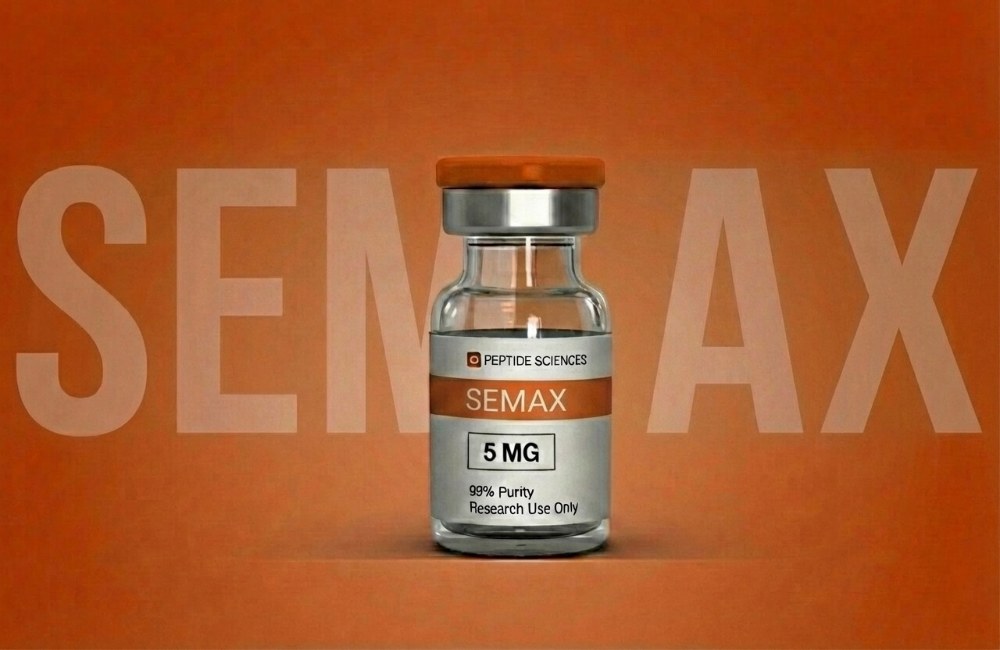
Semax
What It Is, How It Works, and What Research Actually Shows 2026

Semax is a synthetic peptide developed in Russia that has drawn growing interest for its effects on brain function, stroke recovery, and cognitive performance. The research base is real — but almost entirely Russian, and the gap between clinical data and Western regulatory approval is significant. This guide covers the mechanism, the evidence, the dosing, and the 2026 regulatory situation.
Key takeaways
- Semax (Met-Glu-His-Phe-Pro-Gly-Pro) is a seven-amino-acid peptide derived from a fragment of the stress hormone ACTH, developed at the Russian Academy of Sciences in the late 1980s.
- The best-documented mechanism is upregulation of BDNF (brain-derived neurotrophic factor) in the hippocampus — a protein tied to learning, memory, and neuronal survival.
- Russia approved Semax as a prescription pharmaceutical for ischemic stroke and cognitive disorders. It has no FDA approval in the United States.
- As of February 27, 2026, HHS Secretary Robert F. Kennedy Jr. announced that Semax is among approximately 14 peptides expected to return from FDA Category 2 to Category 1 status — but the formal FDA list update had not been published as of March 2026.
- PeptideRx rates the evidence for Semax’s neuroprotective effects as Grade B: limited human trials combined with strong animal model data and a plausible mechanism.
Before you start All peptide protocols require a physician evaluation. Semax has no FDA approval, and its interaction with prescription medications — including stimulants and serotonergic drugs — has not been studied in humans.
What is Semax?
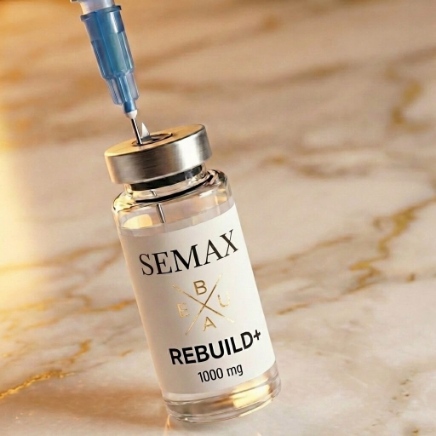
Semax is a synthetic heptapeptide — a chain of seven amino acids — with the sequence Met-Glu-His-Phe-Pro-Gly-Pro (MEHFPGP). Its molecular weight is 813.92 g/mol (CAS registry number: 80714-61-0).
Researchers at the Institute of Molecular Genetics of the Russian Academy of Sciences developed it by taking the ACTH(4–10) fragment — a segment of the stress hormone adrenocorticotropin — and adding a C-terminal Pro-Gly-Pro tripeptide. That modification extended the parent fragment’s half-life from minutes to 20–24 hours in animal models (Kolomin et al., 2013) while preserving its neurotrophic effects and removing its cortisol-stimulating activity. The peptide first appeared in scientific literature in 1991. The name “Semax” is a Russian abbreviation meaning “seven amino acids.”
Geropharm, a Russian pharmaceutical company, manufactures Semax in 0.1% and 1% nasal solution formulations. Russia’s Ministry of Health has approved it as a prescription drug, and the Russian government placed it on the List of Vital and Essential Drugs on December 7, 2011.
Semax variants
Three modified versions of Semax circulate in the research and biohacker communities. None have head-to-head human comparison data against the base compound.
| Form | Modification | Molecular weight | Reported potency vs. base | Evidence level |
|---|---|---|---|---|
| Semax (base) | None (MEHFPGP) | 813.92 g/mol | Baseline | Clinical trials (Russia) |
| N-Acetyl Semax | N-terminal acetylation | ~855 g/mol | Improved BBB penetration (reported) | Preclinical only |
| N-Acetyl Semax Amidate (NASA) | N-terminal acetylation + C-terminal amidation; CAS 2920938-90-3 | ~855.97 g/mol | 2–4x (anecdotal; no human study) | Anecdotal/preclinical |
| Adamax | Unofficial biohacker variant | Undisclosed | Unknown | Minimal published data |
Learn more about how Semax compares to related peptides like Selank.
How does Semax work?
Semax doesn’t act like a stimulant. It works upstream — by influencing proteins that govern neuronal survival and connectivity.
The best-supported mechanism centers on BDNF (brain-derived neurotrophic factor) and its receptor, TrkB. Dolotov et al. (2006) demonstrated that a single intranasal dose of Semax at 50 mcg/kg in rats produced a 1.4-fold increase in hippocampal BDNF protein levels at 3 hours post-dose, alongside a 1.6-fold increase in TrkB phosphorylation (PMID: 16996037). That 3-hour window — not 24 hours — appears to be the primary window of neurotrophic activity.
When BDNF activates TrkB, it triggers two downstream signaling cascades: Ras/ERK and PI3K/Akt. These pathways support neuronal survival, synaptogenesis (the formation of new synaptic connections), and long-term potentiation (LTP) — the cellular process underlying learning and memory formation.
Secondary mechanisms include:
- Serotonergic modulation: Intranasal Semax increased serotonin levels in rat models but did not directly raise dopamine. It did, however, potentiate the dopaminergic effects of d-amphetamine (Eremin et al.) — a distinction that matters if you take prescription stimulants.
- Melanocortin receptor interaction: Semax acts as an antagonist or partial agonist at MC4 and MC5 receptors.
- Enkephalinase inhibition: The peptide inhibits enkephalinase enzymes with an IC50 of 10 micromolar, which may slow the breakdown of endogenous regulatory peptides.
- Immune gene expression: Under ischemic conditions, Semax altered expression of more than 1,500 genes related to inflammation and immune function (Filippenkov et al., 2020, PMID: 32580520).
One important caveat: the exact mechanism of action in humans remains officially unconfirmed. Most mechanistic data comes from rat models.
Learn more about how BDNF affects memory and cognitive performance.
What does the research show?
Key takeaways
- The strongest human evidence covers post-stroke rehabilitation and acute ischemic stroke, both from Russian observational trials.
- One small randomized controlled trial in healthy volunteers (Kaplan et al., 1996) found 71% memory recall in the Semax group vs. 41% in placebo.
- Data for ADHD, TBI, Parkinson’s disease, and musculoskeletal applications either does not exist or comes from animal models only.
- PeptideRx rates the evidence for Semax’s neuroprotective effects as Grade B.
The evidence base for Semax varies sharply by condition. Nearly all controlled human data comes from Russian clinical settings, and most studies were published in Russian-language journals. The table below maps the available evidence across studied conditions.
| Condition | Study type | Key study | Participants | Dose | Key finding |
|---|---|---|---|---|---|
| Ischemic stroke (rehabilitation) | Observational | Gusev et al., 2018 (PMID: 29798983) | n=110 | 6,000 mcg/day; 2 courses of 10 days with 20-day interval | Semax increased plasma BDNF; higher BDNF correlated with improved Barthel Index scores and faster functional recovery |
| Acute ischemic stroke | Observational | Gusev et al., 1997 | n=30 (treatment) + 80 (control) | 1% solution, clinical doses | Accelerated restoration of motor function when added to standard therapy |
| Cerebrovascular insufficiency | Observational | Skvortsova et al., 2005 (PMID: 15792140) | n=187 | Clinical doses | Reduced overall brain damage; potential stroke risk reduction |
| Cognitive enhancement (healthy) | Small RCT | Kaplan et al., 1996 | Healthy volunteers | 250–1,000 mcg/kg intranasal | 71% memory recall in Semax group vs. 41% in placebo; effects lasted 20–24 hours |
| Default mode network (healthy) | Small RCT | Lebedeva et al., 2018 | n=24 | 1% solution, 1.2 mg total | Increased resting fMRI signal in the default mode network rostral subcomponent vs. placebo |
| Optic nerve disease | Observational | Russian clinical studies | Clinical population | 1% solution | Improvements in visual function parameters when combined with anti-inflammatory treatment |
| Peptic ulcer | Approved indication (Russia) | Russian prescribing data | Clinical population | Standard doses | Russian-approved indication; no English-language RCTs available |
Stroke and cerebrovascular conditions
The strongest human evidence covers stroke recovery. Gusev et al. (2018) followed 110 patients receiving 6,000 mcg/day across two 10-day treatment courses. Higher plasma BDNF levels in the Semax group correlated with improved Barthel Index scores — a standard measure of functional independence — and faster recovery (PMID: 29798983).
An earlier observational trial by Gusev et al. (1997) found that adding Semax to standard stroke therapy accelerated motor function restoration in 30 treatment patients compared to 80 controls. Skvortsova et al. (2005) reported reduced brain damage markers and potential stroke risk reduction in 187 patients with cerebrovascular insufficiency (PMID: 15792140).
These are observational trials, not randomized controlled trials. The data is promising, but the study designs limit how far the findings can be generalized to Western clinical populations.
Cognitive performance in healthy adults
The most directly relevant data for nootropic users comes from a small randomized controlled trial by Kaplan et al. (1996). Healthy volunteers receiving 250–1,000 mcg/kg of intranasal Semax showed 71% memory recall compared to 41% in the placebo group. Effects lasted 20–24 hours. Ashmarin et al. (1997) confirmed nootropic effects at 0.015–0.050 mg/kg in humans, lasting up to 24 hours (PMID: 9234274).
A 2018 imaging study by Lebedeva et al. used fMRI to measure Semax’s effect on resting brain activity in 24 healthy participants. Semax at 1.2 mg total dose increased signal in the rostral subcomponent of the default mode network — the brain network associated with self-referential thought, memory consolidation, and mind-wandering. This is mechanistically consistent with BDNF’s role in hippocampal function.
ADHD, TBI, and Parkinson’s disease
These are areas of theoretical interest with limited or no human data.
Kaplan et al. (2006) proposed Semax as a candidate for ADHD treatment based on its ability to augment dopamine effects and stimulate BDNF synthesis in animal models (PMID: 16996699). No human RCT for ADHD has been completed. User reports from nootropic communities describe Semax as an alternative to stimulant medications, but these remain anecdotal and should not be treated as evidence of efficacy.
Traumatic brain injury (TBI) data is limited to rat models showing reduced infarction volume after Semax treatment. No human TBI trials exist in the English-language literature.
Parkinson’s disease data is conflicting. Levitskaya et al. (2004) reported mixed behavioral results in an MPTP rat model. A second MPTP study suggested Semax increased anxiety in Parkinson’s model animals. No human Parkinson’s trials have been published.
Emerging and theoretical applications
Emerging Alzheimer’s research has examined Semax’s copper chelation properties and their effect on amyloid-beta aggregation in vitro (Tomasello et al., 2021). This work is preliminary and has not progressed to animal or human trials.
Semax holds a Russian-approved indication for peptic ulcers, but no English-language randomized controlled trial supports GI applications. Any pain-related benefits from enkephalinase inhibition remain a theoretical pathway only — no published studies address musculoskeletal applications directly.
Data gap notice: No published data supports the use of Semax for ADHD, TBI, Parkinson’s disease, or musculoskeletal conditions in humans. Animal data exists for some of these, but it has not been replicated in human clinical trials.
Learn more about how the evidence for Semax compares to other neuroprotective peptides.
Dosing and administration
Semax has no FDA approval and no standardized Western clinical dosing guidelines. The protocols below combine data from Russian clinical prescribing inserts with community-reported ranges. Consult a licensed physician before starting any peptide protocol.
Administration routes compared
Intranasal delivery is the primary and preferred route. Oral administration is ineffective — peptidase enzymes in the gastrointestinal tract break down the peptide before meaningful absorption can occur.
| Route | Bioavailability | Onset | Duration (reported) | Key limitation |
|---|---|---|---|---|
| Intranasal (nasal spray/drops) | High (olfactory perineural transport) | 5–30 minutes | 4–8 hours (cognitive); BDNF elevation up to 20–24 hours in animals | Nasal irritation (~10% of patients); technique-dependent |
| Subcutaneous injection | Systemic (crosses blood-brain barrier) | 15–30 minutes | Similar to intranasal | Requires reconstitution; not site-injected like BPC-157 |
| Oral (capsules/tablets) | Near zero | N/A | N/A | Peptidase degradation destroys bioavailability |
| Sublingual | No published data | Unknown | Unknown | No evidence basis |
| Topical | No published data | Unknown | Unknown | No evidence basis |
For intranasal administration, the peptide travels via the olfactory epithelium to brain regions involved in memory and learning. Russian-manufactured Semax comes in two concentrations: 0.1% solution (approximately 100 mcg per drop, used for nootropic and mild clinical applications) and 1% solution (approximately 1,000 mcg per drop, reserved for neurological conditions such as stroke and optic nerve disease).
Subcutaneous Semax is injected into abdominal or thigh subcutaneous fat — not near an injury site. Semax acts through central nervous system pathways and does not require localized injection the way BPC-157 does for tendon or soft tissue targets.
Russian clinical dosing (from prescribing insert)
| Indication | Formulation | Dose per application | Frequency | Duration |
|---|---|---|---|---|
| Cognitive support / mental fatigue | 0.1% drops | 200–600 mcg (1–2 drops per nostril) | 2x daily | 10–14 days |
| Optic nerve disorders | 0.1% drops | 600–900 mcg | 2–3x daily | 7–10 days |
| Memory / cognitive deficits (cerebrovascular) | 0.1% drops | 200–2,000 mcg per application | 4x daily | 10–14 days |
| Mild-moderate ischemic stroke | 1% drops | 2,000–3,000 mcg | 3–4x daily (3–4 hour intervals) | 10 days |
| Severe ischemic stroke | 1% drops | 3,000–4,000 mcg | 4–6x daily (2.5–3 hour intervals) | Up to 10 days |
Ashmarin et al. (1997, PMID: 9234274) reported that intranasal Semax at 0.015–0.050 mg/kg produced nootropic effects lasting 20–24 hours in human subjects. For a 70 kg individual, this translates to 1.05–3.5 mg per administration.
Community nootropic protocols
| Goal | Daily dose | Frequency | Cycle length | Off period |
|---|---|---|---|---|
| Beginner / cognitive support | 300–600 mcg | 1–2 sprays, morning | 10–14 days | Equal to cycle length |
| Standard nootropic | 600–900 mcg | 2–3 sprays, morning + early afternoon | 14–30 days | Equal to cycle length |
| High-performance / stacking | 900–1,200 mcg | 3–4 sprays, distributed AM/early PM | 10–14 days | 1–3 months |
| N-Acetyl Semax Amidate (NASA) | 200–600 mcg | 1–2 sprays, morning | 14–30 days | Equal to cycle length |
Cycling and timing
Semax is not an immediate-effect compound for most users. Cognitive benefits typically build over 2–3 days of consistent use. Off periods should match the cycle length at minimum. Extended breaks of 1–3 months between cycles help preserve BDNF receptor sensitivity.
Morning and early afternoon dosing is standard. Avoid dosing after 2:00 PM — late dosing is the most commonly reported cause of insomnia. Food intake does not affect intranasal absorption.
Reconstitution guide
Semax is sold either as a pre-mixed nasal spray or as a lyophilized (freeze-dried) powder requiring reconstitution.
Materials needed: Lyophilized Semax vial, bacteriostatic water (0.9% benzyl alcohol, preferred for multi-use), insulin syringe (27–29 gauge), amber glass or nasal spray bottle.
Step-by-step:
- Clean the vial septum with an alcohol swab.
- Draw the desired volume of bacteriostatic water into the syringe.
- Inject water slowly along the inside wall of the vial — do not spray directly onto the powder.
- Swirl gently until fully dissolved. Never shake. Shaking can damage the peptide structure.
- The solution should be clear and colorless. Discard if cloudy.
- Transfer to a nasal spray bottle or store in the original vial for subcutaneous use.
Concentration calculator
| Vial size | BAC water added | Concentration per 0.1 mL spray |
|---|---|---|
| 5 mg | 5 mL | 100 mcg/spray |
| 10 mg | 5 mL | 200 mcg/spray |
| 30 mg | 10 mL | 300 mcg/spray |
| 10 mg | 10 mL | 100 mcg/spray |
Storage conditions
| Form | Temperature | Maximum duration |
|---|---|---|
| Lyophilized powder (long-term) | -18°C (freezer) | 12+ months |
| Lyophilized powder (short-term) | Room temperature, desiccated | Up to 3 weeks |
| Reconstituted with BAC water | 2–8°C (refrigerator) | Up to 30 days |
| Reconstituted without BAC water | 2–8°C (refrigerator) | Up to 7 days |
Important: Never freeze reconstituted Semax. Ice crystal formation breaks peptide bonds. Methionine — the first amino acid in the MEHFPGP sequence — is particularly susceptible to oxidation. Minimize exposure to light and air after reconstitution.
Subcutaneous injection technique
Use a 27–29 gauge, 0.5-inch needle. Insert at a 45–90 degree angle into a pinched fold of skin. Preferred sites: abdominal fat (most common), front of thigh, upper arm. Rotate injection sites by at least 1–2 inches between consecutive doses to prevent lipohypertrophy (localized fat deposits).
Stacking and combinations
Stacking Semax with other peptides or nootropics is common in research communities. Evidence quality ranges from some published data (Semax + Selank) to purely theoretical (most other combinations).
| Combination | Mechanism rationale | Evidence level | Typical protocol |
|---|---|---|---|
| Semax + Selank | BDNF-driven focus (Semax) + GABAergic calm (Selank) | Some published data (Andreeva et al.) | Semax 300–600 mcg AM; Selank 200–500 mcg PM or co-administered with 15–30 min separation |
| Semax + Noopept | BDNF/NGF upregulation overlap; different receptor pathways | Theoretical + anecdotal | Semax 300–600 mcg intranasal; Noopept 10–30 mg sublingual |
| Semax + BPC-157 | Neuroprotection (Semax) + tissue repair (BPC-157) | Theoretical | Semax intranasal AM; BPC-157 subcutaneous per injury protocol |
| Semax + TB-500 | Systemic anti-inflammatory (TB-500) + CNS BDNF elevation (Semax) | Theoretical | Semax intranasal; TB-500 subcutaneous per recovery protocol |
| Semax + Sermorelin | GH-axis stimulation + BDNF crosstalk | Theoretical | Semax intranasal AM; Sermorelin subcutaneous before bed |
| Semax + caffeine + L-theanine | Alertness + neuroprotection | Anecdotal; caffeine/L-theanine well-studied independently | Semax AM; caffeine 100–200 mg + L-theanine 200 mg |
Combinations to approach with caution: SSRIs and MAOIs carry a theoretical serotonin syndrome risk given Semax’s serotonergic activity in animal models. Antipsychotics work at cross-purposes with Semax’s dopaminergic modulation. Amphetamines present a documented concern — Eremin et al. demonstrated that Semax potentiates d-amphetamine’s dopaminergic effects in rats, raising the risk of overstimulation when combining Semax with prescription stimulants such as Adderall or Vyvanse. No formal drug interaction studies exist for Semax in humans.
Learn more about how to combine peptides safely and what stacking protocols have the most evidence.
Side effects and safety
Semax has been used clinically in Russia since the early 1990s. Published studies report a relatively low adverse event profile — the Gusev et al. (2018) trial noted that 95% of participants rated Semax tolerability as “very good” or “good.” Several important data gaps remain, however, and long-term safety data by Western clinical trial standards does not exist.
Documented side effects
| Effect | Source | Frequency | Route | Clinical significance |
|---|---|---|---|---|
| Nasal irritation / discoloration | Kolomin et al., 2013 | ~10% of patients | Intranasal | Mild; usually resolves without stopping |
| Blood glucose elevation | Kolomin et al., 2013 | ~7.4% of patients with diabetes | Any | Monitor glucose if diabetic |
| Anxiety / overstimulation | Clinical and anecdotal | Reported at high doses (1 mg+) in fatigued individuals | Any | Not seen at standard nootropic doses |
| Insomnia | Anecdotal | Common with late-day dosing | Any | Avoid dosing after 2 PM |
| Irritability / mood volatility | Anecdotal (community reports) | ~15% of community reports | Any | Typically dose-dependent; reduce dose |
Safety flags and data gaps
Cancer and angiogenesis: Semax modulates VEGF (vascular endothelial growth factor) expression under ischemic conditions — initially reducing pro-angiogenic VEGF response, then promoting vascular stabilization. No oncology safety study has been conducted. The cancer concern is theoretical and has not been studied in any clinical or preclinical cancer model. Individuals with a personal or family history of cancer should discuss this data gap with their physician.
Hair loss: Multiple community reports describe hair thinning during Semax use. No clinical study has confirmed or quantified this effect. A theoretical pathway exists through BDNF-driven hair follicle miniaturization in individuals genetically predisposed to androgenetic alopecia. This remains an unconfirmed signal, not an established side effect.
Long-term use: No systematic long-term safety study meeting Western regulatory standards has been conducted beyond 30 days of continuous use at standard nootropic doses. Cycling with off-periods is widely recommended to mitigate unknown long-term risks.
Contraindications
- Hypersensitivity to Semax or related ACTH fragments
- Severe psychiatric disorders (mania, psychosis)
- Pregnancy and breastfeeding (no safety data exists)
- Diabetes (monitor blood glucose closely; elevated glucose reported in ~7.4% of diabetic patients in clinical data)
Learn more about how to monitor for side effects during a peptide protocol.
Legal status (2026)
Important: The regulatory status of Semax is in active transition as of March 2026. The information below reflects the landscape as of that date. Verify current status before making any clinical or purchasing decisions.
| Jurisdiction | Status | Practical implication |
|---|---|---|
| Russia / Ukraine | Approved prescription pharmaceutical (Geropharm; on List of Vital and Essential Drugs since December 7, 2011) | Available by prescription in pharmacies |
| United States | Not FDA-approved; not a controlled substance; FDA Category 2 bulk substance (compounding restricted) | Formal Category 1 reclassification pending; not yet available through compounding pharmacies as of March 2026 |
| European Union | Not approved; gray-market research chemical | Legal to possess for personal research in most EU jurisdictions; cannot be prescribed |
| Canada | Not approved; available through online vendors as research chemical | Similar to EU status |
| Australia | Not approved; likely requires TGA Special Access Scheme | Cannot be purchased without a specific regulatory pathway |
| WADA (competitive athletes) | High violation risk under S0 Non-Approved Substances | Treat Semax as prohibited; consult USADA or GlobalDRO.com before any use |
US regulatory situation
The FDA placed Semax on its Category 2 bulk drug substances list under Section 503A of the Federal Food, Drug, and Cosmetic Act, which effectively barred licensed compounding pharmacies from preparing Semax for patients.
On February 27, 2026, HHS Secretary Robert F. Kennedy Jr. announced that Semax is among approximately 14 peptides expected to return to Category 1 status. Reclassification to Category 1 does not equal FDA approval — it means compounding pharmacies may legally prepare Semax under a valid physician prescription. The formal FDA list update had not been published as of March 11, 2026.
Important: Until the FDA publishes its updated list, the legal status for compounding remains technically unchanged. Check PeptideRx’s regulatory tracker for current updates.
Athletes
Semax is not explicitly named on the 2025 WADA Prohibited List, but WADA’s S0 category covers any pharmacological substance not approved by a governmental regulatory authority for human use. BSCG, a third-party anti-doping certification body, has specifically flagged Semax under S0. No documented athlete sanctions for Semax exist as of publication date, but strict liability rules apply regardless.
Learn more about peptide regulatory status and the 2026 FDA reclassification process.
Alternatives to Semax
Semax is primarily a CNS-focused, neuroprotective peptide. The alternatives below span different mechanism classes and target different systems — the comparison is organized by functional overlap with Semax.
| Compound | Mechanism | Primary use | Route | Evidence level | US legal status (March 2026) |
|---|---|---|---|---|---|
| Selank | Tuftsin analog; GABAergic/anxiolytic | Anxiety, stress resilience | Intranasal | Observational human trials (Russia) | Category 2 (reclassification to Cat. 1 expected) |
| Noopept | Cycloprolylglycine-based; NGF/BDNF modulation | Cognitive enhancement | Sublingual/oral | Limited human RCTs | Unscheduled; sold as supplement in some markets |
| Cerebrolysin | Porcine brain-derived peptide mix | Stroke recovery, TBI, dementia | IV injection | Multiple human RCTs | Prescription (not available in US) |
| PDA / Pentadeca Arginate | Anti-inflammatory; tissue healing | Gut, joint, soft tissue repair | Oral/subcutaneous | Limited; emerging | Research chemical |
| TB-500 (Thymosin Beta-4) | Angiogenesis; systemic anti-inflammatory | Muscle/tendon repair, recovery | Subcutaneous | Animal data + limited human | Category 2 (reclassification expected) |
| Sermorelin | GHRH analog; GH-axis stimulation | Anti-aging, sleep, body composition | Subcutaneous | Human RCTs for GH deficiency | Prescription (compounding) |
| Modafinil | Orexin/histamine; wakefulness promoter | Narcolepsy, shift work, off-label focus | Oral | Extensive human RCTs | FDA-approved (Schedule IV) |
| Piracetam | Cholinergic modulation; membrane fluidity | Cognitive enhancement | Oral | Human RCTs (variable results) | Unscheduled; not FDA-approved |
Semax vs. Modafinil is the most common comparison for focus-seeking users. Modafinil delivers stronger acute wakefulness through orexin and histamine pathways and carries FDA approval for narcolepsy and shift work sleep disorder. Semax operates through BDNF elevation and neurotrophic support — a mechanism that may offer more sustained neuroprotective benefit without stimulant-class side effects. The trade-off is a much thinner evidence base and no US regulatory approval.
Semax vs. Selank is the most complementary pairing, not a competition. Semax provides BDNF-driven focus and cognitive sharpening; Selank adds GABAergic anxiolytic effects without sedation. The combination is the most discussed peptide pairing in the published and community literature.
Learn more about how Selank works and whether the Semax + Selank stack is right for your goals.
The bottom line
Semax has a more substantial research foundation than most peptides circulating in the nootropic space — but the evidence is concentrated in Russian observational trials, and the gap between that data and Western-standard RCTs is real. If your interest is stroke rehabilitation, the human data is meaningful. If your interest is cognitive enhancement or ADHD, you’re working from a small RCT and animal studies. The 2026 regulatory situation is actively shifting, and compounding access may return if the FDA formally publishes its reclassification list. Until then, Semax remains in a gray zone for US users. If you’re considering it, the conversation starts with a licensed physician who can review your health history, assess relevant contraindications, and put the evidence in context for your specific situation.
Frequently Asked Questions
Is Semax FDA-approved?
No. Semax has no FDA approval for any indication in the United States. The FDA placed it on the Category 2 bulk drug substances list, restricting compounding pharmacy access. On February 27, 2026, HHS Secretary Kennedy announced that Semax is among approximately 14 peptides expected to return to Category 1 status — but the formal FDA list update had not been published as of March 2026.
Can Semax be taken orally?
No. Peptidase enzymes in the gastrointestinal tract break down Semax before meaningful absorption can occur. Intranasal and subcutaneous administration are the only routes with evidence of bioavailability. Some vendors sell oral capsules, but there is no published data supporting oral effectiveness.
What is N-Acetyl Semax Amidate (NASA), and is it stronger than regular Semax?
N-Acetyl Semax Amidate (CAS: 2920938-90-3; MW ~855.97 g/mol) features N-terminal acetylation and C-terminal amidation of the base Semax molecule. These modifications improve enzymatic stability and blood-brain barrier penetration. Community reports describe NASA as 2–4 times more potent than base Semax. No head-to-head human comparison study exists to confirm this.
How long does Semax take to work?
Intranasal Semax typically produces noticeable effects within 15–30 minutes. Some users report effects as early as 5 minutes via olfactory nerve transport. Cognitive benefits tend to build over 2–3 days of consistent use. In animal models, BDNF elevation peaks at 3 hours post-dose (Dolotov et al., 2006, PMID: 16996037).
Does Semax increase dopamine?
No — not directly. Eremin et al. demonstrated that intranasal Semax increased serotonin but not dopamine levels in rat models. Semax does potentiate the dopaminergic effects of d-amphetamine, meaning it amplifies stimulant-induced dopamine release rather than raising dopamine independently. BDNF-mediated effects in the prefrontal cortex may contribute to dopaminergic tone indirectly.
Can Semax cause hair loss?
Possibly, though it remains unconfirmed. Multiple community reports describe hair thinning during Semax use, but no clinical study has confirmed or quantified this effect. A theoretical pathway exists through BDNF-driven hair follicle miniaturization in individuals genetically predisposed to androgenetic alopecia. If you have a history of androgenetic alopecia, discuss this unconfirmed risk with your physician before use.
Is Semax safe for long-term use?
Unknown by Western clinical trial standards. Semax has been prescribed in Russia since the early 1990s without major safety signals in the published literature — but no systematic long-term safety study beyond 30 days of continuous use at standard nootropic doses has been conducted. Cycling with off-periods is widely recommended to mitigate unknown risks and preserve BDNF receptor sensitivity.
Can competitive athletes use Semax?
No — not without significant anti-doping risk. Semax is not explicitly named on the 2025 WADA Prohibited List, but WADA’s S0 category covers any pharmacological substance not approved by a governmental regulatory authority for human use. BSCG has specifically flagged Semax under S0. Consult USADA or check GlobalDRO.com before any use in a competitive context.
Considering peptide therapy? Speak with a licensed physician who can review your labs and health history to discuss whether any option is appropriate for your situation.
References
- Gusev EI, Martynov MY, Kostenko EV, et al. The efficacy of semax in the treatment of patients at different stages of ischemic stroke. Zh Nevrol Psikhiatr Im SS Korsakova. 2018;118(3):61–68. PMID: 29798983.
- Gusev EI, Skvortsova VI, Miasoedov NF, et al. Effectiveness of semax in acute period of hemispheric ischemic stroke. Zh Nevrol Psikhiatr Im SS Korsakova. 1997;97(6):26–34. PMID: 11517472.
- Dolotov OV, Karpenko EA, Inozemtseva LS, et al. Semax, an analog of ACTH(4-10) with cognitive effects, regulates BDNF and trkB expression in the rat hippocampus. Brain Res. 2006;1117(1):54–60. PMID: 16996037.
- Dolotov OV, Karpenko EA, Seredenina TS, et al. Semax, an analogue of adrenocorticotropin (4-10), binds specifically and increases levels of brain-derived neurotrophic factor protein in rat basal forebrain. J Neurochem. 2006;97 Suppl 1:82–86. PMID: 16635254.
- Filippenkov IB, Stavchansky VV, Denisova AE, et al. Novel insights into the protective properties of ACTH(4-7)PGP (Semax) peptide at the transcriptome level following cerebral ischemia-reperfusion in rats. Genes (Basel). 2020;11(6):681. PMID: 32580520.
- Kaplan AY, Kochetova AG, Nezavibathko VN, et al. Synthetic ACTH analogue Semax displays nootropic-like activity in humans. Neurosci Res Commun. 1996;19(2):115–123.
- Ashmarin IP, Nezavibat’ko VN, Myasoedov NF, et al. The nootropic adrenocorticotropin analog Semax. Zh Vyssh Nerv Deiat Im I P Pavlova. 1997;47(2):420–430. PMID: 9234274.
- Kaplan AY. Semax as a potential agent for the treatment of ADHD. Neurosci Behav Physiol. 2006. PMID: 16996699.
- Lebedeva IS, et al. Effects of Semax on the default mode network of the brain. Bull Exp Biol Med. 2018;165(5):653–656.
- Skvortsova VI, et al. Study of effectiveness and safety of semax in patients with cerebrovascular insufficiency. 2005. PMID: 15792140.
- Kolomin TA, et al. Characterization of Semax. Dokl Biol Sci. 2013.
- Medvedeva EV, et al. Effects of Semax on neurotrophin gene expression. PMC3987924.
- Tomasello MF, et al. Copper chelation and amyloid-beta aggregation inhibition. ACS Chem Neurosci. 2021.
Disclaimer: PeptideRx provides physician-reviewed educational content about peptide therapy. PeptideRx does not provide medical advice, diagnosis, or treatment. Semax is not FDA-approved for human therapeutic use. All dosing information reflects published research protocols, not prescribing recommendations. Consult a licensed healthcare provider before making any decisions about peptide therapy. Content medically reviewed March 2026. Evidence grading criteria are working definitions pending formal review.
The regulatory status of Semax is subject to change. The information in this article reflects the regulatory landscape as of March 2026. The FDA’s formal reclassification list had not been published at the time of writing. Check PeptideRx’s regulatory tracker for the most current status updates.