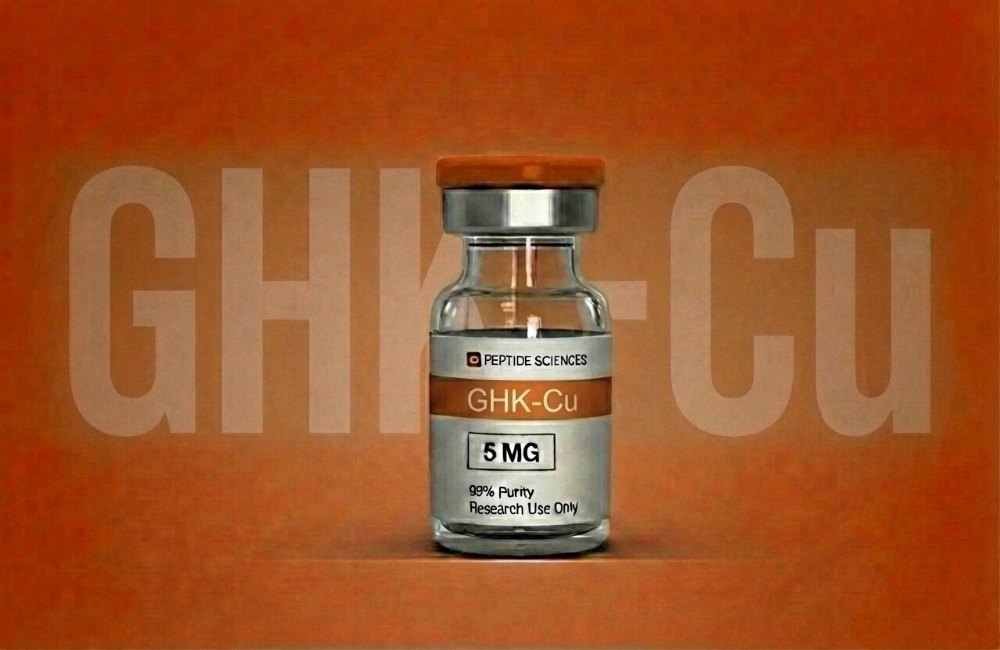
GHK-Cu Peptide
Science-Backed Benefits, Dosing Protocols & Safety 2026

GHK-Cu is a copper-binding peptide your body produces naturally — and one that your levels of drop by 60% between your 20s and your 60s. That decline tracks closely with the slowdown in skin repair, hair density, and tissue healing that comes with aging. The human evidence for topical GHK-Cu is real and reasonably strong. The injectable evidence is more limited, the regulatory situation is complicated, and the gap between vendor claims and published data matters. This guide covers all three.
Key takeaways
- Your natural GHK-Cu levels fall from roughly 200 ng/mL at age 20 to around 80 ng/mL by age 60 — a 60% decline (Pickart & Margolina, Int J Mol Sci, 2018).
- A double-blind randomized controlled trial found topical GHK-Cu reduced wrinkle volume by 55.8% and outperformed Matrixyl 3000 by 31.6% at 8 weeks (Badenhorst et al., J Aging Sci, 2016).
- GHK-Cu modulates more than 4,000 human genes. The Broad Institute ranked it the most active anti-metastatic compound of 1,309 bioactive substances tested.
- Topical GHK-Cu (INCI: Copper Tripeptide-1) is legal OTC in the US, EU, and UK. Injectable GHK-Cu is currently restricted from 503A compounding under a Category 2 FDA classification — reclassification is pending as of March 2026.
- GHK-Cu is not on the WADA Prohibited List. TB-500, a common stack partner, is banned under S2.
Before you start All injectable peptide protocols require a physician evaluation. GHK-Cu injectable carries no FDA approval and is currently restricted from licensed 503A compounding pharmacies — consult a licensed physician before considering any route beyond topical use.
What is GHK-Cu?
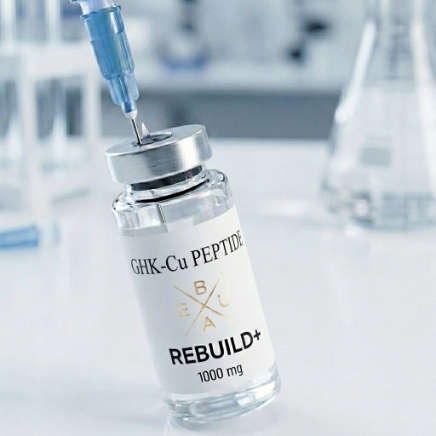
GHK-Cu (glycyl-L-histidyl-L-lysine copper) is a tripeptide — three amino acids — that your body produces on its own and that binds tightly to copper(II) ions. It weighs 340.38 Da as a free peptide and forms a copper complex with a stability constant of log10=16.44, meaning the copper stays attached under normal physiological conditions. Solutions are characteristically blue.
Your plasma GHK-Cu concentration runs around 200 ng/mL in your 20s. By your 60s, it has fallen to roughly 80 ng/mL. That 60% decline correlates with well-documented slowdowns in tissue repair, skin quality, and wound healing that accompany aging (Pickart & Margolina, Int J Mol Sci, 2018, PMID: 29986520).
GHK-Cu has been present in cosmetic formulations for more than 40 years. Research interest has expanded beyond skincare since the Broad Institute’s Connectivity Map identified it as the most active compound among 1,309 bioactive substances tested against metastatic cancer gene signatures.
Learn more about GHK-Cu’s molecular structure and stability data.
How does GHK-Cu work?
GHK-Cu works through two distinct mechanisms: delivering copper directly to the cells that build skin structure, and modulating a remarkably broad range of gene activity.
Collagen synthesis and dermal matrix remodeling
GHK-Cu binds to copper(II) ions and delivers them to dermal fibroblasts — the cells responsible for your skin’s structural foundation. At concentrations from 0.01 nM to 100 nM, it increases production of collagen I, collagen III, and elastin.
At the same time, GHK-Cu upregulates MMP1 and MMP2 (matrix metalloproteinases — enzymes that clear damaged collagen) while increasing TIMP1 (which prevents the new collagen from being immediately broken down). That balance — clearing old, damaged collagen while building new — is what distinguishes GHK-Cu from actives that only stimulate production without clearing the backlog (Badenhorst et al., J Aging Sci, 2016).
GHK-Cu also acts as a cofactor for lysyl oxidase — the enzyme that cross-links collagen fibers so they hold their structure. Without adequate copper delivery, collagen synthesis can occur but the resulting matrix is structurally weaker.
Anti-inflammatory pathways
GHK-Cu suppresses two major inflammation switches: NF-κB p65 and p38 MAPK (mitogen-activated protein kinase). Downstream, this reduces interleukins IL-6 and IL-1β, and TNF-α (tumor necrosis factor alpha — a key inflammatory signaling molecule).
It also reduces fibrinogen — a clotting protein associated with systemic inflammation — by up to 475%. High fibrinogen is an independent cardiovascular risk marker in epidemiological data, including the PROCAM study. GHK-Cu increases superoxide dismutase and glutathione, two antioxidant enzymes involved in managing cellular aging.
Gene modulation
At a 50% expression change threshold, GHK-Cu modulates 31.2% of the human genome — upregulating 59% of affected genes and downregulating 41%. That breadth is unusual for a single compound and explains the range of research interest beyond skin.
Learn more about GHK-Cu’s mechanism in tissue remodeling and gene expression.
What does the research show?
Key takeaways — research
- A double-blind RCT found 55.8% reduction in wrinkle volume and 32.8% reduction in wrinkle depth after 8 weeks of topical GHK-Cu use (Badenhorst et al., J Aging Sci, 2016).
- A 45-patient randomized controlled trial found topical GHK-Cu at 50 mg/mL produced 52–72 extra hairs per cm² over six months (Lee et al., Ann Dermatol, 2016, PMID: 27489425).
- Animal wound healing data is substantial, but human wound healing RCTs do not yet exist.
- Gut health and cognitive function evidence is preliminary — primarily animal models and one small human pilot study.
Evidence tiers used throughout this section: Human RCT = strongest; Human observational/small trial = moderate; Animal model = limited; In vitro only = preliminary.
Skin aging — Human RCT evidence
GHK-Cu has the strongest human evidence base among its studied applications.
In a double-blind, randomized controlled trial, women applied GHK-Cu encapsulated in a nano-lipid carrier twice daily for 8 weeks. Compared to a control serum, GHK-Cu reduced wrinkle volume by 55.8% and wrinkle depth by 32.8%. Against Matrixyl 3000 (palmitoyl tripeptide base), it produced a 31.6% larger reduction in wrinkle volume. Collagen I production, skin thickness, elasticity, and hydration all increased (Badenhorst et al., J Aging Sci, 2016).
A separate 12-week study of 71 women with mild to advanced photoaging found GHK-Cu facial cream increased skin density and thickness, reduced laxity, improved skin clarity, and reduced fine lines. A GHK-Cu eye cream outperformed both placebo and vitamin K cream in 41 women with periorbital photodamage (Pickart et al., Biomedicines, 2021, PMID: 34200134).
A 2024 multicenter study applied 0.05% GHK-Cu gel after fractional laser resurfacing. The GHK-Cu group showed 25% faster epithelial recovery and 30% lower IL-1β and TNF-α levels at 72 hours, compared to standard care (Pickart et al., J Cosmet Dermatol, 2024).
PeptideRx rates the evidence for GHK-Cu + skin aging as Grade A (multiple randomized controlled trials in humans with consistent results).
Hair growth — Limited human trial evidence
GHK-Cu stimulates hair follicle enlargement and extends the anagen (active growth) phase. In a 45-patient randomized controlled trial, topical GHK-Cu at 50 mg/mL produced 52–72 extra hairs per cm² over six months, representing a 38% increase in total hair count (Lee et al., Ann Dermatol, 2016, PMID: 27489425).
A 2025 open-label study found GHK-Cu combined with minoxidil produced 35% terminal hair growth, versus 18% with minoxidil alone. GHK-Cu works through VEGF (vascular endothelial growth factor) and HGF (hepatocyte growth factor) secretion, and directly supports dermal papilla cells — a different mechanism from minoxidil’s vasodilation effect.
PeptideRx rates the evidence for GHK-Cu + hair density as Grade B (limited human trials with strong mechanistic support).
Wound healing — Animal model evidence
GHK-Cu collagen dressings increased collagen content ninefold in healthy rats (Wang et al., Wound Repair Regen, 2017, PMID: 28370978). Animal studies across rabbits, rats, mice, and pigs document 40–50% faster wound closure and improved diabetic wound healing, with reduced TNF-α. One rat ACL model found a transient healing benefit (Fu et al., J Orthop Res, 2015, PMID: 25731775).
These findings have not been replicated in human wound healing RCTs.
PeptideRx rates the evidence for GHK-Cu + wound healing as Grade C (substantial animal data; no human RCT evidence).
Gut health — Small human trial and animal model evidence
A 16-patient pilot study reported a 60% reduction in IBD (inflammatory bowel disease) severity scores with GHK-Cu. A 2025 mouse study using the DSS-colitis model showed GHK-Cu activated SIRT1/STAT3 pathways, reducing colonic inflammation (Front Pharmacol, 2025). Human evidence remains limited to the single small pilot study.
PeptideRx rates the evidence for GHK-Cu + gut inflammation as Grade C (preliminary human data with stronger animal support).
Neurological function — Animal model only
In aging mice treated with GHK at 10 mg/kg body weight five times per week for three weeks, animals located an escape hole significantly faster in Barnes Maze trials 4 and 5 versus saline controls. Immunohistochemistry showed decreased brain inflammation and increased HDAC2 labeling (Dou et al., Aging Pathobiol Ther, 2020).
A separate study found intranasal GHK at 15 mg/kg reduced neuroinflammation in aging mice (Tucker et al., 2023, PMID: 38014118). No human cognitive data exists.
PeptideRx rates the evidence for GHK-Cu + cognitive function as Grade C (animal data only; no human trials).
Pulmonary — Mechanistic evidence only
GHK-Cu modulates 127 genes related to COPD pathology. Animal bleomycin fibrosis models show reduced lung fibrosis with GHK-Cu treatment. No published human pulmonary clinical trials exist.
Learn more about the evidence grades PeptideRx uses and how to interpret them.
Who uses GHK-Cu and why
GHK-Cu draws interest from several distinct groups, for different reasons.
Athletes and active adults (ages 25–45) use it for injury recovery, particularly when cortisone or watchful waiting approaches haven’t produced results. The non-WADA-prohibited status is relevant for competitive athletes — though TB-500, a common stack partner, is banned under S2.
GLP-1 users (ages 30–55) often add GHK-Cu for skin and systemic recovery alongside or instead of semaglutide, drawn by its non-hormonal mechanism and 40-year topical safety record.
Anti-aging and longevity users (ages 40–65, female-skewing) use it for skin quality and cellular maintenance, often after finding conventional skincare inadequate.
Biohackers (ages 28–45) choose GHK-Cu for the documented gene modulation breadth and demand purity-graded sourcing and batch-specific Certificates of Analysis.
Functional medicine patients use it under practitioner direction for immune support and tissue repair.
The cross-segment appeal comes down to three factors: GHK-Cu is non-hormonal, the topical safety record spans four decades, and the mechanism is documented rather than speculative.
Learn more about how GHK-Cu fits within a broader peptide protocol.
Administration routes
| Route | Bioavailability | Onset (skin) | Best use case | Estimated cost | Regulatory risk |
|---|---|---|---|---|---|
| Topical | Moderate (stratum corneum penetration) | 6–8 weeks | Skin anti-aging, scalp/hair | $40–150 per 30 mL | Legal (cosmetic) |
| Injectable (subcutaneous) | High (systemic) | 2–4 weeks | Systemic repair, injury, advanced skin | $50–150 per 100 mg | High (unapproved drug) |
| Oral | Low (limited data) | Unknown | Uncertain; not well-studied | $40–100 per cycle | Gray area |
| Intranasal | Unknown (animal data only) | Unknown | Experimental cognitive use | Variable | Gray area |
| Sublingual | Minimal data | Unknown | Insufficient evidence to evaluate | Variable | Gray area |
Topical GHK-Cu penetrates the stratum corneum (the outermost skin layer) and reaches dermal fibroblasts. Liposomal and nano-lipid carrier formulations improve penetration — the Badenhorst RCT used a nano-lipid carrier. Effective topical concentrations range from 0.05% to 3% for face and body, and up to 8% in some hair growth protocols.
Injectable GHK-Cu provides 10–20x higher tissue concentrations and produces systemic effects. Animal data shows that injection at one site can accelerate healing in distant tissue. This route is not FDA-approved for human use and is currently restricted from licensed 503A compounding pharmacies under Category 2 classification (see Legal status below).
Oral GHK-Cu bioavailability is debated. Published bioavailability data is limited. Some users take liposomal oral formulations, though clinical evidence for this route is minimal.
Intranasal GHK-Cu crosses the blood-brain barrier in rodents. Tucker et al. (2023) used 15 mg/kg intranasal in aging mice. No human intranasal data exists.
Learn more about topical versus injectable GHK-Cu formulations.
Dosing and administration
Important: No human dose-finding trials for injectable GHK-Cu have been published. The protocols below are extrapolated from animal studies and clinician-reported practice. This is not a prescribing recommendation. Consult a licensed physician before injectable use.
Injectable dosing by goal
| Protocol | Dose | Frequency | Duration | Off-cycle |
|---|---|---|---|---|
| Conservative (first cycle) | 1 mg/day | Daily | 30 days | 14 days |
| Standard | 1–2 mg/day | Daily | 30–60 days | 14 days |
| Intensive (injury/wound) | 2–3 mg/day | Daily | 4–8 weeks | 2–4 weeks |
| Twice-weekly maintenance | 2–5 mg | 2–3×/week | 12–16 weeks | 4 weeks |
| Long cycle | 1–2 mg/day | Daily | 12 weeks | 4 weeks |
Commonly reported clinical dosing ranges by goal:
- Skin: 1 mg/day for 30–60 days, then assess.
- Hair growth: 1–2 mg/day, or 2–3 mg given 2–3×/week for 60–90 days.
- Injury/wound healing: 2–3 mg/day near the injury site for 4–8 weeks.
- Gut health: 1–2 mg/day for 30–60 days.
Topical dosing
Topical formulations for facial skin use concentrations from 1% to 3%, applied once or twice daily. Hair growth protocols use concentrations from 0.5% to 8% — the Lee et al. RCT used 50 mg/mL applied topically. Assess results at 6–8 weeks.
Learn more about topical GHK-Cu protocols for hair growth.
Reconstitution guide
What you need
- GHK-Cu lyophilized (freeze-dried) powder vial
- Bacteriostatic water (not tap water; not sterile water for multi-dose use)
- Insulin syringes (U-100)
- Alcohol swabs
- Sharps container
Step-by-step reconstitution
- Draw the target volume of bacteriostatic water into the syringe.
- Inject the water slowly down the inside wall of the vial — not directly onto the powder.
- Swirl gently for 30–60 seconds. Do not shake.
- The solution should turn clear and blue. Discard if cloudy, particulate, or colorless — the copper complex should be blue.
Concentration reference
| Vial size | Bacteriostatic water added | Final concentration | 1 mg dose (U-100) | 2 mg dose (U-100) |
|---|---|---|---|---|
| 10 mg | 1 mL | 10 mg/mL | 10 units | 20 units |
| 10 mg | 2 mL | 5 mg/mL | 20 units | 40 units |
| 50 mg | 5 mL | 10 mg/mL | 10 units | 20 units |
| 100 mg | 10 mL | 10 mg/mL | 10 units | 20 units |
Storage
- Lyophilized (powder): Store at -20°C; stable for months.
- Reconstituted: Store at 2–8°C (standard refrigerator); use within 30 days. Do not freeze after reconstitution.
Injection sites
For systemic benefit: Subcutaneous injection into the abdomen or thigh. Animal data indicates systemic wound healing occurs even from a single distant injection site — you do not need to inject at the injury location.
For injury-specific use: Subcutaneous near the joint — shoulder, knee, elbow, lower back, ankle. Confirm technique with a licensed healthcare provider before periarticular (near-joint) administration.
Common mistakes to avoid: Shaking the vial (degrades the peptide), using tap water, reusing syringes, and not rotating injection sites.
Learn more about subcutaneous injection technique for peptide protocols.
GHK-Cu stacks
Start with GHK-Cu alone for 2–4 weeks before adding another compound. Add one compound at a time. Keep vials separate — do not mix peptides in the same syringe unless specifically formulated together.
GHK-Cu + TB-500
TB-500 (Thymosin Beta-4 fragment) drives cellular migration and actin remodeling. GHK-Cu adds collagen synthesis and gene-level tissue remodeling. Together, they target two distinct phases of repair. A typical loading protocol runs 4–6 weeks at combined dosing, then reduces to maintenance frequency.
Important: GHK-Cu is not prohibited by WADA. TB-500 is listed on the WADA Prohibited List under S2 (peptide hormones, growth factors, and related substances). Athletes subject to testing should not combine these two compounds.
GHK-Cu + BPC-157
BPC-157 (Body Protection Compound-157) targets gut lining repair and tendon healing through different pathways than GHK-Cu. A common protocol: BPC-157 orally (for gut-targeted use) combined with GHK-Cu subcutaneous (systemic repair), run for 4–8 weeks.
GHK-Cu + KPV
KPV is a short anti-inflammatory peptide with documented gut and skin applications. Combined with GHK-Cu, the target is inflammatory skin and GI conditions. Both topical and injectable stacking protocols exist.
GHK-Cu + CJC-1295/Ipamorelin or Sermorelin
GH-releasing peptides work through the hormonal growth hormone axis. GHK-Cu works through gene modulation and copper signaling — entirely different mechanisms. These compounds can be combined without pharmacological conflict, though timing differs: GH-releasing peptides are typically dosed before sleep or post-workout, while GHK-Cu has no established timing restriction.
Non-peptide combinations
Oral vitamin C: GHK-Cu and oral vitamin C support collagen synthesis through different pathways. Do not combine topical vitamin C with topical GHK-Cu. Ascorbic acid inactivates the copper complex, reducing GHK-Cu activity to near zero.
Hyaluronic acid (topical): Synergistic combination. Jiang et al. (J Cosmet Dermatol, 2023) found GHK-Cu combined with hyaluronic acid improved collagen IV production beyond either ingredient alone.
Oral collagen peptides: Provide substrate for collagen production; GHK-Cu upregulates the synthesis pathways. No direct interaction.
AHA/BHA and benzoyl peroxide (topical): Both inactivate the copper complex. Use these in separate AM/PM routines or on alternate days.
Learn more about GHK-Cu + TB-500 stacking protocols.
Side effects and safety
GHK-Cu has been in cosmetic products for more than 40 years. No serious adverse events have been reported in the published literature for topical use. The lethal dose in animal models is approximately 330 mg/kg — more than 10,000x above a standard injectable dose of 1–2 mg.
Side effects by route
| Route | Common | Rare/serious |
|---|---|---|
| Topical | Mild redness on first use (transient) | Allergic contact dermatitis (rare) |
| Injectable | Injection site redness, bruising, mild swelling | Transient blood pressure drop, immune reaction |
| Oral | Mild GI upset at high doses | Copper accumulation with long-term high-dose use |
| Intranasal | Nasal irritation (animal protocol only; no human data) | Unknown — no human safety data |
Blood pressure
GHK-Cu reduces fibrinogen by up to 475%. At standard injectable doses, some users report dizziness or light-headedness — consistent with a mild hypotensive effect. If you have a history of low blood pressure, start with the lowest effective dose (0.5–1 mg) and monitor blood pressure during the first two weeks of injectable use.
Cancer and angiogenesis
GHK-Cu increases VEGF, which promotes new blood vessel formation. This raised a theoretical concern about supporting tumor angiogenesis. The Broad Institute’s Connectivity Map data directly addresses this: GHK-Cu produced the strongest anti-metastatic gene expression profile of 1,309 bioactive substances tested against colorectal cancer signatures. Forty years of topical use have produced no published cancer signal.
Out of caution, GHK-Cu is contraindicated in anyone with an active malignancy until more human clinical data is available.
Copper toxicity
A 1–2 mg dose of GHK-Cu contains approximately 0.15–0.30 mg of elemental copper. The tolerable upper intake level for copper is 10 mg/day (National Institutes of Health). Standard GHK-Cu dosing stays well below that threshold. Long-term high-dose injectable use warrants monitoring of serum copper and zinc levels.
Contraindications
| Type | Condition |
|---|---|
| Absolute | Wilson’s disease, active malignancy, confirmed copper allergy |
| Relative | Pre-existing hypotension, pregnancy, immunosuppression, concurrent anticoagulant therapy |
Learn more about monitoring protocols for injectable peptide use.
Legal status (2026)
Important: This section reflects regulatory status as of March 2026. FDA classification can change. Verify current status at FDA.gov before making any decisions about injectable GHK-Cu.
United States
GHK-Cu is not FDA-approved for any medical use. As a cosmetic ingredient listed as Copper Tripeptide-1 (INCI), topical GHK-Cu is legal to buy and sell OTC.
In October 2023, the FDA placed injectable GHK-Cu on its Category 2 bulk drug substances list under the Federal Food, Drug, and Cosmetic Act (503A). Category 2 means the FDA has identified safety concerns — in GHK-Cu’s case, stated concerns included immune reaction risk and impurity risk in the compounding process. Licensed 503A compounding pharmacies cannot legally compound injectable GHK-Cu under this classification. Licensed 503B outsourcing facilities face the same restriction without an approved drug application.
The FDA has issued warning letters to 12 or more companies since 2022 for marketing GHK-Cu with therapeutic claims.
2026 reclassification update
On February 27, 2026, HHS Secretary Robert F. Kennedy Jr. announced that approximately 14 of the 19 Category 2 peptides — including GHK-Cu — are expected to move back to Category 1 status. Category 1 would restore legal access through licensed compounding pharmacies with a valid physician prescription.
As of March 2026, the FDA has not published the formal updated list. Reclassification to Category 1 does not mean FDA approval — compounded peptides remain unapproved drugs.
International status
| Region | Status |
|---|---|
| United States | Topical legal; injectable Category 2 (restricted from compounding, reclassification pending) |
| European Union | Topical legal (cosmetic); injectable not approved as medicine |
| United Kingdom (MHRA) | Topical legal; injectable not approved |
| Canada (Health Canada) | Topical legal; no approval for injectable |
| Australia (TGA) | Topical legal; injectable unapproved therapeutic good |
WADA/USADA status
GHK-Cu is not on the WADA Prohibited List as of 2026. TB-500 (Thymosin Beta-4), a common GHK-Cu stack partner, is prohibited under S2 (peptide hormones, growth factors, and related substances). Military personnel subject to UCMJ testing should verify independently before use. WADA updates its Prohibited List annually — verify current status at wada-ama.org before each competition cycle.
Red flags when buying
Avoid vendors who claim GHK-Cu is “FDA-approved,” operate cash-only, provide no Certificate of Analysis, use disease-cure language, or price injectable GHK-Cu under $20 per 100 mg. These are consistent patterns among non-compliant suppliers.
Learn more about evaluating peptide vendor quality and COA standards.
Alternatives to GHK-Cu
| Alternative | Best for | Evidence vs GHK-Cu | WADA status | Cost range |
|---|---|---|---|---|
| Tretinoin/retinol | Wrinkle reduction | Deeper evidence base; more irritation | Not prohibited | $10–80/month |
| TB-500 | Acute soft tissue injury | Complementary — different mechanism | Prohibited (S2) | $30–60 per 5 mg |
| BPC-157 | Gut lining repair, tendon healing | Complementary — different mechanism | Not prohibited | $40–80 per 5 mg |
| Sermorelin / CJC-1295 + Ipamorelin | Body composition, GH axis support | Different mechanism; combinable | Not prohibited | $100–200/month |
| Minoxidil + finasteride | Hair loss (FDA-approved) | Stronger evidence base for hair loss | Not prohibited | $20–100/month |
Retinoids (tretinoin/retinol): Tretinoin is the standard reference treatment for wrinkle reduction with the deepest evidence base among topical actives. It causes more irritation than GHK-Cu, requires sun avoidance, and is contraindicated in pregnancy. GHK-Cu works as a complement to retinoids — or as a standalone for those who cannot tolerate retinoid side effects. The two can be used on alternate nights.
TB-500 standalone: TB-500 is a strong first choice for acute soft tissue injuries where cellular migration is the limiting factor. GHK-Cu is the better choice for skin, hair, and neurological applications. TB-500 is prohibited by WADA; GHK-Cu is not.
BPC-157 standalone: BPC-157 is a strong first choice for gut lining repair and tendon-specific healing. GHK-Cu is superior for skin and hair applications. BPC-157 oral bioavailability is debated — some researchers argue enteric coating is necessary for gut delivery.
Sermorelin / CJC-1295 + Ipamorelin: GH-releasing peptides work through the growth hormone axis to support body composition and recovery. GHK-Cu is non-hormonal and targets tissue structure directly. These approaches address different problems and can be combined without pharmacological conflict.
Minoxidil + finasteride: These are the only FDA-approved interventions for hair loss and carry the strongest evidence base of any hair loss treatment. GHK-Cu works as a complement — particularly for women who cannot use finasteride — or as an add-on that addresses follicle structure while minoxidil addresses blood flow. A 2025 study found the combination produced 35% terminal hair growth versus 18% with minoxidil alone.
Learn more about how GHK-Cu compares with TB-500 for injury recovery.
The bottom line
Your natural GHK-Cu levels drop 60% between your 20s and your 60s, and the clinical evidence suggests that gap matters — particularly for skin repair and hair density. If you’re considering GHK-Cu, topical is the right starting point: it’s legal, well-tolerated, and has the most direct human evidence behind it. Injectable GHK-Cu may offer faster and more systemic effects, but it currently sits in a restricted regulatory category, and your access depends on where the FDA reclassification process lands in the coming months. Talk with a licensed physician about your goals, your labs, and whether any GHK-Cu protocol — topical or otherwise — is appropriate for your situation.
Frequently Asked Questions
Is GHK-Cu FDA-approved?
No — GHK-Cu is not FDA-approved for any medical use. As a cosmetic ingredient (listed as Copper Tripeptide-1), topical GHK-Cu is legal to purchase and use OTC in the US. Injectable GHK-Cu is classified Category 2 by the FDA, restricting 503A pharmacy compounding. Reclassification to Category 1 is expected in 2026 pending a formal FDA announcement.
How long does GHK-Cu take to work?
Results depend on the route and goal. Topical skin improvement is typically visible at 6–8 weeks; optimal results appear at 3–6 months with continuous use. Hair growth protocols show reduced shedding at 4–8 weeks and increased density at 3–6 months. Injectable use for tissue repair produces results in 2–4 weeks based on clinical extrapolation and animal data.
Can I use GHK-Cu with retinol?
Yes, with timing separation. Use GHK-Cu in the morning and retinol at night, or alternate nights. Do not layer them in the same application. Do not mix topical GHK-Cu with topical vitamin C (ascorbic acid) — ascorbic acid inactivates the copper complex and reduces efficacy significantly.
Is GHK-Cu banned in sports?
No — GHK-Cu is not on the WADA Prohibited List as of 2026. TB-500, which is frequently stacked with GHK-Cu, is prohibited under S2. Competitive athletes should treat GHK-Cu and TB-500 as separate decisions and verify current WADA status at wada-ama.org before each competition cycle.
What is the difference between GHK and GHK-Cu?
GHK is the tripeptide alone (glycyl-L-histidyl-L-lysine). GHK-Cu is the same peptide bound to a copper(II) ion. Copper binding is what activates GHK’s biological functions — without copper, the peptide shows minimal effect in animal wound healing and hair growth studies. Most topical and injectable products sold commercially are the copper-bound GHK-Cu form.
Can GHK-Cu cause cancer?
No cancer causation has been identified in 40+ years of topical use. The Broad Institute’s Connectivity Map ranked GHK-Cu the most active anti-metastatic compound of 1,309 bioactive substances tested — the gene expression profile it produces suppresses, rather than promotes, metastatic behavior. GHK-Cu does increase VEGF, which drives angiogenesis (new blood vessel formation), and this theoretical concern supports the precautionary contraindication in active malignancy. Current evidence does not support a clinical cancer risk.
Is oral GHK-Cu effective?
Possibly, but the evidence is thin. Oral GHK-Cu bioavailability is debated — published data on oral bioavailability is limited. Some users take liposomal oral formulations. Without human bioavailability studies, it is not possible to confirm whether oral GHK-Cu produces the same effects as topical or injectable routes.
Considering GHK-Cu? Speak with a licensed physician who can review your health history and discuss whether topical or injectable protocols are appropriate for your goals.
References
- Pickart L, Margolina A. Regenerative and protective actions of the GHK-Cu peptide in the light of the new gene data. Int J Mol Sci. 2018;19(7):1987. PMID: 29986520
- Badenhorst T, Svirskis D, Merrilees M, Bolke L, Wu Z. Effects of GHK-Cu on MMP and TIMP expression, collagen and elastin production, and facial wrinkle parameters. J Aging Sci. 2016;4(3):1000166.
- Lee WJ, et al. Efficacy and safety of a new copper-tripeptide complex in hair loss. Ann Dermatol. 2016;28(4). PMID: 27489425
- Tucker et al. GHK-Cu intranasal cognitive effects in aging mice. Aging Pathobiol Ther. 2023. PMID: 38014118
- Frontiers in Pharmacology. GHK-Cu SIRT1/STAT3 pathway in DSS-colitis mouse model. 2025.
- Fu et al. GHK-Cu in rat ACL healing model. J Orthop Res. 2015. PMID: 25731775
- Dou et al. Cognitive aging mice treated with GHK. Aging Pathobiol Ther. 2020.
- Pickart L, Vasquez-Soltero JM, Margolina A. GHK peptide as a natural modulator of multiple cellular pathways in skin regeneration. Biomed Res Int. 2015;2015:648108. PMID: 26180815
- Pickart et al. GHK-Cu skin regeneration pathways. Biomedicines. 2021. PMID: 34200134
- Jiang et al. GHK-Cu and hyaluronic acid synergy. J Cosmet Dermatol. 2023.
- Wang X et al. GHK-Cu-liposomes in scald wound healing. Wound Repair Regen. 2017;25(2):270–278. PMID: 28370978
- Pickart L, et al. GHK-Cu and skin remodeling: updated clinical evidence. J Cosmet Dermatol. 2024.
Disclaimer: GHK-Cu injectable is not FDA-approved for human therapeutic use. Topical GHK-Cu is permitted as a cosmetic ingredient in the US, EU, and UK. Injectable GHK-Cu is available as a research chemical only. Under Sections 503A and 503B of the Federal Food, Drug, and Cosmetic Act, injectable GHK-Cu is currently restricted from pharmacy compounding (Category 2 classification, as of March 2026, with reclassification pending). This content is educational only and does not constitute medical advice. Consult a licensed physician before starting any peptide protocol.