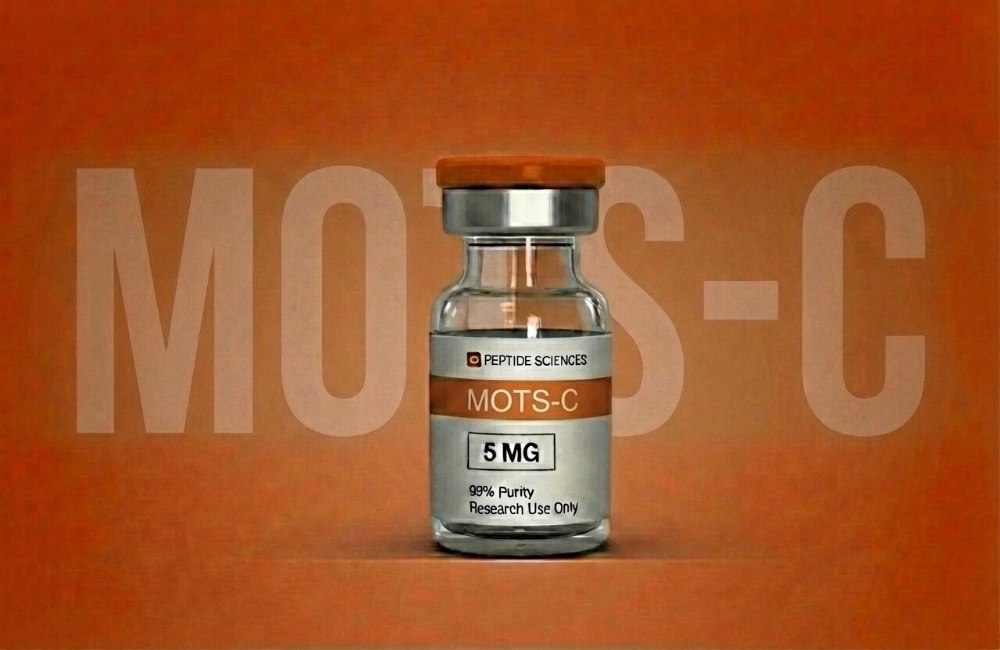
MOTS-c Peptide
Mechanism, Research Benefits, Dosing Protocol & Compliance 2026

MOTS-c is a small peptide produced by your mitochondria — the energy-generating organelles inside your cells — that regulates how your body handles glucose, burns fat, and responds to physical stress. It has attracted serious research interest as a potential exercise mimetic and metabolic modulator, particularly in aging. The evidence so far is real but limited: all published efficacy data comes from animal studies, no completed human clinical trial exists for the native peptide, and MOTS-c cannot legally be compounded or prescribed in the United States. This guide covers what the research actually shows, where the gaps are, and what the regulatory picture looks like in 2026.
Key takeaways
- MOTS-c (Mitochondrial Open Reading Frame of the 12S rRNA-c) is a 16-amino-acid peptide encoded by mitochondrial DNA — making it one of the only known bioactive peptides originating outside the cell nucleus.
- It activates AMPK (AMP-activated protein kinase), the body’s master metabolic switch, through a specific pathway involving the folate cycle and a molecule called AICAR.
- Animal studies show significant effects on insulin resistance, physical capacity in aged mice, and bone loss — but no completed human clinical trial has tested the native peptide.
- MOTS-c plasma levels decline with aging and rise during exercise (Reynolds et al., 2021, Nature Communications, PMID: 33469022).
- PeptideRx rates the evidence for MOTS-c’s metabolic effects as Grade C: primarily animal and in vitro data with no completed human clinical validation.
- MOTS-c is not permitted in compounded medications (FDA) and is explicitly prohibited by WADA at all times under Section 4.4.1 (AMPK Activators). Competitive athletes cannot use it.
Before you start All peptide protocols require a physician evaluation. MOTS-c is classified Research Use Only in the United States, cannot be legally compounded, and carries an explicit WADA ban — anyone in competitive sport faces career-ending sanctions if they use it.
What is MOTS-c?

Most peptides your body makes are encoded by nuclear DNA — the genome inside your cell’s nucleus. MOTS-c is different. It’s encoded by a 51-base-pair sequence within the mitochondrial 12S rRNA gene, placing it among a rare class of signals called mitochondrial-derived peptides (MDPs).
Lee et al. (2015, Cell Metabolism, PMID: 25738459) first identified and characterized MOTS-c, describing it as a mitochondrial signaling peptide that regulates metabolic homeostasis. The full name — Mitochondrial Open Reading Frame of the 12S rRNA-c — reflects exactly where it’s encoded. Its sequence is MRWQEMGYIFYPRKLR (16 amino acids), molecular formula C₁₀₁H₁₅₂N₂₈O₂₂S₂, molecular weight approximately 2,174.6 g/mol.
MOTS-c belongs to the same peptide family as Humanin (the first MDP discovered), SHLP1-6, and SHMOOSE. All share one defining feature: they are encoded by short open reading frames (sORFs) within mitochondrial DNA and act as retrograde signals — messages the mitochondria send back to the rest of the cell.
One thing the research has established clearly: MOTS-c levels change across your lifespan. Plasma concentrations decline with aging. Exercise increases them — Reynolds et al. (2021) demonstrated that endurance exercise raises MOTS-c expression in human skeletal muscle and circulation. This biological context frames much of the interest in the peptide: it behaves, at least in part, like something your body already uses to couple exercise with metabolic health.
Learn more about mitochondrial-derived peptides and the MDP family.
How does MOTS-c work?
MOTS-c activates AMPK — the enzyme often described as the body’s master metabolic regulator. But it doesn’t flip that switch directly. It works through a more indirect route involving a metabolic pathway you’ve probably never heard of.
Here’s the chain:
MOTS-c → inhibits the folate cycle → disrupts de novo purine biosynthesis → elevates AICAR → activates AMPK → upregulates GLUT4 → increases glucose uptake
Each step matters. The folate cycle (also called one-carbon metabolism) is directly linked to the pathway that builds purines from scratch. When MOTS-c disrupts this process, AICAR (5-aminoimidazole-4-carboxamide ribonucleotide) accumulates inside the cell. AICAR is a well-established AMPK activator — in fact, it’s the very molecule that a separate WADA-banned compound (AICAR itself) mimics pharmacologically.
AMPK activation, in turn, drives GLUT4 glucose transporters to the cell surface, increasing the cell’s capacity to absorb glucose from the bloodstream. This is the core mechanism behind the insulin-sensitizing effects seen in animal studies.
There’s a second pathway, too. Under conditions of metabolic stress — glucose restriction, oxidative stress, serum deprivation — MOTS-c physically moves from the cytoplasm into the cell nucleus. Inside the nucleus, it interacts with NRF2 and ATF1/7 transcription factors, regulating genes that contain antioxidant response elements (AREs). Kim et al. (2018, Cell Metabolism, PMID: 29983246) demonstrated this nuclear translocation pathway, describing it as a direct communication channel from the mitochondrial genome to the nuclear genome.
The pharmacological parallel most often drawn is with metformin. Both MOTS-c and metformin activate AMPK and improve glucose utilization — but through different upstream mechanisms. Metformin inhibits mitochondrial Complex I. MOTS-c works through the folate cycle. Different entry points, overlapping outputs.
Learn more about how AMPK activation affects glucose metabolism and insulin sensitivity.
What does the research show?
Important: All MOTS-c efficacy data below comes from animal studies or cell culture experiments. Distinguish carefully between mouse data and human data — the two are not interchangeable. PeptideRx rates the evidence for MOTS-c’s metabolic effects as Grade C.
Key takeaways — research
- In aged mice (22 months), two weeks of MOTS-c treatment significantly extended treadmill running capacity (Reynolds et al., 2021).
- MOTS-c prevented diet-induced obesity and insulin resistance in mice — without reducing food intake (Lee et al., 2015).
- Human plasma MOTS-c levels are lower in individuals with type 2 diabetes, gestational diabetes, and obesity across multiple observational studies.
- CB4211, a MOTS-c analog developed by CohBar, completed Phase 1 (NCT03998514) and met its primary safety endpoint — this is the only human trial data available.
Metabolic effects: insulin resistance and obesity
Lee et al. (2015) demonstrated that MOTS-c treatment prevented high-fat-diet-induced obesity and insulin resistance in mice. The effect did not come from reduced food intake or increased activity. MOTS-c increased thermogenesis (body heat production) and enhanced glucose utilization, measured by respiratory exchange ratio. Skeletal muscle showed increased AMPK activation and higher glucose transporter expression.
In aged mice (22 months), the same treatment reversed the insulin resistance that had developed with aging — a finding with direct relevance to metabolic decline in older adults.
Human observational data adds context. Plasma MOTS-c levels are lower in individuals with type 2 diabetes (Du et al., 2018), gestational diabetes (Yin et al., 2022), and obesity (Ramanjaneya et al., 2019). Kong et al. (2025) reported that MOTS-c may delay pancreatic islet cell senescence, suggesting a potential role in diabetes prevention. These associations are interesting — but association is not causation, and none of this is intervention data in humans.
Physical capacity and exercise performance
Reynolds et al. (2021) treated middle-aged (12-month) and old (22-month) mice with MOTS-c daily (15 mg/kg/day, intraperitoneal) for two weeks, then measured treadmill running capacity. Old MOTS-c-treated mice ran significantly longer than untreated old mice. Critically, late-life initiated treatment — starting at 23.5 months (roughly equivalent to 70+ human years) at three times weekly — still improved physical capacity and healthspan markers.
In humans, the same study confirmed that endurance exercise raises endogenous MOTS-c expression in skeletal muscle and circulation. This positions MOTS-c as a biological mediator of exercise’s metabolic benefits — not just a pharmaceutical analog of them.
Bone health
Ming et al. (2016, Biochemical and Biophysical Research Communications) found that MOTS-c suppressed ovariectomy-induced bone loss in mice via AMPK activation at 5 mg/kg over 12 weeks. No human bone density data exists.
Cardiovascular and neurological research
Cardiovascular data comes from animal models and cell culture. MOTS-c has shown NF-κB inhibition, oxidative stress reduction, and endothelial protection in these settings. Cardiac function improved in diabetic rat models in several 2020–2023 studies.
Neurological data is thinner still. Lower plasma MOTS-c levels have been associated with cognitive decline in aging models, but no interventional neurological study has been completed. This is an associational signal, not evidence of benefit.
| Condition | Study model | Key finding | Evidence grade | Citation |
|---|---|---|---|---|
| Insulin resistance (diet-induced) | Mouse | Prevented obesity and insulin resistance; increased glucose utilization | C | Lee et al., 2015 |
| Age-related insulin resistance | Mouse (22 mo.) | Reversed skeletal muscle insulin resistance | C | Lee et al., 2015 |
| Exercise/physical capacity | Mouse (all ages) | Enhanced treadmill running; late-life treatment improved healthspan | C | Reynolds et al., 2021 |
| Bone loss | Mouse | Suppressed ovariectomy-induced bone loss via AMPK activation | C | Ming et al., 2016 |
| Cardiovascular | Mouse/cell culture | Reduced NF-κB inflammation; improved cardiac function in diabetic rats | C | Multiple (2020–2023) |
| Type 1 diabetes | Mouse | Lowered blood glucose in STZ-induced T1D mice | C | Xu et al., 2024 |
| Neurological/Alzheimer’s | Associational | Lower MOTS-c associated with cognitive decline in aging models | C | Limited data |
Learn more about how AMPK-activating compounds compare for metabolic outcomes.
Dosing and administration
Important: No FDA-approved dosing exists for MOTS-c. No validated human dosing protocol has been published. All frameworks below derive from animal studies and practitioner-reported ranges. Consult a licensed physician before any use.
Administration route
Subcutaneous injection is the only administration route with published research support. All animal studies used intraperitoneal or subcutaneous injection.
| Route | Bioavailability | Evidence |
|---|---|---|
| Subcutaneous injection | Systemic; primary established route | All published animal studies |
| Oral | Not established; peptide likely degraded by GI proteases before absorption | No supporting data |
| Nasal | Unknown | No published data |
| Topical | Unknown | No published data |
| Sublingual | Unknown | No published data |
Dosing frameworks
Commonly reported clinical protocols fall into two frameworks:
| Framework | Starting dose | Upper range | Frequency |
|---|---|---|---|
| Daily (mcg range) | 200 mcg once daily | 500–1,000 mcg/day | Daily, titrated over weeks |
| Weekly (mg range) | 5 mg, 3x weekly | 15 mg/week total | 2–3 injections/week |
An alternate practitioner-reported protocol: 5 mg every 5 days for 20 days (4 injections total), repeated after a 6-month interval.
Cycle structure: 2–4 weeks on, followed by 2–4 weeks off. The rationale is that sustained AMPK activation may lead to pathway desensitization — periodic breaks may allow receptor resensitization. This has not been clinically validated.
Timing: Morning administration, fasted. Some practitioners recommend dosing 30–60 minutes before fasted training to align with the metabolic stress response. Morning timing also appears to reduce insomnia risk, a commonly reported side effect with evening dosing.
Animal study reference doses: Lee et al. (2015) used 5 mg/kg/day intraperitoneal in mice. Reynolds et al. (2021) used 15 mg/kg/day for 2 weeks in aged mice. Standard allometric scaling from mouse to human yields substantially lower per-kg doses — but this conversion has not been validated in clinical settings.
Reconstitution guide
Standard 10 mg vial: Add 3.0 mL bacteriostatic water (0.9% benzyl alcohol) to reach a concentration of 3.33 mg/mL.
- 0.15 mL = 500 mcg per injection
- 0.30 mL = 1 mg per injection
Steps:
- Wash hands. Clean the vial septum with an alcohol swab.
- Draw bacteriostatic water into an insulin syringe.
- Trickle the water slowly down the inside wall of the vial — never spray directly onto the lyophilized powder.
- Do not shake. Swirl gently until fully dissolved. The solution should be clear and colorless.
- Label the vial with date, concentration, and contents. Refrigerate immediately.
Injection sites: Lower abdomen (avoiding the navel), outer thighs, upper arms. Rotate sites by at least 1–2 inches between injections to prevent lipohypertrophy. Use a 90-degree angle for most body types; 45 degrees for lean individuals with minimal subcutaneous fat.
Storage
| Form | Temperature | Maximum duration |
|---|---|---|
| Lyophilized powder (long-term) | −20°C (freezer) | 2+ years |
| Lyophilized powder (short-term) | 2–8°C | Months |
| Reconstituted with bacteriostatic water | 2–8°C, light-protected | 7 days optimal; 21–28 days maximum |
Published stability data indicates approximately 25% activity loss after 24 hours at 4°C for reconstituted MOTS-c. Use reconstituted solution within 7 days for maximum potency. Never refreeze reconstituted solution. For travel, transport as lyophilized powder.
Learn more about peptide reconstitution and storage best practices.
Side effects and safety
MOTS-c is described as generally well-tolerated in animal studies and practitioner reports. No completed human safety trial exists for the native peptide.
| Side effect | Source | Notes |
|---|---|---|
| Injection site irritation (redness, swelling, mild bruising) | Practitioner reports; CB4211 Phase 1 trial | Most commonly reported issue in the Phase 1 analog trial |
| Insomnia | Practitioner reports | More common with evening dosing; morning administration recommended |
| Palpitations | Practitioner reports | Dose-dependent; typically at higher doses |
| Appetite changes | Practitioner reports | Both increased and decreased appetite reported |
| Mild fatigue or lethargy | Practitioner reports | Reported during initial adaptation period |
CB4211 Phase 1 trial data (NCT03998514): CohBar’s MOTS-c analog met its primary safety endpoint with no serious adverse events. Persistent injection site reactions were the most commonly reported issue. This is the closest available proxy for human safety data — but it reflects a modified analog, not the native peptide.
Cancer risk: Conflicting preclinical data exists. Some studies suggest anti-cancer properties through AMPK-mediated growth inhibition. Others identify a theoretical promotion risk in hormone-sensitive cancers (prostate, breast) due to metabolic pathway effects. No human cancer safety data exists. Anyone with a history of or active malignancy — particularly hormone-sensitive cancers — should discuss MOTS-c with an oncologist before any research use.
Long-term safety: No human data. Animal studies have not comprehensively assessed long-term effects.
Stacking caution — metformin and berberine: Both metformin and berberine activate AMPK through their own independent pathways. Combining either with MOTS-c creates dual AMPK activation that could theoretically increase hypoglycemia risk. No published interaction data exists. Practitioners generally advise close glucose monitoring with concurrent use.
Learn more about AMPK activation risks and interactions with metabolic medications.
Legal status (2026)
| Jurisdiction | Status | Key detail |
|---|---|---|
| United States (FDA) | Not approved; not permitted in compounded medications | Classified Research Use Only (RUO). FDA has explicitly stated MOTS-c cannot be used in compounded medications. It was not included in the February 2026 HHS reclassification announcement. |
| WADA | Prohibited at all times | 2025/2026 Prohibited List, Section 4.4 (Metabolic Modulators), 4.4.1 (AMPK Activators): MOTS-c is named explicitly alongside AICAR. No Therapeutic Use Exemption pathway exists. |
| US, Canada, UK, Australia | Legal for research purchase | Available as research-grade peptide labeled “for research use only.” Not approved for human therapeutic use in any of these jurisdictions. |
| European Union | Varies by member state | Generally treated as an RUO peptide; individual country regulations apply. |
| US Military | Likely prohibited | As a WADA S4.4.1 prohibited substance with no FDA approval, military drug testing programs would likely flag MOTS-c. |
MOTS-c occupies a stricter regulatory position than many other research peptides. Unlike BPC-157, KPV, or Semax — which are expected to return to Category 1 compounding status following the February 2026 HHS announcement — MOTS-c was not included in that reclassification. Its explicit naming on the WADA Prohibited List and its FDA prohibition from compounding create a more restrictive environment than most peptides in this category.
Important: Competitive athletes face career-ending sanctions if they use MOTS-c. USADA has published specific guidance confirming this prohibition. No Therapeutic Use Exemption is available because MOTS-c has no approved therapeutic use.
Learn more about the 2026 FDA peptide reclassification and what changed.
Alternatives to MOTS-c
| Peptide/compound | Primary target | Human data available? | Regulatory status |
|---|---|---|---|
| SS-31 (Elamipretide) | Inner mitochondrial membrane (cardiolipin stabilization) | Yes — trials in mitochondrial disease, cardiomyopathy | Investigational |
| Humanin | Neuroprotection; apoptosis inhibition | Limited human data | Research use only |
| Metformin | AMPK activation (via Complex I inhibition) | Decades of human clinical data | FDA-approved for type 2 diabetes |
| BPC-157 | Tissue repair, gut healing, anti-inflammatory | Limited human data | Compounding status varies (2026) |
| TB-500 | Tissue repair, actin regulation | Limited human data | Research use only |
SS-31 (Elamipretide) addresses mitochondrial dysfunction directly by stabilizing cardiolipin in the inner mitochondrial membrane. It’s a different target within the mitochondrial health space — MOTS-c works on metabolic signaling; SS-31 works on mitochondrial structural integrity.
Humanin, the first discovered MDP, is MOTS-c’s closest relative. It operates through distinct mechanisms — primarily protecting against amyloid-beta toxicity and apoptosis — with a stronger neurological emphasis than MOTS-c’s metabolic focus.
Metformin is the most direct pharmacological comparison. Both activate AMPK, though through different upstream pathways. Metformin is FDA-approved, inexpensive, oral, and has decades of human safety and efficacy data. For anyone with established metabolic disease, metformin remains the evidence-based standard — not MOTS-c.
Learn more about mitochondrial-targeted compounds and how they compare.
The bottom line
MOTS-c is one of the most mechanistically interesting peptides in the mitochondrial-derived peptide family — a genuine signaling molecule your body already produces that appears to couple metabolic health with exercise and aging. The animal data is compelling, particularly the work showing that even late-life treatment improved physical capacity in aged mice. But the gap between that and validated human data is large. No completed human clinical trial exists for the native peptide, and the regulatory situation in 2026 is strict: not compoundable in the US, explicitly banned by WADA. If you’re a competitive athlete, the answer is simple — MOTS-c is not an option. If you’re a researcher or physician evaluating this peptide for a patient, the honest assessment is that the biology is plausible, the human evidence isn’t there yet, and the regulatory risks are real. Your physician should weigh that picture carefully before any decision.
Frequently Asked Questions
What is MOTS-c and how does it differ from other peptides?
MOTS-c is a 16-amino-acid peptide encoded by mitochondrial DNA — not nuclear DNA — making it one of the only known bioactive peptides from the mitochondrial genome. It activates AMPK to regulate glucose metabolism, insulin sensitivity, and cellular stress responses. Most other research peptides (BPC-157, KPV, Semax) are encoded by nuclear DNA or are synthetic analogs of nuclear-encoded hormones.
Is MOTS-c legal to use?
It depends on how and by whom. Research-grade MOTS-c is legal to purchase as a Research Use Only compound in the US, Canada, UK, and Australia — but it cannot be prescribed or compounded for human therapeutic use. For competitive athletes, the answer is no: WADA explicitly prohibits MOTS-c under Section 4.4.1 at all times, with no Therapeutic Use Exemption available.
What is C-peptide, and is it the same as MOTS-c?
No — these are completely different. C-peptide is a 31-amino-acid byproduct of insulin synthesis in pancreatic beta cells. When proinsulin is cleaved to produce active insulin, C-peptide is released simultaneously. C-peptide testing measures beta cell function and helps differentiate type 1 from type 2 diabetes. It has no relationship to MOTS-c.
What do C-peptide test results mean?
Normal fasting C-peptide levels typically range from 0.5–2.0 ng/mL. Low C-peptide suggests reduced beta cell function — as seen in type 1 diabetes, late-stage type 2 diabetes, or beta cell destruction. Elevated C-peptide suggests insulin resistance (early type 2 diabetes) or insulinoma. Testing requires a fasting blood draw and clinical interpretation.
Can competitive athletes use MOTS-c?
No. WADA prohibits MOTS-c under Section 4.4.1 (AMPK Activators) at all times — both in-competition and out-of-competition. No Therapeutic Use Exemption pathway exists because MOTS-c has no approved therapeutic indication. USADA has published specific guidance confirming this prohibition. Use carries career-ending sanction risk.
Is MOTS-c the same as metformin?
No, though both activate AMPK. MOTS-c is an endogenous mitochondrial-derived peptide administered by injection, with only animal data for the native peptide. Metformin is an FDA-approved oral pharmaceutical for type 2 diabetes with decades of human safety data and clinical validation. The upstream mechanisms are also different: MOTS-c works through folate cycle inhibition; metformin works through mitochondrial Complex I inhibition.
What are the most common MOTS-c side effects?
Injection site irritation, insomnia (more common with evening dosing), palpitations, and appetite changes. These tend to be dose-dependent and mild based on practitioner reports. The CB4211 analog Phase 1 trial (NCT03998514) identified persistent injection site reactions as the most frequently reported issue. No long-term human safety data exists for the native peptide.
What quality standards should I look for when sourcing MOTS-c?
Look for a per-batch Certificate of Analysis (CoA) with HPLC purity at 99%+, mass spectrometry confirmation of molecular weight (~2,174.6 Da), cGMP-certified manufacturing, and cold-chain shipping. Avoid any supplier that makes human-use marketing claims, declines to share a CoA, or offers pricing below $20 for a 5 mg vial — these are red flags for quality or authenticity issues.
Considering peptide therapy? Speak with a licensed physician who can review your labs and discuss whether any peptide option is appropriate for your situation.
References
- Lee C, Zeng J, Drew BG, et al. The mitochondrial-derived peptide MOTS-c promotes metabolic homeostasis and reduces obesity and insulin resistance. Cell Metab. 2015;21(3):443–454. PMID: 25738459.
- Reynolds JC, Lai RW, Woodhead JST, et al. MOTS-c is an exercise-induced mitochondrial-encoded regulator of age-dependent physical decline and muscle homeostasis. Nat Commun. 2021;12:470. PMID: 33469022.
- Kim SJ, et al. The mitochondrial-encoded peptide MOTS-c translocates to the nucleus to regulate nuclear gene expression in response to metabolic stress. Cell Metab. 2018;28(3):516–524. PMID: 29983246.
- Wan W, et al. Mitochondria-derived peptide MOTS-c: effects and mechanisms related to stress, metabolism and aging. J Transl Med. 2023. PMID: 36694186.
- Ming W, et al. Mitochondria related peptide MOTS-c suppresses ovariectomy-induced bone loss via AMPK activation. Biochem Biophys Res Commun. 2016;476(4):412–419.
- Kong BS, et al. MOTS-c and pancreatic islet cell senescence. Exp Mol Med. 2025.
- ClinicalTrials.gov NCT03998514. CB4211 Phase 1 safety and tolerability study.
- WADA 2025/2026 Prohibited List, Section 4.4.1 (AMPK Activators).
- USADA. What is the MOTS-c peptide? January 2024.
Disclaimer: This content is for educational purposes only and does not constitute medical advice, diagnosis, or treatment. MOTS-c is not FDA-approved for any indication. It is classified as Research Use Only (RUO) and is not permitted in compounded medications. MOTS-c is explicitly prohibited by WADA for competitive athletes under Section 4.4.1 (AMPK Activators). PeptideRx does not sell peptides and does not provide medical consultations. All clinical claims cite PubMed-indexed or publicly available peer-reviewed sources. Dosing information reflects published preclinical data and practitioner-reported protocols and should not be interpreted as a prescription. The regulatory landscape is subject to change. Information reflects status as of March 2026.