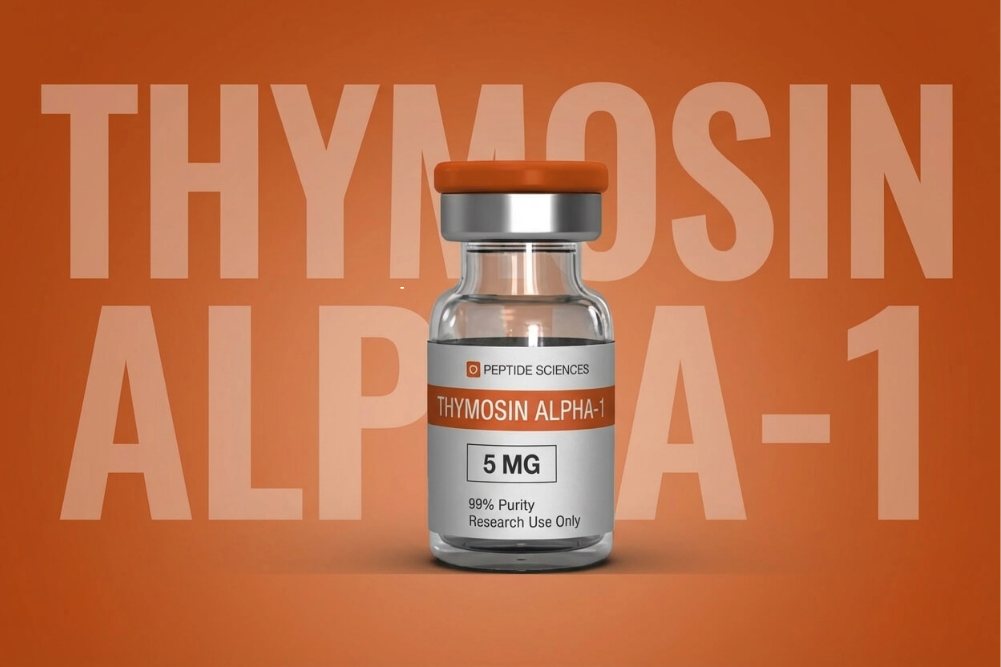
Thymosin Alpha-1 (Thymalfasin)
Mechanisms, dosing, benefits and 2026 legal status

Thymosin alpha-1 (Tα1) is a peptide your thymus gland produces naturally — and one of the most studied immunomodulatory compounds in clinical medicine, with approved uses in more than 35 countries. In the United States, it has held FDA orphan drug designations for nearly three decades and is now expected to return to legal compounding status following a February 2026 HHS announcement. The evidence behind it is real, the regulatory history is complicated, and the gap between what’s clinically proven and what’s marketed online is significant. This guide covers all three.
Key takeaways
- Thymosin alpha-1 is a 28-amino-acid peptide (3,108 Da) that activates the immune system through TLR-2 and TLR-9 signaling on dendritic cells, driving expansion of T cells and natural killer cells
- Thymalfasin (brand name Zadaxin) holds FDA orphan drug designations for hepatocellular carcinoma, malignant melanoma, DiGeorge syndrome, and chronic active hepatitis B — but is not broadly FDA-approved for therapeutic use
- The standard clinical dose is 1.6 mg subcutaneously twice weekly, based on a 900 mcg/m² body surface area calculation validated across multiple hepatitis B trials
- The TESTS trial (Wu et al., BMJ, January 2025; n=1,089) found no statistically significant reduction in 28-day sepsis mortality (HR 0.99, p=0.93), contradicting earlier smaller meta-analyses
- On February 27, 2026, HHS Secretary RFK Jr. announced Tα1 is among 14 peptides expected to return to FDA Category 1 compounding status; formal FDA guidance had not been published as of March 2026
Before you start. All peptide protocols require a physician evaluation. Thymosin alpha-1 is contraindicated in organ transplant recipients — its immune-activating mechanism directly conflicts with the immunosuppressive therapy required to prevent rejection. If you are on any immunosuppressive regimen, do not use Tα1 without explicit guidance from your treating physician.
What is Thymosin Alpha-1?
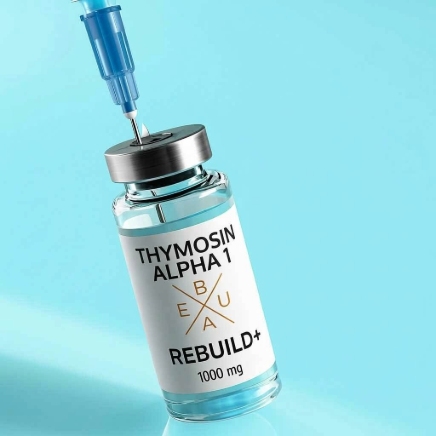
Thymosin alpha-1 is a 28-amino-acid immunomodulatory peptide with a molecular weight of 3,108 Daltons. It was first isolated from bovine thymus tissue by Dr. Allan L. Goldstein in 1972. Your body produces it naturally — the thymus gland carries the highest concentration, though the spleen, lung, kidney, and brain all contribute.
The peptide is cleaved from a larger 113-amino-acid precursor protein called prothymosin alpha (ProTα) via asparagine endopeptidase. Its amino acid sequence — Ac-SDAAVDTSSEITTKDLKEKKEVEEEAEN — is conserved across human, bovine, porcine, and ovine species, which is why animal research findings translate well enough to inform human clinical study design.
Thymalfasin and Zadaxin
Thymalfasin is the internationally recognized generic name for the synthetic version of Tα1. Zadaxin is the registered brand name. Both contain an amino acid sequence identical to endogenous human Tα1 and are produced via solid-phase peptide synthesis — the only production method approved for clinical-grade Tα1.
Thymalfasin is approved for therapeutic use in more than 35 countries across Latin America, Eastern Europe, the Middle East, and Asia-Pacific. In the United States, it holds FDA orphan drug designations for four conditions but has not received broad marketing approval.
Learn more about how thymalfasin compares with other immunomodulatory peptides.
How does Thymosin Alpha-1 work?
Tα1 acts at the intersection of your innate and adaptive immune systems — a distinction that separates it from single-pathway immune stimulants.
Here’s the signaling chain in plain terms:
Tα1 → activates TLR-2 and TLR-9 on dendritic cells → triggers IL-2, IL-12, IFN-α, and IFN-γ production → drives expansion of CD4+ helper T cells, CD8+ cytotoxic T cells, and natural killer (NK) cells
Tα1 also activates TLR-3 and TLR-4 through IRF3 and NF-κB signaling pathways. This dual engagement of innate and adaptive immunity is what makes it an immunomodulator rather than a simple stimulant.
The net effect isn’t one-directional. Tα1 upregulates suppressed immune responses and promotes regulatory T-cell differentiation through indoleamine-2,3-dioxygenase (IDO) stimulation. The result is a more calibrated immune response — not an indiscriminate boost.
Learn more about TLR signaling and how it differs from other immune activation pathways.
What does the research show?
Key takeaways — research
- Virological response in hepatitis B reached 40.6% with 1.6 mg twice-weekly Tα1 for 52 weeks (Mutchnick et al., 1991; n=195)
- The 2025 TESTS Phase 3 trial (Wu et al., BMJ; n=1,089) found Tα1 did not reduce 28-day sepsis mortality (HR 0.99, p=0.93), overturning earlier smaller trials
- China’s National Health Commission included Tα1 in its April 2020 COVID-19 treatment protocol, but no Phase 3 RCT has validated this use
- Tα1 is being studied alongside PD-1 immune checkpoint inhibitors for cancer — early data suggests it may reduce T-cell exhaustion
Hepatitis B
The strongest evidence for Tα1 is here. A 195-patient clinical trial of 1.6 mg subcutaneous Tα1 administered twice weekly for 52 weeks showed a virological response rate (clearance of serum HBV-DNA and HBeAg) of 40.6% (Mutchnick et al., 1991).
Combination therapy with interferon-alpha 2b improved outcomes further. One trial reported normal serum ALT levels at six months in 71% of combination therapy patients versus 35% receiving interferon alone (Ancell et al., AJHP, 2001). Hepatitis B treatment using Tα1 predates direct-acting antivirals and has largely been superseded by them.
PeptideRx rates the evidence for Tα1 in chronic hepatitis B as Grade A.
Hepatitis C
Tα1 monotherapy showed limited efficacy against hepatitis C. When combined with pegylated interferon-alpha 2a, one trial reported HCV RNA clearance in 65% of combination patients versus 29% receiving interferon alone (Ancell et al., AJHP, 2001). Direct-acting antivirals have replaced this approach.
PeptideRx rates the evidence for Tα1 in hepatitis C as Grade B.
Sepsis
The evidence here is now inconclusive, and it’s the most important update in this article.
The TESTS trial (Wu et al., BMJ, January 2025) is the largest and most rigorous trial of Tα1 for sepsis to date. It enrolled 1,106 adults across 22 centers in China meeting Sepsis-3 criteria. Participants were randomized 1:1 to subcutaneous Tα1 or placebo every 12 hours for seven days.
The primary outcome — 28-day all-cause mortality — did not differ between groups. Mortality occurred in 127 of 542 patients (23.4%) in the Tα1 group versus 132 of 547 (24.1%) in the placebo group (HR 0.99; 95% CI: 0.77–1.27; p=0.93). No secondary outcomes differed either.
This contradicts earlier positive meta-analyses based on smaller, less rigorous trials.
A prespecified subgroup analysis did show a potential differential effect: patients aged 60 and older trended toward benefit (HR 0.81; 95% CI: 0.61–1.09), and patients with diabetes showed a statistically significant benefit (HR 0.58; 95% CI: 0.35–0.99; p for interaction=0.04). These findings require dedicated confirmatory trials before they influence clinical practice.
PeptideRx rates the evidence for Tα1 in sepsis as Grade B — with the overall mortality signal now null.
COVID-19
China’s National Health Commission included Tα1 in its April 2020 COVID-19 treatment protocol to address T-cell lymphopenia in critically ill patients. Two U.S.-registered trials (NCT04428008, NCT04487444) investigated thymalfasin for COVID-19.
A 2023 study found that Tα1 reduced proinflammatory cytokine production by T cells through dendritic cell modulation during acute SARS-CoV-2 infection (Espinar-Buitrago et al., ScienceDirect, 2023). The evidence remains observational. No Phase 3 RCT has validated Tα1 specifically for COVID-19.
PeptideRx rates the evidence for Tα1 in COVID-19 as Grade C.
Cancer
Thymalfasin holds FDA orphan drug designations for hepatocellular carcinoma (HCC) and malignant melanoma. In HCC, Tα1 is used as an adjuvant to chemotherapy — inhibiting tumor cell proliferation and reducing chemotherapy-induced immunosuppression.
A multicenter randomized study of 488 patients with metastatic melanoma tested thymosin alpha-1 combined with dacarbazine and interferon-alpha. The study reported durable responses with median response durations ranging from 1.9 to 23 months. Adding Tα1 did not produce additional adverse reactions beyond those expected from the dacarbazine-interferon regimen (Maio et al., J Clin Oncol, 2010).
Early clinical and preclinical data also show potential in non-small cell lung cancer and head-and-neck carcinoma. Emerging research is exploring Tα1 in combination with PD-1 immune checkpoint inhibitors, where it may reduce T-cell exhaustion and help restore antitumor immune responses. These findings are preliminary.
PeptideRx rates the evidence for Tα1 in oncology support as Grade B.
Vaccine adjuvant use in elderly populations
Thymic involution — the gradual shrinkage of the thymus after age 60 — contributes to immunosenescence (a decline in immune competence). This reduces how well older adults respond to vaccines.
Clinical data shows Tα1 administered as a vaccine adjuvant increased antibody response to influenza vaccination in elderly patients who previously failed to achieve adequate antibody titers. Thymalfasin is approved as a vaccine adjuvant for influenza and hepatitis B in elderly and immunocompromised populations in multiple countries outside the United States.
PeptideRx rates the evidence for Tα1 as a vaccine adjuvant in elderly populations as Grade B.
Autoimmune and inflammatory conditions
A 2024 review identified potential for Tα1 in rheumatoid arthritis (RA), multiple sclerosis (MS), and systemic lupus erythematosus (SLE). The proposed mechanism is modulation of regulatory T-cell differentiation and suppression of overactive inflammatory responses. Tα1 has also shown antioxidant activity through upregulation of superoxide dismutase, glutathione peroxidase, and catalase.
Smaller trials have documented clinical applications in acute pancreatitis and fungal/mold infections. These findings are preliminary.
PeptideRx rates the evidence for Tα1 in autoimmune and inflammatory conditions as Grade C.
Dosing and administration
Tα1 has one validated administration route: subcutaneous injection. Every published randomized controlled trial, pharmacokinetic study, and approved dosing protocol is based on subcutaneous (SC) delivery. Other routes lack clinical evidence.
Important: Tα1 is a 28-amino-acid peptide. Oral formulations degrade in the gastrointestinal tract before reaching systemic circulation. No oral bioavailability data exists for Tα1. Claims about oral Tα1 products are not supported by clinical evidence.
Dosing by indication
The standard approved dose for thymalfasin is 1.6 mg administered subcutaneously twice weekly. This is derived from a body surface area calculation of 900 mcg/m² (Ancell et al., AJHP, 2001). Pharmacokinetic studies confirm Tα1 reaches peak serum concentration approximately 2 hours after SC injection, with a plasma half-life of approximately 2 hours and no evidence of accumulation with repeated dosing (Rost et al., Int J Clin Pharmacol Ther, 1999).
| Indication | Dose | Frequency | Cycle length | Source |
|---|---|---|---|---|
| Chronic hepatitis B (orphan designation) | 1.6 mg SC | Twice weekly | 6–12 months | Ancell et al., AJHP, 2001 |
| Hepatocellular carcinoma (adjuvant) | 1.6 mg SC | Twice weekly | Per oncology protocol | Clinical trial protocols |
| Vaccine adjuvant (elderly) | 1.6 mg SC | Twice weekly | 4 weeks pre- and post-vaccination | International clinical protocols |
| Severe acute pancreatitis (research) | 3.2 mg SC | Twice daily | 7 days | Li et al., Crit Care, 2009 |
| Off-label immune support | 1.6 mg SC | Twice weekly | 8–12 weeks typical; physician-directed | Functional medicine practice — no standardized protocol |
| Sepsis (TESTS trial protocol) | 1.6 mg SC | Every 12 hours | 7 days or until ICU discharge | Wu et al., BMJ, 2025 |
The clinical dose range across published studies spans 0.8 mg to 6.4 mg for single doses, and 1.6 mg to 16 mg per day for multi-dose regimens lasting 5 to 7 days (PMC7747025). Off-label dosing protocols vary and require physician supervision.
Administration routes compared
| Route | Evidence base | Bioavailability | Clinical support | Notes |
|---|---|---|---|---|
| Subcutaneous (SC) | Strong — multiple RCTs and PK studies | Peak serum at ~2 hours; ~2-hour half-life | Standard of care across all approved indications | Abdomen, thigh, or upper arm; rotate sites |
| Intramuscular (IM) | Limited — some international clinical use | Similar absorption profile to SC | Used in some international protocols | Fewer data than SC; not preferred |
| Oral | None | No data — peptide degrades in the GI tract | No clinical trials | Not a viable route for Tα1 |
| Nasal | None | No Tα1-specific data | No clinical evidence | Not supported for Tα1 |
| Sublingual | None | No Tα1-specific data | No clinical evidence | Not supported for Tα1 |
| Topical | Preclinical only | One subcutaneous animal model (wound healing) | No human clinical data | Anecdotal only |
Reconstitution guide
Thymalfasin is supplied as a lyophilized (freeze-dried) powder in single-use vials. Each vial contains 1.6 mg thymalfasin, 50 mg mannitol as a bulking agent, and sodium phosphate buffer at pH 6.8. Store lyophilized vials at -20°C prior to reconstitution.
Reconstitution steps:
- Draw 1.0 mL of sterile water for injection into a syringe
- Inject the water slowly into the vial, directing the stream against the glass wall — not directly onto the powder
- Gently swirl until the contents dissolve completely. Do not shake vigorously; excessive agitation can denature the peptide
- Inspect the solution. It should appear clear and colorless. Discard if particulate matter or discoloration is present
- Draw the full 1.0 mL into a new syringe for injection
Storage after reconstitution: Use promptly. If immediate use isn’t possible, store refrigerated at 2°C to 8°C. Sterile-water reconstitution is typically stable for 24 to 48 hours. Compounding pharmacies that supply Tα1 reconstituted in bacteriostatic water (0.9% benzyl alcohol) extend shelf life to approximately 28 days under refrigeration. Confirm storage instructions with your dispensing pharmacy.
Injection site guidance: Administer into the fatty tissue of the abdomen (avoiding a 2-inch radius around the navel), the front of the thigh, or the back of the upper arm. Rotate injection sites with each dose to reduce the risk of localized reactions.
Learn more about subcutaneous injection technique for peptide therapy.
Side effects and safety
Thymalfasin has a favorable safety profile across more than 30 clinical trials involving over 11,000 human subjects (Dinetz & Lee, Altern Ther Health Med, 2024).
Documented side effects
| Side effect | Frequency | Severity | Notes |
|---|---|---|---|
| Injection-site reactions (redness, mild swelling, transient discomfort) | Common | Mild | Rates comparable to placebo in controlled trials |
| Low-grade fever | Uncommon | Mild | Reported in some combination therapy trials |
| Fatigue | Uncommon | Mild | More commonly attributed to co-administered interferon-alpha |
| Nausea, muscle aches, neutropenia | Rare | Mild to moderate | Observed in trials combining Tα1 with interferon-alpha 2b; attributed primarily to interferon component |
Animal toxicology
Preclinical toxicology studies found no adverse reactions at single doses up to 20 mg/kg body weight or repeated doses up to 6 mg/kg/day for 13 weeks (Garaci et al., Frontiers in Medicine, 2024). The highest single dose tested in animals represents approximately 800 times the standard clinical dose. Teratology studies in mice and rabbits revealed no fetal abnormalities.
Contraindications
Important: Tα1 is contraindicated in organ transplant recipients. The peptide’s immune-activating mechanism directly conflicts with the immunosuppressive therapy required to prevent rejection. Do not use Tα1 in any patient on an immunosuppressive regimen without explicit guidance from their transplant physician.
Patients with active malignancies should discuss Tα1 use with their oncologist before starting. Immune activation could theoretically interact with tumor biology in ways that are not yet fully characterized.
What the TESTS trial confirmed about safety
The TESTS trial (Wu et al., BMJ, 2025) found no statistically significant difference in any safety outcome between the Tα1 and placebo groups — even at the intensive dosing schedule of every 12 hours for seven days in critically ill ICU patients. The null efficacy finding for sepsis mortality is not a safety signal. It confirms that Tα1 at studied doses is generally well-tolerated even in the most demanding clinical conditions.
A note on angiogenesis
No angiogenic signal has been documented for Tα1 in the published literature. This is an important distinction from thymosin beta-4 (TB-500), which has documented angiogenic properties. Tα1 and TB-500 are structurally and functionally distinct peptides despite sharing a thymosin-family name.
Learn more about the differences between thymosin alpha-1 and thymosin beta-4.
Legal status (2026)
The regulatory picture for Tα1 in the United States involves several overlapping frameworks. Understanding each one matters for both prescribers and patients.
FDA orphan drug designations
Thymalfasin holds FDA orphan drug designations for four conditions: hepatocellular carcinoma, malignant melanoma, DiGeorge syndrome with immune defects, and chronic active hepatitis B.
Orphan drug designation provides regulatory incentives (tax credits, market exclusivity periods) to encourage development of therapies for rare diseases. Designation is not equivalent to broad marketing approval. The FDA orphan drug database lists thymalfasin as “Not FDA Approved for Orphan Indication” for certain designations.
Category 1 vs. Category 2 compounding status
In late 2023, the FDA moved 19 peptides — including Tα1 — to its Category 2 list under Section 503A of the Federal Food, Drug, and Cosmetic Act. Category 2 designation effectively restricted licensed compounding pharmacies from preparing these peptides as bulk drug substances.
In September 2024, five peptides (CJC-1295, Ipamorelin, Thymosin Alpha-1, AOD-9604, and Selank) were removed from Category 2 and referred to the Pharmacy Compounding Advisory Committee (PCAC) for formal review — the standard first step toward potential Category 1 eligibility.
February 2026 HHS announcement
On February 27, 2026, HHS Secretary Robert F. Kennedy Jr. announced that approximately 14 of the 19 restricted peptides, including Tα1, would be returned to Category 1 compounding status. Category 1 status allows licensed compounding pharmacies to legally prepare these peptides under a physician’s prescription.
Important: As of early March 2026, formal FDA guidance implementing this reclassification has not been published. The announcement signals regulatory intent — it does not constitute official policy. Do not assume compounding access has been formally restored until the FDA updates its Category 2 list through official channels.
The FDA also recently reconstituted the PCAC membership, which may affect the direction of future advisory reviews.
WADA and anti-doping status
Thymosin beta-4 (TB-500) is explicitly listed on the WADA Prohibited List under class S2 (peptide hormones, growth factors, related substances, and mimetics). The 2025 and 2026 WADA Prohibited Lists name “Thymosin-β4 and its derivatives e.g. TB-500” as banned substances.
Thymosin alpha-1 is not explicitly named as a banned substance on the WADA Prohibited List. The S2 class does include a catch-all provision covering “other growth factors or growth factor modulators” that affect immune function or regenerative capacity. Whether Tα1 falls under this provision has not been formally clarified by WADA or USADA as of early 2026.
Important: Athletes subject to anti-doping testing should verify Tα1 status directly with WADA or their sport’s designated anti-doping authority before use. Do not assume clearance based on the absence of an explicit listing.
Military context
U.S. Department of Defense Operation Supplement Safety Program (OPSS) guidance on peptides generally follows FDA classification. Active-duty military personnel should consult their unit medical officer and verify current DoD policy before using any peptide therapy.
Learn more about the February 2026 FDA peptide reclassification and what it means for compounding access.
Alternatives to Thymosin Alpha-1
No alternative peptide replicates Tα1’s specific TLR-2/TLR-9 agonist immunomodulation mechanism. The compounds below are sometimes discussed alongside Tα1 but serve different primary functions.
| Peptide | Primary indication | Mechanism | 2026 US legal status | Key difference from Tα1 |
|---|---|---|---|---|
| TB-500 (Thymosin beta-4) | Musculoskeletal repair, wound healing, angiogenesis | Actin-binding protein that promotes cell migration and tissue regeneration | Announced for Category 1 reclassification (pending formal guidance); WADA-banned | Distinct peptide (43-aa vs. 28-aa); does not target immune modulation via TLR agonism |
| PDA (Pentadeca Arginate) | Tissue repair, anti-inflammatory | Synthetic 15-aa peptide; BPC-157 derivative with arginine salt | Emerging compound; regulatory status evolving | Different mechanism; not an immunomodulator |
| Sermorelin | Growth hormone optimization, metabolic support | GHRH analog that stimulates pituitary GH release | Announced for Category 1 reclassification (pending formal guidance) | Growth hormone secretagogue; operates through endocrine pathway, not immune modulation |
| CJC-1295 | Growth hormone optimization, sleep, lean mass | GHRH analog with extended half-life via DAC modification | Announced for Category 1 reclassification (pending formal guidance) | Complementary to Tα1 in longevity protocols, not substitutive |
| KPV | Anti-inflammatory, gut health | Alpha-MSH fragment; melanocortin pathway anti-inflammatory | Announced for Category 1 reclassification (pending formal guidance) | Does not activate TLR pathways or modulate adaptive immunity |
Sermorelin and CJC-1295 address metabolic, regenerative, and sleep-related pathways through the GHRH receptor on pituitary somatotroph cells. Practitioners sometimes co-prescribe them alongside Tα1 in longevity protocols, but they address entirely different physiological systems.
TB-500 targets musculoskeletal repair and angiogenesis. If your goal is immune support, TB-500 is not a substitute for Tα1. The two peptides share a family name but differ in amino acid sequence, molecular target, and clinical application.
Learn more about how Tα1 fits into broader immune optimization protocols.
The bottom line
Thymosin alpha-1 is one of the most clinically studied immunomodulatory peptides available, with a track record spanning more than three decades, over 35 countries of approval, and a well-documented safety profile in more than 11,000 human subjects. For hepatitis B, vaccine adjuvant use in elderly populations, and oncology support, the evidence is meaningful. The February 2026 HHS announcement signals that US compounding access is likely returning — but formal FDA guidance has not been published, so check current status with a licensed physician before pursuing a protocol. If you’re an athlete subject to anti-doping rules, verify Tα1’s WADA status directly with your governing body before use — the absence of an explicit listing does not confirm clearance.
Frequently asked questions
What is the standard dosage of Thymosin Alpha-1?
The typical clinical dose is 1.6 mg administered subcutaneously twice weekly, calculated from a 900 mcg/m² body surface area basis (Ancell et al., AJHP, 2001). This dose is validated across hepatitis B treatment protocols spanning 6 to 12 months. Off-label protocols may differ — consult a licensed physician for individualized guidance.
Is Thymosin Alpha-1 legal in the United States in 2026?
Access is in transition. Thymalfasin holds FDA orphan drug designations for four indications. On February 27, 2026, HHS Secretary RFK Jr. announced that Tα1 is among 14 peptides expected to return to Category 1 compounding status, which would allow licensed compounding pharmacies to prepare it under a physician’s prescription. Formal FDA guidance implementing this change had not been published as of March 2026.
What is the difference between Thymosin Alpha-1 and TB-500?
They are structurally and functionally distinct peptides that share a family name. Thymosin alpha-1 (28 amino acids, 3,108 Da) targets immune modulation through TLR-2/TLR-9 agonism and T-cell activation. TB-500 — a fragment of thymosin beta-4 (43 amino acids) — targets tissue repair and angiogenesis through actin-binding and cell migration pathways. TB-500 is explicitly banned by WADA under class S2. Tα1 is not named on the WADA Prohibited List, though its status under the S2 catch-all provision remains unconfirmed.
Does Thymosin Alpha-1 work for sepsis?
The evidence is now inconclusive. The TESTS trial (Wu et al., BMJ, January 2025) enrolled 1,089 adults with sepsis across 22 centers and found no statistically significant 28-day mortality reduction (HR 0.99; 95% CI: 0.77–1.27; p=0.93), contradicting earlier smaller meta-analyses. A prespecified subgroup analysis suggested potential benefit in patients aged 60 and older and those with diabetes — but these findings require dedicated confirmatory trials before they can inform treatment decisions.
What are the side effects of Thymosin Alpha-1?
Injection-site reactions — redness, mild swelling, and transient discomfort — are the most common side effects, occurring at rates comparable to placebo in controlled trials. Fever and fatigue occur rarely and are more commonly associated with co-administered interferon-alpha than with Tα1 itself. Animal toxicology studies found no adverse effects at single doses up to 20 mg/kg (approximately 800 times the clinical dose). Tα1 is contraindicated in organ transplant recipients.
Can Thymosin Alpha-1 be taken orally?
No. As a 28-amino-acid peptide, Tα1 is degraded by proteolytic enzymes in the gastrointestinal tract before reaching systemic circulation. No oral bioavailability data exists. Every clinical study showing immune modulation is based on subcutaneous injection. Oral formulations claiming Tα1 benefits have no supporting clinical data.
Is Thymosin Alpha-1 banned by WADA?
Thymosin alpha-1 is not individually named on the 2025 or 2026 WADA Prohibited Lists. Thymosin beta-4 (TB-500) is explicitly banned under class S2. The S2 class includes a catch-all provision covering immunomodulatory growth factors, and whether Tα1 falls under it has not been formally clarified by WADA or USADA as of early 2026. Athletes should verify status directly with their governing anti-doping authority before use.
How long does Thymosin Alpha-1 take to work?
Tα1 reaches peak serum concentration approximately 2 hours after subcutaneous injection, with blood levels returning to baseline within 24 hours. Clinical immune benefits — such as improved T-cell counts or vaccine antibody response — typically develop over weeks of consistent twice-weekly administration. Hepatitis B treatment protocols span 6 to 12 months.
Considering peptide therapy? Speak with a licensed physician who can review your labs and discuss whether any option is appropriate for your situation.
References
- Wu J, Pei F, Zhou L, et al. The efficacy and safety of thymosin α1 for sepsis (TESTS): multicentre, double blinded, randomised, placebo controlled, phase 3 trial. BMJ. 2025;388:e082583. doi:10.1136/bmj-2024-082583
- Ancell CD, Phipps J, Young L. Thymosin alpha-1. Am J Health-Syst Pharm. 2001;58(10):879-888. doi:10.1093/ajhp/58.10.879
- Romani L, Bistoni F, Gaziano R, et al. Thymosin alpha 1 activates dendritic cells for antifungal Th1 resistance through toll-like receptor signaling. Blood. 2004;103(11):4232-4239. doi:10.1182/blood-2003-11-4036
- Garaci E, Paci M, Matteucci C, et al. Phenotypic drug discovery: a case for thymosin alpha-1. Front Med (Lausanne). 2024;11:1388959. doi:10.3389/fmed.2024.1388959
- Rost KL, Wierich W, Masayuki F, Tuthill CW, Horwitz DL, Herrmann WM. Pharmacokinetics of thymosin alpha1 after subcutaneous injection of three different formulations in healthy volunteers. Int J Clin Pharmacol Ther. 1999;37(1):51-57.
- Danielli R, Fonsatti E, Pezzani L, et al. Thymosin alpha-1 in melanoma: from the clinical trial setting to the daily practice and beyond. Ann N Y Acad Sci. 2012;1270:8-12.
- Nayersina R, Fowler P, Guilhot S, et al. HLA A2 restricted cytotoxic T lymphocyte responses to multiple hepatitis B surface antigen epitopes during hepatitis B virus infection. J Immunol. 1993;150(10):4659-4671.
- Espinar-Buitrago MS, Vazquez-Alejo E, Magro-Lopez E, et al. Immune modulation via dendritic cells by the effect of Thymosin-alpha-1 on immune synapse in HCMV infection. ScienceDirect. 2023. doi:10.1016/j.intimp.2023.110085
- Dinetz EL, Lee E. Comprehensive review of the safety and efficacy of Thymosin alpha 1 in human clinical trials. Altern Ther Health Med. 2024;30(1):6-12.
- Gu B, Zhou Y, Nie Y, et al. Efficacy of thymosin α1 for sepsis: a systematic review and meta-analysis of randomized controlled trials. Front Cell Infect Microbiol. 2025;15:1673959. doi:10.3389/fcimb.2025.1673959
- ClinicalTrials.gov. Thymalfasin (Thymosin Alpha 1) to Treat COVID-19 Infection. NCT04487444.
- ClinicalTrials.gov. Thymosin Alpha 1 (Ta1) for COVID-19. NCT04428008.
- U.S. Food and Drug Administration. Orphan Drug Designations and Approvals: Thymalfasin. FDA.gov.
Disclaimer: PeptideRx provides physician-reviewed educational content about peptide therapy. PeptideRx does not provide medical advice, diagnosis, or treatment. Thymosin alpha-1 (thymalfasin) is not FDA-approved for human therapeutic use. All dosing information reflects published research protocols, not prescribing recommendations. Consult a licensed healthcare provider before making any decisions about peptide therapy. The February 27, 2026 HHS announcement regarding peptide reclassification does not constitute formal FDA guidance and should not be interpreted as confirmation of legal compounding status. Content medically reviewed [date]. Evidence grading criteria are working definitions pending formal review.