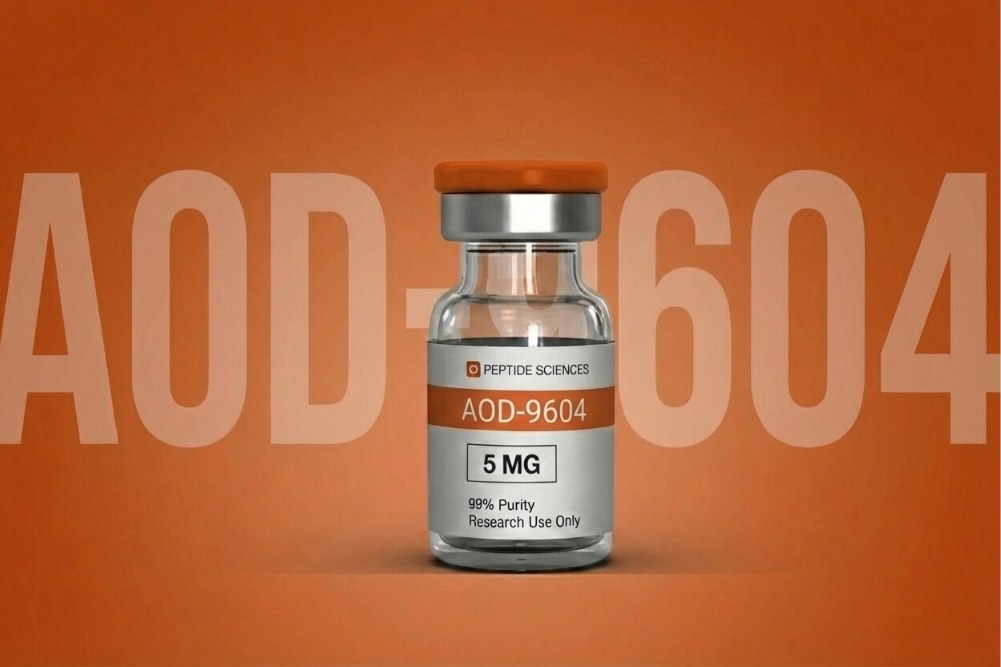
AOD-9604
Mechanism, Dosing, Safety, and Legal Status

AOD-9604 is a 16-amino acid peptide derived from the fat-burning region of human growth hormone — modified for stability, stripped of growth hormone’s side effects, and studied in six human clinical trials involving more than 900 participants. It works directly on fat cells, which is exactly what draws people to it as an alternative to GLP-1 medications. The evidence for fat loss is real but modest, the injectable route most practitioners use today has never been tested in a human trial, and the regulatory situation shifted again in early 2026. This guide covers the mechanism, the actual trial data, what’s still unknown, and where the law currently stands.
Key takeaways
- AOD-9604 is a synthetic 16-amino acid peptide derived from amino acid residues 176–191 of human growth hormone (hGH), with structural modifications that improve stability
- It targets fat cells directly via β3-adrenergic receptor (β3-AR) upregulation — a pathway completely independent of the growth hormone receptor
- Six randomized, double-blind, placebo-controlled trials confirmed no IGF-1 elevation, no glucose impairment, and no serious adverse events attributed to AOD-9604
- The best human fat-loss data: oral 1 mg/day produced approximately 2.6–2.8 kg of fat loss beyond placebo over 12 weeks; the larger 24-week OPTIONS trial failed its primary endpoint
- The subcutaneous injectable route used by most practitioners today has never been tested in a human fat-loss RCT — this is the single most important evidence gap in the literature
- The PCAC voted against 503A compounding inclusion on December 4, 2024; HHS Secretary RFK Jr. announced a potential reclassification on February 27, 2026, but the FDA had not formally acted as of March 2026
Before you start All peptide weight loss protocols require a physician evaluation. AOD-9604 has no FDA-approved therapeutic indication, and the subcutaneous route used in most clinical protocols has no human fat-loss trial data to support it — making physician oversight especially important before starting any protocol.
What is AOD-9604?
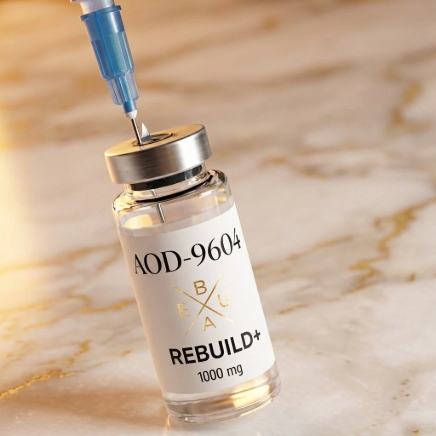
AOD-9604 — Anti-Obesity Drug 9604 — is a synthetic hexadecapeptide (16 amino acids) with the sequence YLRIVQCRSVEGSCGF. Metabolic Pharmaceuticals Ltd. in Australia developed it in the 1990s from a specific region of human growth hormone.
The peptide comes from the C-terminal end of hGH, specifically residues 176 through 191. Two structural changes distinguish it from the native fragment. The N-terminal phenylalanine at position 176 has been replaced with a tyrosine residue, increasing peptide stability. A disulfide bridge connects Cys7 and Cys14, adding structural rigidity that improves resistance to enzymatic breakdown.
AOD-9604 is not the same as “HGH Fragment 176-191.” The native fragment lacks the tyrosine substitution and has no human clinical trial data. AOD-9604 is the studied, patent-protected molecule. Some vendors treat these interchangeably — that is technically inaccurate, and the distinction matters when evaluating vendor quality.
AOD-9604 vs. HGH Fragment 176-191 vs. full hGH
| Attribute | AOD-9604 | HGH Fragment 176-191 | Full hGH |
|---|---|---|---|
| Length | 16 amino acids | 16 amino acids | 191 amino acids |
| GH receptor binding | No | No | Yes |
| IGF-1 elevation | No | Unknown | Yes |
| Lipolysis mechanism | β3-AR mediated | Similar (presumed) | GH receptor mediated |
| Glucose impairment | No | Unknown | Yes |
| Human trial data | 6 RCTs, 900+ participants | None | Extensive |
| N-terminal modification | Tyr substitution | None | N/A |
Learn more about how AOD-9604 compares structurally to full human growth hormone.
How does AOD-9604 work?
AOD-9604 targets fat cells through a pathway that has nothing to do with the growth hormone receptor. This is the most important thing to understand about why it differs from actual growth hormone therapy.
The signaling chain looks like this:
AOD-9604 → upregulates β3-adrenergic receptor (β3-AR) in fat tissue → β3-AR activation triggers lipolysis → stored triglycerides break down into free fatty acids + glycerol → available for energy use
At the same time, AOD-9604 inhibits lipogenesis (the process of converting excess calories into stored fat). The effect is two-directional: more fat released, less new fat created.
Heffernan et al. (2001, PMID 11713213) confirmed this mechanism using β3-AR knockout mice. Mice lacking the β3-AR gene did not respond to AOD-9604 treatment at all — demonstrating that the fat-reducing effect depends entirely on β3-AR activity. Normal mice showed reduced body weight gain and increased fat oxidation without changes in blood sugar or insulin levels.
Why the growth hormone receptor distinction matters
AOD-9604 does not bind the growth hormone receptor. That single distinction eliminates the side effects that make long-term growth hormone use problematic.
Across all six human clinical trials, AOD-9604 produced no elevation in IGF-1 (insulin-like growth factor 1) — the hormone that mediates most of hGH’s growth-promoting effects, including the concern about stimulating cell proliferation. It also showed no impairment of glucose metabolism and no insulin resistance.
The trade-off is straightforward: AOD-9604 carries none of the acromegaly risk, diabetes risk, or cell-proliferation concerns associated with growth hormone therapy. But it also provides none of hGH’s muscle-building, bone-density, or anti-aging effects. AOD-9604 is a fat metabolism tool, not a growth hormone substitute.
Learn more about how β3-adrenergic receptor activation differs from GH receptor pathways.
What does the research show?
Fat loss and body composition
Key takeaways — fat loss research
- The 12-week Phase IIb trial (METAOD005) found oral 1 mg/day produced approximately 2.6–2.8 kg of fat loss beyond placebo in obese adults
- Higher oral doses did not produce proportionally greater effects, suggesting a ceiling effect
- The 24-week OPTIONS trial (536 subjects) failed its primary endpoint at every dose tested
- All six trials used oral dosing — no human fat-loss RCT has tested the subcutaneous injectable route
Evidence grade: PeptideRx rates the evidence for AOD-9604 fat loss as Grade B: limited human trial data shows a real but modest signal via oral dosing, supported by strong animal mechanism data; injectable efficacy remains unproven.
Six randomized, double-blind, placebo-controlled trials tested AOD-9604 for fat loss in humans. Here is what each key trial found:
METAOD005 (Phase IIb, 12 weeks): 300 obese subjects received oral AOD-9604 at 1, 5, 10, 20, or 30 mg/day. The 1 mg/day group showed the strongest response — approximately 2.6–2.8 kg of weight loss compared to 0.8 kg in the placebo group. Higher doses produced no proportionally greater effects. A ceiling exists somewhere near or below 1 mg/day for oral dosing.
METAOD006 / OPTIONS trial (Phase IIb, 24 weeks): 536 obese adults received oral AOD-9604 at 0.25, 0.5, or 1 mg/day for 24 weeks. The trial failed its primary endpoint. No dose produced statistically significant weight loss versus placebo.
The OPTIONS trial failure ended Metabolic Pharmaceuticals’ development program in 2007. Several hypotheses have been proposed:
- A mandatory diet-and-exercise protocol applied to all groups (including placebo) may have masked AOD-9604’s modest effect
- The oral doses tested may have been insufficient for the longer duration
- β3-adrenergic receptor pathways may have species-specific differences that limit translation from rodent models to humans
- Patient adherence and study design factors may have diluted the signal
Data gap notice: The subcutaneous injectable route used in most practitioner protocols today (200–500 mcg/day) has never been tested in a human fat-loss RCT. Injectable delivery offers higher bioavailability than oral dosing, which makes a stronger effect plausible — but plausible is not proven. Many clinic websites present injectable AOD-9604 fat-loss claims as though clinical trial data supports them. It does not.
Joint health and osteoarthritis
Evidence grade: PeptideRx rates the evidence for AOD-9604 joint health as Grade C: animal data only, no human clinical trial.
Kwon and Park (2015, PMID 26275694) tested AOD-9604 in a rabbit model of osteoarthritis. AOD-9604 combined with hyaluronic acid (HA) showed synergistic effects on cartilage protection and repair — reducing cartilage degradation markers and improving histological scores beyond either treatment alone.
This single rabbit study has driven growing interest in intra-articular (joint injection) use, particularly in sports medicine settings. No human RCT has tested intra-articular AOD-9604 for osteoarthritis.
Other researched areas
Cardiovascular (cholesterol): One Phase IIb trial press release reported improvements in cholesterol markers in some AOD-9604 groups. Published peer-reviewed data on this finding is limited.
Neurological / mood: A patent filing references potential antidepressant properties. Some trial participants reported transient mild euphoria. No dedicated neurological study has been published.
Skin and wound healing: A topical formulation was tested and development was discontinued due to lack of effectiveness through the skin route.
Learn more about the evidence base for AOD-9604 across different conditions.
Dosing and administration
Important: No FDA-approved dosing protocol exists for AOD-9604. Oral trial doses ranged from 0.25–30 mg/day. Community injectable protocols use 200–500 mcg/day. All injectable dosing is extrapolated from oral trial data and animal studies — not validated by human RCT. Consult a licensed physician before beginning any protocol.
Administration routes compared
| Route | Bioavailability | Evidence level | Standard dose range | Notes |
|---|---|---|---|---|
| Subcutaneous (SubQ) | High | No human fat-loss RCT | 200–500 mcg/day | Most common practitioner route; unproven for fat loss |
| Oral (capsule) | Low | 6 human RCTs | 250–1,000 mcg/day | Only route with clinical trial data |
| Sublingual/troche | Moderate (estimated) | No published data | Variable | Offered by some compounding pharmacies |
| Nasal spray | Unknown | No published data | Variable | No clinical support |
| Topical | Very low | Discontinued | N/A | Development stopped for ineffectiveness |
| Intra-articular | Direct (joint) | 1 rabbit study | 100–500 mcg/injection | For OA only; ultrasound guidance required |
AOD-9604 degrades rapidly in biological systems. Intravenous half-life in pig plasma is approximately 3 minutes, with complete degradation in about 56 minutes in vitro. This rapid clearance supports daily dosing across all routes.
Weight-based injectable protocols (community-derived, not clinically validated)
| Body weight | Daily SubQ dose | Notes |
|---|---|---|
| Under 160 lbs (~73 kg) | 200–300 mcg | Lower end of community range |
| 160–200 lbs (~73–91 kg) | 300 mcg | Most commonly reported dose |
| Over 200 lbs (~91 kg) | 300–500 mcg | Higher end; monitor with bloodwork |
Cycle length
| Protocol | Duration | Break | Notes |
|---|---|---|---|
| Standard cycle | 8–12 weeks | 2–4 weeks off | Prevents potential receptor desensitization |
| Extended (physician-supervised) | 12–16 weeks | 4 weeks off | Less common; requires bloodwork monitoring |
Timing: Most protocols call for morning administration on an empty stomach, at least 30 minutes before food. The rationale: insulin has anti-lipolytic effects — it signals fat cells to store, not release. Dosing in a fasted state keeps insulin low and allows AOD-9604’s fat-mobilizing signal to work without opposition.
No formal loading phase has been established. No validated oral-to-injectable dose conversion exists.
Clinical trial doses for reference
| Trial | Route | Dose | Duration |
|---|---|---|---|
| METAOD001 (Phase I) | IV | 25–400 mcg/kg | Single dose |
| METAOD005 (Phase IIb) | Oral | 1, 5, 10, 20, 30 mg/day | 12 weeks |
| METAOD006 / OPTIONS | Oral | 0.25, 0.5, 1 mg/day | 24 weeks |
Reconstitution guide
AOD-9604 for injection is sold as a lyophilized (freeze-dried) powder, typically in 2 mg, 5 mg, or 10 mg vials.
| Vial size | BAC water added | Concentration | Volume per 300 mcg dose | Volume per 500 mcg dose |
|---|---|---|---|---|
| 2 mg | 1.0 mL | 2,000 mcg/mL | 0.15 mL (15 units) | 0.25 mL (25 units) |
| 5 mg | 2.0 mL | 2,500 mcg/mL | 0.12 mL (12 units) | 0.20 mL (20 units) |
| 10 mg | 4.0 mL | 2,500 mcg/mL | 0.12 mL (12 units) | 0.20 mL (20 units) |
Step-by-step reconstitution:
- Allow the vial to reach room temperature (about 15 minutes)
- Wash hands and put on nitrile gloves
- Swab both vial stoppers with alcohol pads
- Draw the desired volume of bacteriostatic water into an insulin syringe
- Insert the needle into the AOD-9604 vial and release water slowly down the inside wall of the glass — do not spray onto the powder
- Swirl gently until dissolved; never shake. The solution should be clear and colorless. Discard if cloudy.
- Label with date, concentration, and contents. Refrigerate immediately.
Storage:
| State | Temperature | Duration |
|---|---|---|
| Lyophilized (powder) | -18°C or below | 12+ months |
| Lyophilized (powder) | Room temperature | ~2–3 weeks (shipping acceptable) |
| Reconstituted | 2–8°C (refrigerator) | 14–30 days |
Injection site selection
For fat loss, the abdominal subcutaneous area is standard. Inject at least 2 inches from the navel using a 29–31 gauge insulin syringe at a 45-degree angle. Pinch a fold of skin, inject slowly, and withdraw. Rotate sites using a quadrant method (upper left, upper right, lower left, lower right) to prevent lipohypertrophy.
For joint and osteoarthritis applications, intra-articular injection requires ultrasound guidance and must be performed by a qualified physician.
Learn more about subcutaneous injection technique for peptide protocols.
Stacking AOD-9604
Important: No combination RCT data exists for any AOD-9604 stack. Every combination below is based on mechanistic rationale — not proven clinical synergy. Always consult a licensed physician before combining compounds.
| Stack | Rationale | Evidence level | Typical protocol |
|---|---|---|---|
| AOD-9604 + CJC-1295/Ipamorelin | Dual-pathway fat loss: direct lipolysis (AOD) + GH-axis stimulation (CJC/Ipa) | Mechanistic rationale only | AOD 300 mcg AM fasted + CJC/Ipa 100/100 mcg before bed |
| AOD-9604 + BPC-157 | Fat loss + injury recovery; common for athletes cutting weight while rehabbing | Mechanistic rationale only | AOD 300 mcg AM + BPC-157 250–500 mcg near injury site |
| AOD-9604 + Hyaluronic Acid (IA) | Cartilage protection synergy for OA | 1 rabbit study (PMID 26275694) | Intra-articular injection by physician |
| AOD-9604 + Tesamorelin | Visceral fat reduction via two complementary pathways | Mechanistic rationale | AOD 300 mcg + Tesamorelin 2 mg (Tesamorelin is Rx-only) |
| AOD-9604 + Semaglutide | Direct lipolysis + appetite suppression | No combination data | Emerging in functional medicine clinics; semaglutide is Rx-only |
The CJC-1295/Ipamorelin combination targets fat from two angles. CJC-1295 stimulates the body’s own growth hormone production through the GH axis. AOD-9604 bypasses that axis entirely and acts directly on fat cells via β3-AR. The pathways do not overlap.
The BPC-157 (Body Protection Compound-157) pairing appeals to athletes managing both body composition and injury recovery simultaneously. AOD-9604 handles fat metabolism; BPC-157 addresses tissue repair through VEGFR2 angiogenesis and nitric oxide modulation.
Avoid combining AOD-9604 with other pro-lipolytic agents (such as high-dose caffeine or yohimbine) without medical supervision. Excessive fat mobilization can stress the liver and cardiovascular system. Active cancer is a contraindication for all peptide combinations.
Learn more about evidence-based peptide stacking strategies.
Side effects and safety
Key takeaways — safety
- Stier et al. (2013) compiled safety data across all six human trials: AOD-9604 displayed a tolerability profile indistinguishable from placebo
- No elevation in IGF-1, no glucose impairment, no anti-AOD-9604 antibodies, and no serious adverse events attributed to AOD-9604 in any trial
- The longest human trial lasted 24 weeks — long-term safety data beyond 6 months does not exist
Six-trial safety summary
Stier et al. (2013) analyzed safety data across all six human clinical trials. The findings were consistent:
- No elevation in IGF-1 levels
- No impairment of glucose metabolism or insulin sensitivity
- No anti-AOD-9604 antibodies detected (no immunogenicity signal)
- No effects on blood pressure, heart rate, or ECG parameters
- Adverse event rates in AOD-9604 groups matched placebo rates across all trials
Side effects not seen vs. full hGH
Because AOD-9604 does not bind the growth hormone receptor, it does not produce the side effects commonly associated with growth hormone therapy: acromegaly risk, insulin resistance, fluid retention or edema, carpal tunnel syndrome, or joint swelling.
Documented and reported side effects
| Side effect | Type | Frequency | Notes |
|---|---|---|---|
| Injection site redness/swelling | Injection site reaction | Common | Resolves within hours; standard for any SubQ peptide |
| Transient itching at injection site | Injection site reaction | Common | Rotate sites to minimize |
| Mild headache | Reported (anecdotal) | Uncommon | Occurred at equal rates in placebo groups during trials |
| Nausea | Reported (anecdotal) | Uncommon | Occurred at equal rates in placebo groups during trials |
| Transient lightheadedness | Reported (anecdotal) | Rare | Not attributed to AOD-9604 in trial data |
| Brief mild euphoria | Reported (anecdotal) | Rare | Led to patent filing on antidepressant properties; no dedicated study published |
Cancer risk assessment
AOD-9604 carries a different cancer risk profile than growth hormone. The primary cancer concern with hGH relates to IGF-1 elevation, which stimulates cell proliferation. AOD-9604 does not raise IGF-1, removing this specific risk pathway.
Animal toxicology studies established a No Observed Adverse Effect Level (NOAEL) of 100 mg/kg/day in rats. No genotoxicity, mutagenicity, or carcinogenicity signals appeared in the preclinical safety battery.
Active cancer remains a contraindication as a precautionary measure. This applies to all peptides that influence cell metabolism.
Long-term safety gap: The longest human trial lasted 24 weeks. No safety data beyond 6 months exists. Anyone following extended protocols is operating outside the evidence window. Discuss this gap with your physician.
Learn more about how AOD-9604 safety data compares to full growth hormone therapy.
Legal status (2026)
Regulatory timeline
| Date | Event |
|---|---|
| 2014 | AOD-9604 receives GRAS (Generally Recognized as Safe) status for use as a food ingredient at doses up to 1 mg/day |
| September 2023 | FDA places AOD-9604 on Category 2 of the interim 503A bulks list, effectively prohibiting compounding |
| September 2024 | FDA removes AOD-9604 from Category 2 after the nominator withdraws the nomination, resetting the review process |
| December 4, 2024 | PCAC (Pharmacy Compounding Advisory Committee) votes against including AOD-9604 on the 503A compounding list; FDA recommended against inclusion |
| February 27, 2026 | HHS Secretary RFK Jr. announces on JRE #2461 that ~14 of 19 restricted peptides will return to Category 1 status |
| March 2026 (current) | FDA has not published updated guidance; formal rulemaking pending; a related lawsuit anticipates final rule by March 2027 |
GRAS is not FDA drug approval
AOD-9604’s 2014 GRAS designation allows its use as a food additive at doses up to 1 mg/day. GRAS status does not mean AOD-9604 is approved for any therapeutic purpose. It does not authorize injectable use. It does not make AOD-9604 a legal prescription medication.
Important: Any website stating AOD-9604 is “FDA-approved” is spreading misinformation. It is not.
Current compounding status
The PCAC vote against 503A inclusion on December 4, 2024 is advisory, not binding. The FDA has not issued its final rulemaking based on this recommendation. Until it does, AOD-9604 exists in a regulatory gray zone. State-level enforcement varies.
The February 27, 2026 HHS announcement signals a potential policy reversal, but the FDA had not formally implemented any change as of March 2026. A lawsuit challenging the FDA’s Category 2 designations for several peptides has been administratively closed pending an expected final rule by March 2027.
WADA and sports bans
WADA explicitly prohibits AOD-9604 under Section S2.2.3 (Growth Hormone Fragments) of the 2025 and 2026 Prohibited Lists. The language specifically references “growth hormone fragments, e.g. AOD-9604 and hGH 176-191.” Prohibited at all times, in and out of competition.
AOD-9604 is detectable via LC/MS/MS methods. The primary metabolite CRSVEGSCG is more stable than the parent peptide and serves as the anti-doping detection target, with a limit of detection of 50 pg/mL in urine (Cox et al., 2015, PMID 25208511).
USADA enforces the WADA prohibition. The Department of Defense/OPSS prohibits AOD-9604 for all US military service members.
Status by region
| Region | Status | Compounding access | Notes |
|---|---|---|---|
| United States | Not FDA-approved; GRAS for food only | Gray zone pending final rulemaking | PCAC voted against 503A inclusion Dec 4, 2024 |
| Australia | Not TGA-approved | Restricted | AFL scandal origin |
| European Union | Not approved | Not available | Unapproved substance |
| United Kingdom | Not approved | Not available | Research chemical only |
| Canada | Not approved | Not available | Health Canada regulated |
| WADA (all sport) | Prohibited S2.2.3 | N/A | At all times; no therapeutic use exemption |
Learn more about the current FDA rulemaking timeline for compounding peptides.
Alternatives to AOD-9604
| Compound | Mechanism | FDA status | Fat-loss efficacy | WADA status | Route | Cost |
|---|---|---|---|---|---|---|
| AOD-9604 | β3-AR lipolysis | GRAS (food only) | ~2.6–2.8 kg/12 wks (oral) | Prohibited (S2.2.3) | SubQ, oral | $ |
| Semaglutide (Wegovy) | GLP-1 appetite suppression | FDA-approved | ~15% body weight | Not prohibited | SubQ, oral | $$$$ |
| Tirzepatide (Zepbound) | GLP-1/GIP dual agonist | FDA-approved | ~20–22.5% body weight | Not prohibited | SubQ | $$$$ |
| Tesamorelin (Egrifta) | GHRH analog → GH release | FDA-approved (HIV lipodystrophy only) | Visceral fat reduction | Prohibited (S2) | SubQ | $$$ |
| CJC-1295/Ipamorelin | GHRH + GHRP → GH release | Not approved | Indirect (via GH axis) | Prohibited (S2) | SubQ | $$ |
| BPC-157 | VEGFR2 + NO → tissue repair | Not approved | No direct fat-loss data | Prohibited (S0) | SubQ, oral | $ |
| 5-Amino-1MQ | NNMT inhibition → fat metabolism | Not approved | Preclinical only | Not listed | Oral | $$ |
The GLP-1 comparison
Semaglutide and tirzepatide produce 15–22.5% body weight reduction in clinical trials. AOD-9604 produced approximately 2.6–2.8 kg (~1–2% body weight) above placebo in its best 12-week trial. GLP-1 medications are FDA-approved and operate through robust appetite-suppression mechanisms. If maximum fat loss is the goal and budget is not a limiting factor, GLP-1 medications have the stronger evidence base.
AOD-9604 does have potential advantages over GLP-1s: lower cost, no appetite suppression (some people prefer to maintain normal hunger cues), no GI side effects, and no lean muscle loss. GLP-1 medications can cause significant lean tissue loss alongside fat loss — a meaningful trade-off for body recomposition goals.
Tesamorelin is the only FDA-approved peptide targeting fat loss (for HIV-related lipodystrophy specifically). It works through the GH axis and does elevate IGF-1. AOD-9604’s lack of IGF-1 elevation is an advantage for those concerned about cell proliferation.
Learn more about how AOD-9604 fits within the broader landscape of fat-loss therapies.
The bottom line
AOD-9604 is one of the more thoroughly studied peptides in the fat-loss category — six human trials, 900+ participants, and a consistent safety record are genuinely notable. The problem is that the best efficacy result (2.6–2.8 kg above placebo at 12 weeks via oral dosing) is modest, the 24-week trial failed, and the injectable route most practitioners use today has no human fat-loss trial to validate it. If you’re weighing AOD-9604 against a GLP-1 medication purely on efficacy, the GLP-1 wins by a significant margin. AOD-9604 is a more reasonable consideration if you want to avoid appetite suppression, can’t afford or don’t tolerate GLP-1s, or are combining it with other protocols under physician supervision. Whatever you decide, talk with a licensed physician who can review your health history and help you evaluate whether the evidence matches your specific goals.
Frequently asked questions
Is AOD-9604 FDA-approved?
No. AOD-9604 received GRAS (Generally Recognized as Safe) status in 2014, but only for use as a food ingredient at doses up to 1 mg/day. GRAS status is not FDA drug approval. AOD-9604 has no approved therapeutic indication. The PCAC voted against including it on the 503A compounding list on December 4, 2024, and formal FDA rulemaking had not been completed as of March 2026.
Will AOD-9604 fail a drug test?
Yes, if tested under WADA protocols. WADA explicitly lists AOD-9604 under S2.2.3 (Growth Hormone Fragments) — prohibited at all times, in and out of competition. Anti-doping labs detect AOD-9604 via its metabolite CRSVEGSCG using LC/MS/MS methods with a limit of detection of 50 pg/mL in urine. Military testing under the OPSS also prohibits AOD-9604.
Does AOD-9604 raise IGF-1?
No. All six human clinical trials confirmed that AOD-9604 does not elevate IGF-1 levels. AOD-9604 does not bind the growth hormone receptor, which is the pathway that triggers IGF-1 production. This is one of its primary safety advantages over growth hormone therapy.
What is the difference between AOD-9604 and HGH Fragment 176-191?
AOD-9604 is a modified version of the native hGH 176-191 fragment. AOD-9604 has a tyrosine substitution at the N-terminal position (replacing the native phenylalanine) and a Cys7-Cys14 disulfide bridge for structural stability. The native fragment has no human clinical trial data. AOD-9604 has data from six RCTs. Some vendors sell them interchangeably — they are structurally and potentially functionally different molecules.
Is injectable AOD-9604 more effective than oral?
Unknown. Injectable AOD-9604 provides higher bioavailability than oral dosing, which makes a stronger effect plausible. However, all six human fat-loss trials used oral AOD-9604 — no human RCT has tested the injectable route for fat loss. Higher bioavailability does not automatically produce better outcomes. This is the single most important evidence gap in AOD-9604 research.
How long does AOD-9604 take to work?
Community reports suggest subtle body composition changes at 2–4 weeks and more noticeable fat loss at 8–12 weeks. The Phase IIb clinical trial (METAOD005) measured its primary weight difference at the 12-week mark. Individual results depend on diet, exercise, baseline body composition, and metabolic health.
Can AOD-9604 cause cancer?
No carcinogenicity signal appeared in the full animal toxicology battery (NOAEL 100 mg/kg/day in rats). AOD-9604 does not elevate IGF-1, removing the primary cancer-risk concern associated with growth hormone. No long-term human safety data extends beyond 24 weeks. Active cancer is a contraindication as a precautionary measure.
Is AOD-9604 legal to buy in the US?
GRAS status allows food or supplement use at up to 1 mg/day. Injectable “research use only” sales exist in a legal gray area. The PCAC voted against 503A compounding inclusion in December 2024, but formal FDA rulemaking has not been completed. State enforcement varies. Possession is not a criminal offense, but selling AOD-9604 for human therapeutic use without proper pharmaceutical sourcing violates FDA regulations.
Ready to explore peptide therapy? Consult a licensed physician who can review your labs and health history to discuss whether any option is appropriate for your situation.
References
- Heffernan MA, Thorburn AW, Fam B, et al. Increase of fat oxidation and weight loss in obese mice caused by chronic treatment with human growth hormone or a modified C-terminal fragment. International Journal of Obesity. 2001;25(10):1442–1449. PMID: 11673763.
- Heffernan MA, Jiang WJ, Thorburn AW, Ng FM. Effects of oral administration of a synthetic fragment of human growth hormone on lipid metabolism. American Journal of Physiology: Endocrinology and Metabolism. 2000;279(3):E501–507. PMID: 10950816.
- Heffernan M, Summers RJ, Thorburn A, et al. The effects of human GH and its lipolytic fragment (AOD9604) on lipid metabolism following chronic treatment in obese mice and beta(3)-AR knock-out mice. Endocrinology. 2001;142(12):5182–5189. PMID: 11713213.
- Stier H, Vos E, Kenley D. Safety and tolerability of the hexadecapeptide AOD9604 in humans. Journal of Endocrinology and Metabolism. 2013;3(1-2):7–15.
- Kwon DR, Park GY. Effect of intra-articular injection of AOD9604 with or without hyaluronic acid in rabbit osteoarthritis model. Annals of Clinical and Laboratory Science. 2015;45(4):426–432. PMID: 26275694.
- Cox HD, Lopes F, Woldemariam GA, et al. Interlaboratory agreement of insulin-like growth factor 1 concentrations measured by mass spectrometry. Clinical Chemistry. 2014;60(3):541–548.
- Cox HD, Rampton J, Eichner D. Quantification of insulin-like growth factor-1 in dried blood spots for detection of growth hormone abuse in sport. Analytical and Bioanalytical Chemistry. 2013;405(6):1949–1958. PMID: 25208511.
- Misra M. Obesity pharmacotherapy: current perspectives and future directions. Current Cardiology Reviews. 2013;9(1):33–54. PMC3584306.
- Moré MI, Kenley D, Gey KF. Compositions containing AOD-9604 for GRAS food use. FDA GRAS Notice GRN 502. 2014.
- FDA PCAC Docket FDA-2024-N-4777. Pharmacy Compounding Advisory Committee meeting, December 4, 2024.
- WADA 2025/2026 Prohibited List. S2.2.3: Growth Hormone Fragments.
Disclaimer: PeptideRx provides physician-reviewed educational content about peptide therapy. PeptideRx does not provide medical advice, diagnosis, or treatment. AOD-9604 is not FDA-approved for human therapeutic use. All dosing information reflects published research protocols, not prescribing recommendations. Consult a licensed healthcare provider before making any decisions about peptide therapy. Content medically reviewed [date]. Evidence grading criteria are working definitions pending formal review.